Seakeeper Brief

Seakeeper Luxury Yacht Charter & Superyacht News

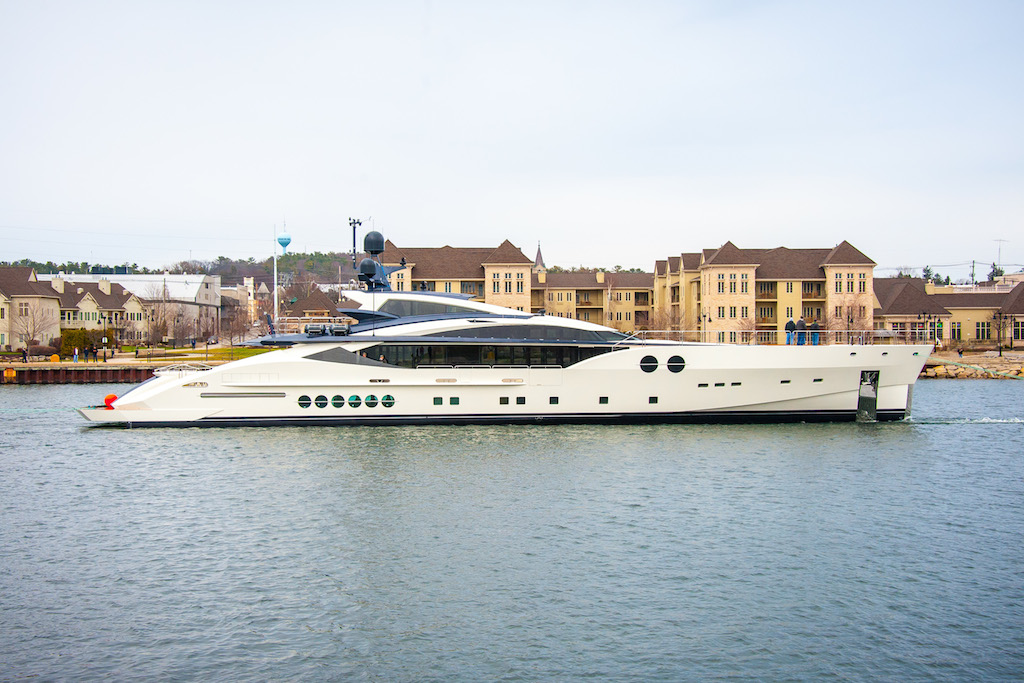
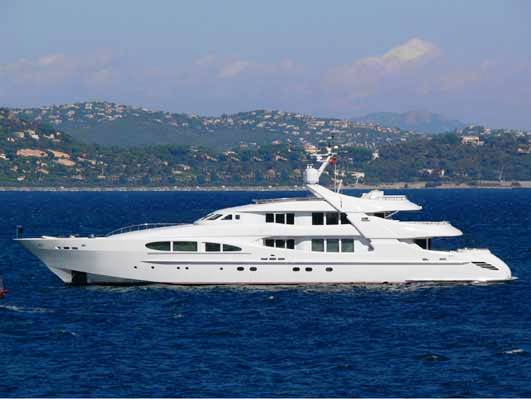
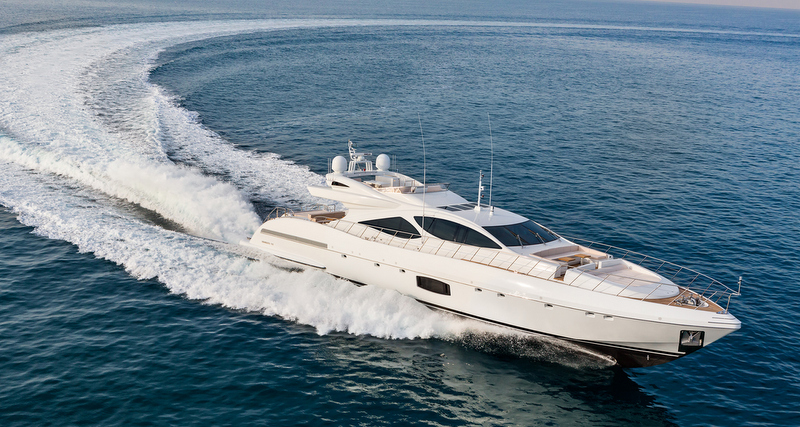
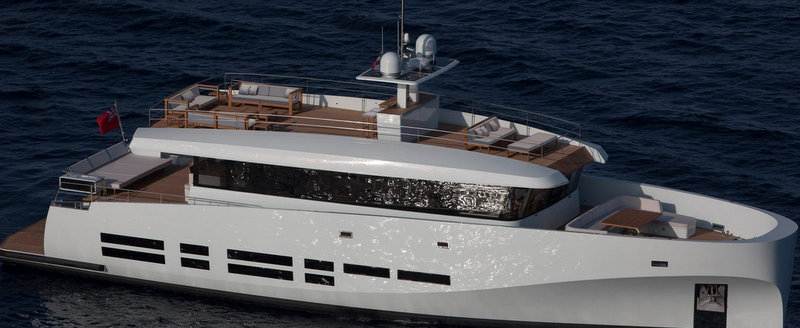
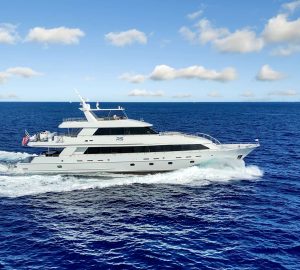
Seakeeper gyros stabilise charter yacht MARHABA

February 29, 2012

Number of benefits of gyro stabilisation have been appreciated by Ferrari chairman Luca Cordero di Montezemolo who chose to charter the Ocea 108 Commuter motor yacht Marhaba, for the past two seasons. Certainly a man that understands the importance of unhindered speed and beauty. Seakeeper gyros provides superior roll reduction in a range of sea conditions, without drag-producing appendages. Their quite operation and low power consumption make them the stabilisation choice over fins, including for underway use. Motor Yacht Marhaba has been recently fitted with two Seakeeper M21000 gyros.

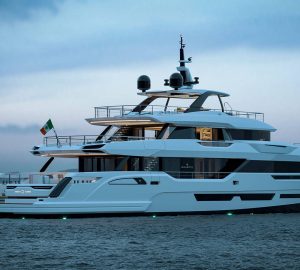
Charter Yacht Marhaba

Charter Yacht Marhaba

A “Control Moment Gyro,” it employs the physics of gyro-dynamics to deliver powerful righting force that stabilizes a yacht.  The gyro’s flywheel spins at high speed in a near vacuum, inside an aluminum spherical housing.  This virtually eliminates air friction, which allows Seakeeper gyros to weigh much less, and consume very little power.

“The Seakeeper gyros’ performance has been really satisfying.  The feeling onboard Marhaba charter yacht has changed dramatically, during navigation, due to an important reduction in roll.  This allows everyone on board, even the more sensitive people, to fully enjoy the experience of Marhaba,” said Montezemolo.  “We recommend Seakeeper gyros because the effective roll reduction has been very important, more than expected.  And also, all the technical requirements that we have taken into consideration for our choice have been completely satisfied.”

Motor yacht MARHABA - Main Salon

Motor yacht MARHABA - Main Salon

Montezemolo experienced the power of Seakeeper gyros himself during a side-by-side comparison of a fin and gyro-type stabilizer on yachts off the coast of Viareggio, Italy.  “We considered the Seakeeper gyros’ high rotational speed, which created a high value of angular momentum.  Also, they produced limited noise and added limited weight,” said Montezemolo.

Seakeeper gyros also include an active control mechanism which optimizes the gyro’s performance over a wide range of sea states.  A passively controlled gyro must be turned off in the roughest conditions to keep from damaging itself, whereas the Seakeeper Gyro can continue to operate when it is most needed.

Motor yacht MARHABA -   Aft Deck

Motor yacht MARHABA - Aft Deck

The M21000 gyros were retrofitted in the lazarette, one port and one starboard.  Superyacht Marhaba already had a hydraulic fin system in place.  Subsequent sea trials 2 miles off the coast of Genoa, Italy, verified the performance of the Seakeeper gyros, both underway and at zero speed.

Though seas were relatively calm on day one for underway testing, with light winds and short, choppy waves with estimated maximum heights of 0.4m, when compared to the performance of the yacht’s stabilizing fins, Seakeeper proved its capabilities extremely well.

Superyacht MARHABA - Master Cabin

Superyacht MARHABA - Master Cabin

With Marhaba yacht travelling at 10 knots in beam seas, the gyro and fins were engaged separately, and then used together.  The Seakeeper gyros, operating alone underway, reduced the standard deviation of the roll rate from more than 1.2 degrees to 0.8 degrees.  The gyros also reduced the standard deviation of the roll angle from nearly 1.0 degrees to 0.6 degrees, producing results very similar to those achieved by the fins alone.

Zero speed trials performed aboard motor yacht Marhaba further prove the versatility of the Seakeeper gyro’s stabilization capabilities.  On day one, even in such calm conditions, the combination of waves and the yacht’s natural roll at zero speed produced uncomfortable motion.  The Seakeeper gyros achieved an impressive 76% resonant roll reduction.

On day two of the sea trials, a storm blew in, creating breaking waves with maximum heights of approximately 1.25m.  Those onboard even witnessed a waterspout nearby.  Again, with the Seakeeper gyros engaged, a powerful 77% zero speed resonant roll reduction was achieved aboard charter yacht Marhaba.

Tender of motor yacht Silver Cloud by Abeking & Rasmussen catalyst for Seakeeper to stabilize smaller boats

February 14, 2012

Seakeeper is now producing a new MX series gyro stabilizer opening up more comfortable worlds to boats in the 11-13m range.  Based on the same ground-breaking technology as its M8000 and M21000 gyros, the MX series will be tuned to an individual’s application, in an affordable package.

Seakeepers  new MX series gyro stabilizer for smaller yachts

Seakeepers new MX series gyro stabilizer for smaller yachts

Quality Seakeeper features are standard, such as quiet operation, low power draw, and active electronic controls.  The MX series still spins a flywheel inside a vacuum-sealed sphere to create powerful righting force.

Seakeeper will optimize its control algorithms to the faster roll periods on smaller craft, working closely with clients to deliver the greatest possible angular momentum.  The MX series can deliver up to 80% roll reduction whether a boat is underway, idling or at anchor.  It is initially designed for boats up to 15 US tons displacement.

“People with smaller boats have been begging us for gyro technology,” said John Kermet, Seakeeper VP of sales and marketing.  “The MX series is an extension of Seakeeper’s proven gyro platform, an affordable solution.  Fishermen can venture farther offshore.  Small cruisers have more overnight anchoring options.  Scuba divers can re-board their craft in safety.  Yacht owners can also stabilize their tenders,” Kermet said.

“We are levelling the horizon for a much larger range of boats now, and will continue to design and innovate.  Our MX series is an evolution, in advance of the gyro revolution.”

The catalyst for this evolution was a recent Seakeeper gyro installation on an 11.9m Intrepid.  As tender to the 40.8m SWATH Abeking & Rasmussen motor yacht Silver Cloud, custom-designed for comfort on the roughest seas, the owners sought the same stability for their small boat.

Intrepid is known for its fast and fuel efficient custom sport yachts.  External stabilizing appendages would produce drag, affecting the Intrepid 390′s 50-knot top speed, and its small genset couldn’t be taxed.  So Intrepid, Seakeeper and Ocean5 Naval Architects created the gyro-enhanced Intrepid 390, the first gyro on a boat this small.

“Intrepid builds boats tailor-made to the customer’s needs and desires,” said Joe Brenna, Intrepid VP of customer service.  “The Seakeeper works like a dream, the performance just amazed me.  Our 390 is still fast and handles extremely well, but it’s steady as a rock.”

“Seakeeper’s rugged and durable design withstands the rigors of small, high-speed boat operation.  It’s the only viable stabilization system for such craft,” said Robert Kaidy, Ocean5 CEO.  “Sea trials are a validation of engineering, and this exceeded our expectations.  Intrepid makes a solid boat.  Even at high speed, the gyro had no impact on its dynamic characteristics, other than the very positive effect of reducing roll.

“It doesn’t take much on smaller boats to make it difficult to walk around.  When you’re uncomfortable, it really detracts from the boating experience,” said Kaidy.  “But the gyro changes that, returning the comfort, utility and functionality of the boat.  It’s really fundamental.  I predict we’ll see more new boats of this size designed for a Seakeeper gyro—soon.”

Seakeeper´s New Field Service Manager

January 31, 2012

Citing a rapidly growing worldwide market for its gyro stabilization products, Seakeeper has appointed Steve Shaw as its newest field service manager.

Seakeeper´s New Field Service Manager - Steve Shaw

Seakeeper´s New Field Service Manager - Steve Shaw

Seakeeper CEO Shepard McKenney made the announcement. “2011 was a very solid year for Seakeeper,” McKenney said. “Even in these trying economic times, we continue to grow. Steve will be instrumental in responding to the service needs of our customers and partners worldwide.”

Originally from the UK, Shaw has 16 years of experience in the US marine industry. He most recently served as the head of service for a large East Coast shipyard.

The Seakeeper gyro’s powerful righting force virtually eliminates discomfort and seasickness by minimizing rock and roll. The gyro optimizes torque to provide excellent stability while a yacht is underway, anchored, or at zero or low speed.

New Heesen 65m Motor Yacht due to be launched in 2013 with the Seakeeper M21000 Gyros

January 25, 2012

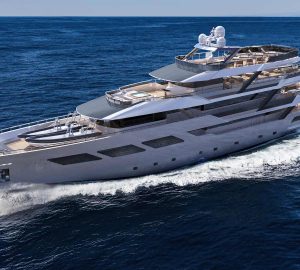
When a yacht builder premieres an excellent engineering advance, other components must be equally revolutionary. Twenty years in development, Heesen Yachts‘ Fast Displacement Hull Form (FDHF) debuts on its new 65m motor yacht, the first of which is due to be launched in 2013. To provide underway and at anchor stabilization for the unique 65m superyacht design, Heesen has chosen Seakeeper M21000 gyros as standard equipment.

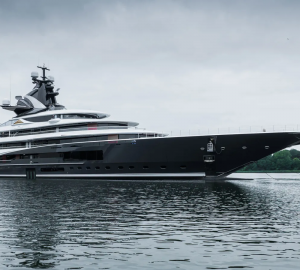
Heesen 65m Yacht - the world's first fast displacement yacht

Heesen 65m Yacht with the Seakeeper Gyros Standard - the world's first fast displacement vessel

Nearly a year into her construction at the Heesen shipyard, this is the world’s first fast displacement yacht. The recently-delivered Seakeeper gyros, 5 units for this 65m craft, will be installed with the assistance of Seakeeper’s Dutch distributor, Kemper en Van Twist Diesel.

Heesen’s FDHF incorporates features that affect hydrodynamic resistance over the entire speed range, such as the limited immersed transom, bulbous bow, trim control and spray rails for a 30% increase in hull efficiency. When paired with the yacht’s MTU M93L engines, it will have a 4,200 nm range with 20 knot cruising speeds and a top speed of 27 knots.

With such a unique hull design, it’s not possible to use external appendages, such as stabilizing fins, that could affect performance. Housed completely inside the lightweight, efficient Heesen hull, the Seakeeper gyros will provide power-saving stabilization while the yacht is underway, at zero speed or at anchor.

The powerful righting torque of each M21000 gyro results from a steel flywheel spinning at high speeds in a vacuum, within an aluminum housing. Drawing a miserly 3 kW at full speed, each gyro delivers 21,000 Newton meter seconds of angular momentum to achieve up to 80% roll reduction. This ensures owners and guests are comfortable, and safe, onboard in varying sea conditions.

Luxurious amenities on this remarkable Heesen yacht design include a duplex beach club, glass-bottom swimming pool, 10 sq.m side balcony, a vast sundeck, and accommodations for up to 12 guests in custom-built quarters. Seakeepers’ steadying force will be particularly appreciated on the touch-and-go helicopter deck and in the multiple yacht tender garages.

37m Heesen Super Yacht Aurelia and 65m motor yacht YN 16465 featuring Seakeeper´s stabilization system

December 28, 2011

Seakeeper can expect a long partnership with the Dutch shipyard Heesen Yachts, impressed by their stabilization system after a sea trial in July 2011. Seakeeper´s gyro stabilization system was installed on the 37m Aurelia superyacht (hull YN 15437) , and sebsequently will be also installed on the 65m Fast Displacement motor yacht YN 16465, due for completion in late 2012.

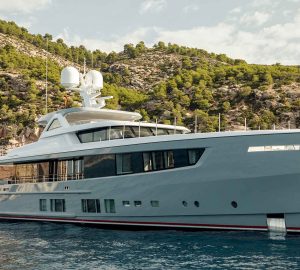
37m semi-displacement motor yacht Aurelia by Heesen Yachts

37m semi-displacement motor yacht Aurelia by Heesen Yachts

“Heesen’s 37m class was designed before stabilization at anchor was considered standard for a luxury yacht,” said Peter van der Zanden, Heesen general manager, design & development. Instead of obtrusive fins, an internal stabilization system was demanded and two M21000 gyros were installed on the new build.

“Aurelia is a semi-displacement yacht and therefore fins are a disturbing factor,” said Rob de Wijs, sales manager with Seakeeper’s Holland distributor, Kemper en Van Twist Diesel B.V (KVT). “Heesen had no experience with gyros, so they were uncertain if the predicted roll reduction could be achieved. After the sea trial, they were convinced.”

Heesen 65m Fast Displacement Motor Yacht YN 16465 - Image courtesy of Heesen Yachts

Heesen 65m Fast Displacement Motor Yacht YN 16465 - Image courtesy of Heesen Yachts

The two Seakeeper M21000 Gyros installed on the luxury yacht Aurelia (hull YN 16465) were tested at zero speed and while underway in extreme, rough seas three miles outside Slijkgat Inlet between Holland and France. Wind was blowing northwest at 20 knots with 1.5m sea conditions. At zero speed, the gyros reduced resonant roll by greater than 55%.

The Seakeeper gyros were also tested during underway operation. Samples were recorded at speeds of 6, 13, 18 and 28 knots. Through this speed range, the system reduced roll by an average of 50%.

“We were impressed with how well the boat handled with the gyros,” said Aurelia Capt. Brenden Scott. “They really helped with roll. As a charter yacht we were looking for comfort at anchor, zero speed and while underway.”

“We are sure that Heesen will have no doubts about Seakeeper anymore. The product has proven itself,” said de Wijs.

High seas during the trial proved that Seakeeper gyros worked so well underway that even seasoned crew marvelled at how well they steadied Aurelia superyacht. The point was further made during a video shoot on choppy waters off Cannes.

Speaking on behalf of the super yacht Aurelia’s owner, Heesen PR and press office manager Sara Gioanola said, “Cruising on Aurelia with the Seakeepers is a very special experience. We worked on a video shoot off Cannes in September. The area is quite popular with yachts constantly running up and down. Many crew members onboard that day were seasick and constantly asked for the gyros to be engaged, as they were turned off for brief periods during testing.

“While other yachts were rolling, we stayed still. The videographers felt great and could work in a perfect environment. The stabilization during the running shots also was pretty astonishing. We had to make a circle and Aurelia did not lean inside. She ran straight. The comfort you experience is unparalleled. Once you try a yacht equipped with a gyro, you can’t go back to fins.”

M21000 gyros are designed for larger vessels, Seakeeper is working with yachts up to 65m. The gyros’ powerful righting torque device is easily installed with no thru-hull fittings.

The tenth yacht in the leading Dutch builder’s 37m Aurelia is available for charter in the Mediterranean during the summer and the Caribbean in the winter.

Seakeeper installs three M21000 gyros on Italyachts’ 43m Motor Yacht ELSEA

December 09, 2011

Seakeeper three M21000 gyros were installed on Italyachts’ new 43m motor yacht Elsea, a yacht that is extremely sophisticated with high-performance, which deserves the very best stabilization system.  Half fly, half-hardtop, Elsea superyacht represents the new yacht class – Sportfly.

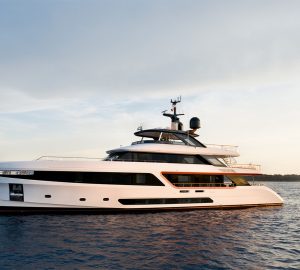
Italyachts 43m luxury motor yacht ELSEA

Italyachts 43m luxury motor yacht ELSEA

43m super yacht Elsea reaches a cruising speed of 30 knots and top speed of 35 knots. Stabilization while underway is key for such a fast vessel. Whether cruising through the seas or at anchor, Seakeeper’s gyros level the yacht for a smooth ride.

After sea trials in Viareggio, Italy and St. Tropez, France, the gyros achieved greater than 75% resonant roll reduction.

From previous experience, Elsea yacht’s captain, Jonathan Stone, is quite enthusiastic about Seakeeper. “The gyros work well at reducing roll at speed, at anchor and in port in Monaco. The owner is very happy with the result, and we are looking at instal l ing Seakeepers on other vessels he owns.

“They offer better performance than the classic zero-speed fin. For a high-speed yacht it’s crucial not to have obstructions in the water and guests feel more comfortable swimming around the vessel.”

“In contrast to fins, gyros don’t produce a jerky movement, installation is easier, they don’t occupy as much space and are almost plug-and-play. In addition, silence at anchor is a huge factor for me. The gyros themselves are silent,” said Stone. “This is fantastic when guests are on the swim plat form.”

Capt. Stone further explained why gyros are preferred on yachts like Elsea. “Comfort is a top priority, along with the ability of the crew to carry out their duties,” he said. “We were at anchor for several days in Portisco, Sardinia, an area famous for being buzzed by other large craft. The gyros worked so well I was never asked if the stabilizers were on.”

“We received Seakeeper’s full support from design to commissioning,” said Myriam Rel igieux, Rodriguez Group marketing assistant. With only a compact space to work with at about 50″ L x 55″ W x 36″ H, “the three gyros perfectly matched the technical space avai lable on the aft side of the boat.”

Designed for larger yachts, the M21000 draws only 3kW. A forged, high-strength steel f lywheel spins at 4,000 rpm in a near vacuum, generating an impressive 21,000 Newton meter seconds of angular momentum. Spool-up time to stabilization is a quick 30 minutes.

Sun-worshippers enjoy Elsea’s magnificent sundeck and multiple solariums. The main deck features a sun-drenched living/dining room accommodating up to 12 guests. Appealing to connoisseurs, meticulous finishing touches include white leather offset by smooth wengé wood.

105′ Nordlund Motor yacht Mixer equipped with Seakeeper Gyro

October 28, 2011

One testament to a product’s success is when a boat owner becomes a repeat customer. Such is the case for Seakeeper, which has now supplied three gyro stabilization systems to Mr. Frank Miles for three boats. After installing M7000 series gyros on his 50′ and 55′ Maritimo sport fishers, Miles recently added a M21000 model to his 105′ Nordlund motor yacht Mixer, to better enjoy time aboard with family and friends.

105' Nordlund Motor yacht Mixer

105' Nordlund Motor yacht Mixer

Built in 2002 by Nordlund Boat Company, motor yacht Mixer is a classy yet family-oriented yacht with a sportfish personality. Designed mainly for entertaining and fishing on the US West Coast up into Alaska, the vessel is powered by twin 1,350 hp Detroit Diesels, cruises at 18 knots with a top speed of 22 knots and has a 6,000-gallon fuel capacity. Already fitted with Naiad fins, Mixer was recently hauled at Nordlund’s Tacoma, Washington, yard for minor maintenance and the gyro installation.

Miles said after installing a Seakeeper 7000 series gyro on his first Maritimo, “It worked so well I bought a second gyro for another Maritimo and now this one for Mixer. We fish a lot, so when we troll and stop to catch salmon, the gyro stabilizes the boat when the fins don’t.”

Because the Seakeeper mounts completely inside the hull, it was installed in the lazarette, just forward of the steering gear, through temporary hatch cut in the cockpit deck. Small for its power at about 50″ L x 55″ W x 36″ H, the gyro required only minor relocation of two water heaters, spare anchor storage and refrigeration equipment for the retrofit.

105' Nordlund Motor yacht Mixer equipped with Seakeeper Gyro.

105' Nordlund Motor yacht Mixer equipped with Seakeeper Gyro.

“Seakeeper delivers exactly what Mr. Miles wants, it steadies Mixer while trolling, and eliminates the snap roll in a swell while at anchor,” said Paul Nordlund of Nordlund Boat Company. “The general opinion is that the Seakeeper gyro enhances the performance of the fins while the boat is underway. When the speed of the vessel is less than 8 to 9 knots, the fins are not very effective and the gyro does al l the stabilizing.” Designed for larger boats, the Seakeeper M21000 spins a forged,

High-strength steel flywheel at 4,000 rpm in a near-vacuum environment. It generates an unmatched 21,000 Newton meter seconds of angular momentum, creating a powerful righting force to stabilize craft at anchor, at slow speeds or underway.

Combining style, function and fun in her custom design, yacht Mixer’s well-appointed interior includes an elegant spiral staircase leading from the main deck to the master stateroom. Her family appeal shows in the dining table that seats a dozen or more people for parties, for which Miles’ wife does all the cooking. The Mixer yacht’s sportfish purpose is apparent from her three bait tanks, fighting chair and freezers recessed into the afterdeck.

Nordlund has been a family-owned, family-run boatyard for more than 50 years. All Nordlund yachts are 100% custom-designed and built. “When a customer wants stabilization on their boat, we recommend the Seakeeper gyro,” said Nordlund.

Seakeeper appoints Tom Goeke as Chief Operating Officer

October 28, 2011

Seakeeper, Inc, a worldwide leader in gyroscopic boat roll stabilization, has appointed a new chief operating officer.  Tom Goeke most recently served as chief executive officer of Kloeckner Pentaplast Group, a multinational manufacturer of industrial films and coatings.

“Tom is the right man at the right time for Seakeeper.  With our sales more than doubling year on year, we are experiencing the transition from limited production to mass manufacturing and want to realize all of the benefits that such a transition makes possible,” said Seakeeper CEO Shepard McKenney.

“He has successfully run a large manufacturing company in a mature industry where absolute quality and efficiency is the standard,” continued McKenney.  “Besides bringing the skills we need, we are grateful to have the services of such an outstanding individual and look forward to working with Tom in the coming years.”

With no external appendages, Seakeeper Gyro Stabilization Systems are mounted inside the hull and produce a powerful righting force to virtually eliminate boat rock and roll.  The actively-controlled units are highly effective at anchor, zero and low speeds, as well as while underway.

Seakeeper welcomes Brook Streit as new regional sales manager

September 14, 2011

Expanding its national sales force, Seakeeper named Brook Streit as regional sales manager for North America.  He will be responsible for generating business in the recreational market.

Seakeeper welcomes Brook Streit as new regional sales manager

Seakeeper welcomes Brook Streit as new regional sales manager

“Brook’s great contacts and extensive industry knowledge will help us as we focus on the refit market over the upcoming months,” said John Kermet, Seakeeper VP of sales and marketing.  “With plentiful experience in many marine sectors, he understands our customers and will help provide the best stabilization solutions for their applications.”

Streit formerly served as sales manager for Derecktor Shipyards in Bridgeport, Connecticut.  In that position he generated sales leads for power and sailing yachts.  Streit is a graduate of The Landing School’s boatbuilding program.

The state-of-the-art Seakeeper gyro delivers a powerful righting force that virtually eliminates boat rock and roll.  Actively controlled, the gyro optimizes torque and provides superior stability at anchor, zero and low speeds, and while underway.

New Seakeeper gyro increases yacht stability with Seakeeper M8000 gyro stabiliser

August 02, 2011

The new Seakeeper M8000 gyro stabiliser which is “the most powerful unit on the market on a per-kilogram, per-cubic meter and per-kW basis,” according to Twin Disc’s Glenn Frettingham was released by Twin Disc (Pacific) at the Sydney International Boat Show in Australia.

Twin Disc (Pacific) Managing Director Glenn Frettingham explains the

Twin Disc (Pacific) Managing Director Glenn Frettingham explains the

The spherical unit delivers 8,000 Newton meter seconds of righting force to stabilise any vessel up to 31.75 tonnes displacement.

Frettingham said the gyro’s power comes from Seakeeper’s newly-designed, high-strength, single-piece forged flywheel. 

The new M8000 spins at 8,000 rpm in a near-vacuum to eliminate the significant negative effects of air drag. Spool-up time to stabilisation is 20 minutes and 35 minutes to rated rpm.

The new model, which replaces the successful M7000, was on display at the Riviera and Sunseeker on-water stands at the Show.

“The new M8000 is easier to install and requires less power to operate,” said Twin Disc (Pacific) Managing Director Glenn Frettingham.

“The gyro motor drive box is now pre-mounted on the unit and pre-wired at the factory, reducing installation labour and wiring. The M8000 is 14 percent more powerful and 44 percent quieter than the M7000A it replaces. The M8000′s operating status and diagnostic information are accessed from the display panel and keypad mounted on the boat’s bridge.

“Installation is simplified with a new pre-filled, self-purging coolant design.

“Built to last, with minimal required scheduled maintenance, the M8000 also features heavy-duty gimbal shafts and bearings, as well as cast-aluminum saddle beams.

“Unlike fin-based, roll stabilisation systems whose performance decreases sharply at less than cruising speed, the Seakeeper gyro stabiliser works equally well from zero to full speed,” said Mr Frettingham.

Riviera CEO John Anderson said the company is delighted to partner with Twin Disc in displaying the new gyro at the show.

“The Seakeeper has been a strong addition to our client offerings,” he said. “This new model is easier to install in our boats because it is now a self-contained unit delivered direct from Twin Disc (Pacific).

“Our owners appreciate the fact the gyro works effectively whether the boat is at speed or at anchor or in their marina.

“The improvements in the M8000 will deliver better performance and lower maintenance.” Mr Anderson said the company had recently installed a larger Seakeeper M21000 gyro in the latest of its flagship 70 Enclosed Flybridge boats.

Weighing only 525kg and measuring 922 mm long, 997 mm wide and 705 mm high, the compact M8000 gyro can be installed as a boat is being built or easily retrofitted into an existing vessel and does not necessarily need to be aligned with the fore/aft centreline of the hull.

“A Seakeeper gyro can be installed to the hull structure in the engine room, lazarette or anywhere aft of midship where there is a minimum area of 800(L)x977(W)x671(H)mm of available space,” said Mr Frettingham.

The unit requires 3KW to spool up and as little as 1kW to operate.

The Seakeeper gyro is actively controlled by state-of-the-art motion sensors and computer processors to optimise torque.