Volvo Ocean Race Brief

Volvo Ocean Race Luxury Yacht Charter & Superyacht News

A busy season for Integrated Marine Group launching a new website

May 09, 2012

A very busy season started quite early for the well known NZ superyacht refit company, Integrated Marine Group, with yachts arriving for the Rugby World Cup in September and October 2011. More yachts continued to arrive during the season, with some of them participating in the successful Millennium Cup. This Superyacht Event was followed soon after by the arrival of the Volvo Ocean yachts, supported ethusiastically by Auckland over their one-week stay.

Integrated Marine Group launches a new website

Integrated Marine Group launches a new website

Even during such busy times Integrated Marine Group continued to work hard behind the scenes. Proving their motto to seek better ways to do things whilst keeping things simple, IMG launched their new look website to coincide with the commencement of the Millennium Cup 2012. Whilst the content remains the same the new layout makes navigating the website quicker and easier in this time conscious world. It should also make it much easier to update the news and events sections so expect more news from IMG over the coming months.

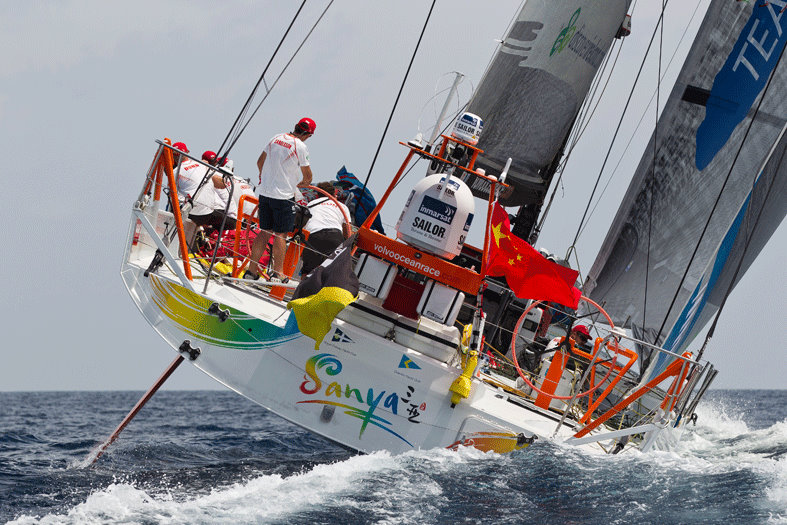
Sanya Serenity Superyacht Marina in China hosted Volvo Ocean Race Teams

March 08, 2012

After 14 days and 3051 nautical miles of cruising the ocean from the Maldives to Sanya, the Volvo Ocean Race teams have finally reached home base. An amazing performance for the sailors whose only thoughts were to arrive at Serenity Marina safe and sound bringing their yachts in one piece.

Sanya Serenity Superyacht Marina in China hosted Volvo Ocean Race Teams

Sanya Serenity Superyacht Marina in China hosted Volvo Ocean Race Teams

After partying with family and friends, enjoying  a relaxing moments with team members on-shore, it now time to meticulously repair and bring back to life their yachts.

Yacht builders, riggers, electrician, sail makers, sail designer as well as engineer are on scheduled 12 hours a day to check every little details that will make the yacht faster.

The calm waters of Serenity Marina are creating as well the perfect platform  for stepping the rig, which in fact was not easy in previous ports including Alicante and Abu Dhabi where marinas tended to be choppy.

Serenity Marina harbor is living up to every one expectations in every ways by being the perfect host for entire Volvo Ocean Race. Serenity Marina state-of-the art facilities have given an extensive assistance to shore and sailors teams.

High Performance Yacht Design Conference, 12 – 14 March 2012, Auckland

February 16, 2012

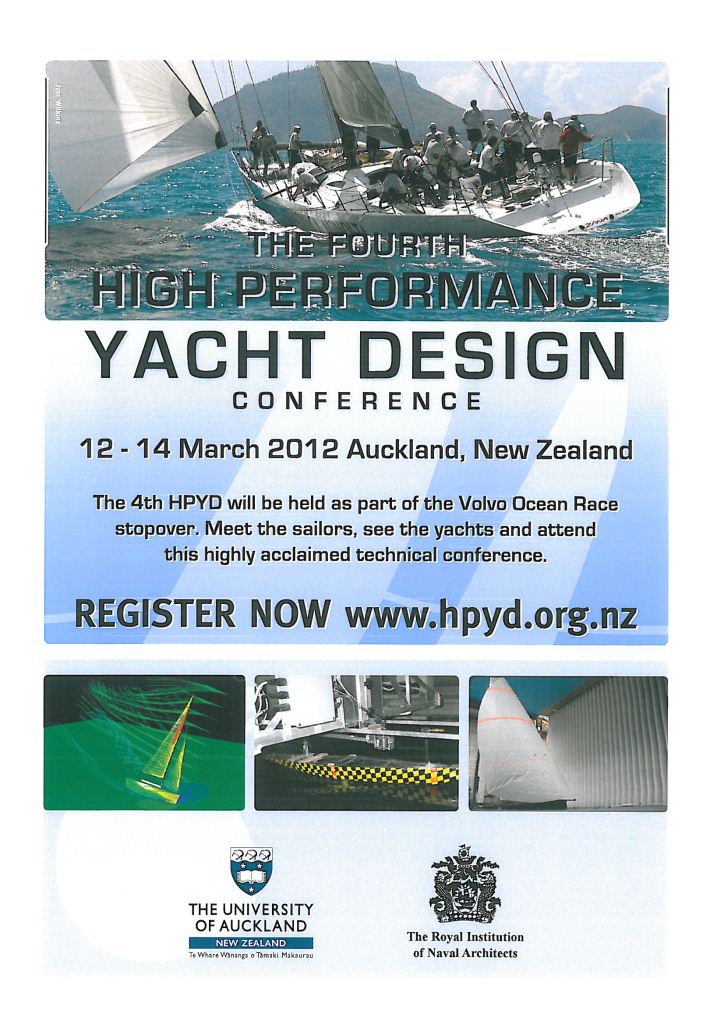
The Royal Institution of Naval Architects (NZ), New Zealand Trade and Enterprise and the University of Auckland will host the 4th High Performance Yacht Design Conference from 12 – 14 March 2012 at the Maritime Museum, Viaduct Harbour, Auckland, New Zealand.  The conference with coincide with the Volvo Ocean race – Auckland stopover.

High Performance Yacht Design Conference, 12 - 14 March 2012, Auckland

High Performance Yacht Design Conference, 12 - 14 March 2012, Auckland

With the Volvo Ocean Race yachts in town and AC45 catamarans training on the harbour this summer, Auckland, New Zealand is also playing host to an international group of scientists, designers and academics focused on what makes them go fast now – and how to make them go even faster in the future. The science of achieving speed under sail is at the heart of the fourth High Performance Yacht Design Conference from March 12 to 14 2012.

As the state of the art leaps forward with record-shattering circumnavigations and America’s Cup yachts capable of 35 knots under giant wings, the conference will bring together more than 100 international delegates and research experts across a wide range of disciplines from materials and structures to aero- and hydrodynamics.

Organised under the auspices of The Royal Institute of Naval Architects (NZ) and the University of Auckland, the conference will take place at the Maritime Museum in the Viaduct Harbour – where the Volvo Ocean Race fleet will be berthed.

For the first time, the conference will include a public session (on Monday, March 12), which will focus on the Volvo Ocean Race and will include a panel of skippers, competitors and designers talking about the current race and the performance aspects of these highly powerful canting-keel yachts.

“In some respects, we are approaching a point where performance may exceed human endurance on these long offshore races,” says conference chairman, David Le Pelley from the University of Auckland Yacht Research Unit. “These yachts are quite extreme and the demands on crew are enormous. In the pressure of competition, skippers have to make tough decisions about how close to the edge they can go before they start risking not just the boats, but the safety of their crew.”

Among the panel will be Chris Nicholson, skipper of the New Zealand CAMPER entry, Mike Sanderson, a previous winner of the race and current skipper of the Chinese Sanya team, Simon Fisher from the Abu Dhabi Ocean Racing team, Tony Mutter from the American PUMA crew along with technical experts Ian Campbell of the Wolfson Unit at Southampton University and Giovanni Belgrano, a world expert on composite structures.

Campbell and Belgrano will also deliver keynote addresses in their respective fields, along with Dr Len Imas, an international authority in Computational Fluid Dynamics (CFD) from the Stevens Institute of Technology in the USA.

With Belgrano and Imas both working on the Emirates Team New Zealand America’s Cup programme, much of their current attention will be on the design and development of the extraordinary new class of 72ft catamarans propelled by highly efficient articulating wings, which will debut in San Francisco next year.

The advent of wings is an exciting new field for high performance sailing, but they do not mean the demise of soft sails. Intensive research and development continues to take place in this area.

“Despite the huge resources that have gone into sail design programmes over the course of high profile America’s Cup and Volvo Ocean Race campaigns, there is still much to learn,” says Le Pelley, who will present a paper on aerodynamic force deduction techniques.

To offset the costs and practical difficulties involved in full-scale on-the-water testing, big advances have been made in computer modeling and CFD programs. While these have improved dramatically, the ultimate goal of perfectly dependable computer simulation and performance prediction design tools remains a long way off. “There will always be a place for experimental and numerical testing,” says Le Pelley.

And, he acknowledges, amidst all the science, there is also even still a place for some art and old-fashioned eyeballing in yacht design.

This is the fourth High Performance Yacht Design Conference to take place in New Zealand. The first was in 2002 during the lead-up to the America’s Cup.

The conferences have achieved a high reputation as a forum for some of the leading experts in various fields of yacht design and form an important part of New Zealand’s standing as a world leader in the marine industry.

World Yacht Racing Forum´s optimism for yacht racing industry

December 15, 2011

According to the World Yacht Racing Forum´s speakers the yacht racing industry is as strong as ever, and provides its partners, venues, athletes and events with great opportunities despite the difficult economy.

World Yacht Racing Forum taking place in Estoril, Portugal

World Yacht Racing Forum taking place in Estoril, Portugal

The fourth edition of the World Yacht Racing Forum started on Tuesday December 13, in Estoril, Portugal. Over 200 delegates attended the presentations, collecting precious information and meeting the industry’s key actors during the networking breaks.

“Most of the world’s best boat builders are here”, declared Dominique Dubois, President of Multiplast. “For us, it is a unique opportunity to meet the designers, the team managers, the sailors… The Forum is really the place to be if you are involved in the yacht racing industry, because this is where you meet the world’s best in the field. Farr yacht design, Green Marine, Mark Turner, the Volvo Ocean Race, the America’s Cup, Multi One Design… Everyone that counts is here.”

Kevin Roberts, Editorial Director of SportBusiness Group, introduced the debates by setting the context: “Despite the economic situation, sponsorship carries on increasing worldwide. No less than 35 billion US dollars have been invested in sponsorship this year, mainly in sports (77%), and this figure will increase next year. However sailing isn’t benefiting enough from this trend. The beneficiaries are mainly football, golf, basketball or Formula 1 whilst sailing doesn’t seem to be on the radar. There are however many reasons to be cheerful and to look forward to the future.”

The sport is indeed attractive, and current and new projects do have a great appeal and potential. The Multi One Design Circuit, for example, will see its first sailing season in 2012. Introduced at a previous World Yacht Racing Forum, in Monaco, the MOD circuit has now become a reality, dragging partners, suppliers and services providers in its wake.

Many of today’s speakers, split in different debates, highlighted the fact that the sport needs more creativity to appeal to a wider audience. New media and social networks are at the heart of the sports development; they were widely discussed, explained and analysed by various experts such as Aaron Savage, Director, Interactive Mix, who reminded the audience that the key to success remains the message. “Stop focusing on the technology, he said. Focus on what Internet can do and it is huge.”

Hertha Baumann, Vice President PR and Events management, Mirabaud, gave the “Yacht Racing Photo of the Year” as an example. “We have touched 15’000 people in less than two weeks, and reached a public that is much wider than the usual sailing audience. It is for us a different way to show our passion for sailing, and also the proof that there is a huge interest for the sport.”

Talking about how to measure the commercial return of the sport, Nathalie Quéré, head of sponsorship, BT Global Services, highlighted the fact that the sport of sailing provides unique emotions and opportunities. “You can’t just measure your commercial success by calculating your ROI. You need to include other elements such as the emotional factor or the networking opportunities offered by the sport, and those elements are not measurable with conventional tools.”

Andrew Pindar, one of sailing’s long lasting commercial supporters, summarised the day by saying that “there simply isn’t any other platform where to exchange ideas and experiences, and to discuss what we have learned over the year. The World Yacht Racing Forum provides a platform that stimulates the debates and helps the promotion of the sport worldwide.”

In the YRDTS today sessions went long and lively, with a full room of influential designers, builders, rule-makers and owners discussing a wide variety of topics, ranging from Non-destructive testing to the development of HPR, a new Grand Prix rating rule concept. Keynote speaker Pat Shaughnessy of Farr Yacht Design spoke of the need to utilize the creative talents and insights inherent to all competitive sailors to adjust in these economic times to new opportunities to engage more youth-oriented projects within the sailing industry, and also to apply their talents to new fields outside the marine industry as well. Bill Pearson of North Technology Group spoke of this as well in his description of the latest applications for TPT (Thin-Ply Technology), which range from AC72 wingsails to parts for Formula 1 race cars.

In TP52 design, there was wide agreement that the boat and class will have an active new life outside the MedCup, with a meeting scheduled soon to decide their direction for 2012. In the session on Non-destructive testing it was agreed that while great tools exist to determine potential problems in laminate construction, there are standards still needed to determine when these problems may or may not contribute to part failure. After describing the standard design package for the AC72 catamaran to be used in the 34th America’s Cup, Vincent Prevost of VPLP explained that teams wanting to optimize use of this package better sign up by next month, as there is a 10-month build time needed and then only 30 sailing days left in 2012 to comply with the AC rules…so far one of the three teams currently committed to build an AC72 has purchased this package, but will likely use it as a reference only.

The last session on HPR was the longest of the day, as the concept and design parameters were presented by four panelists hoping to see the Grand Prix racing community embrace this new continuum-based rule project which promotes the design of high-performance offshore-capable boats. Thus far there has been some strong interest in this, so the HPR group is promised to make a beta version available for comment by year’s end.

Tomorrow’s sessions will focus on the world’s top yacht racing events, the Volvo Ocean Race, the America’s Cup and the Olympic Games. Sessions will also be dedicated to yacht club management and the place of women in the sport.

Farr Yacht Designs to attend Volvo Open Race stopover in Cape Town

November 23, 2011

Russ Bowler, Vice President of Farr Yacht Design, will be present in Cape Town to assist the Volvo Open 70 Abu Dhabi Ocean Racing as they get ready for the second in-port race and Leg 2.

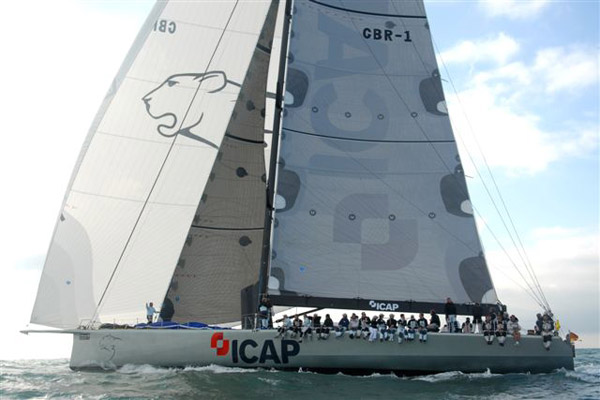
30m charter yacht LEOPARD 3 by Farr Yacht Design

30m charter yacht LEOPARD 3 by Farr Yacht Design

Farr Yacht Design will have designers at every stopover to assist in engineering any necessary repairs, reviewing performance information and assisting with strategic decisions.

80ft Caribbean sailing luxury charter yacht Matelot by Farr Yacht Design

80ft Caribbean sailing luxury charter yacht Matelot by Farr Yacht Design

Farr Yacht Design is renowned top racing-yacht design team founded by Bruce Farr and Russell Bowler. They are also leaders in developing fast, comfortable custom and production cruising yachts, featuring practical interior arrangements, smart sail plans and deck layouts, kind handling characteristics in all conditions, with safe, well engineered hulls and superior performance.

Here is a selection of the stunning Farr Yacht Design charter yachts.

B&G supports 2011 Volvo Ocean Race

November 10, 2011

Leading marine electronics manufacturer B&G is happy to announce that it is offering race support to both the organisers and participants of the 2011 Volvo Ocean Race, which began on the 5th November in Alicante, Spain.

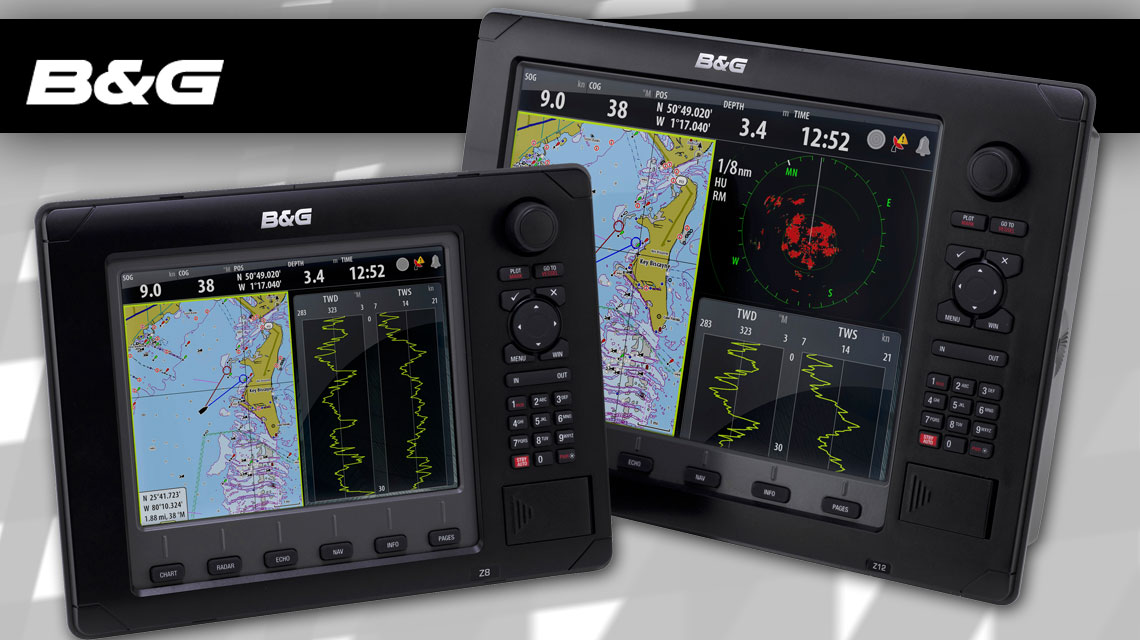
B&G Zeus multifunction displays

B&G Zeus multifunction displays

Since the inception of the world-renowned Volvo Ocean Race, all Open 70 yachts taking part have relied on marine electronic equipment from leading manufacturer B&G to give them the knowledge to compete successfully in the race, and this is set to continue throughout the 2011 race.

This year, not only have all competing race teams got B&G equipment onboard, the Race Control Centre and committee boats are also fully fitted with an array of B&G electronic equipment ranging from the sailing-specific Zeus multifunction display unit, to the H3000 Hercules Data Processor and the ultra-bright HV 30/30 instrument display screens.

B&G will also be supplying onboard race support to entrants at all of the Race Ports from Abu Dhabi to Miami, ensuring that competitors are getting the most out of their B&G systems.

Alan Davis, Product Line Director for B&G, said: “We’re delighted to be supporting the Volvo Ocean Race. Both B&G and the race organisers have worked together for a number of years to ensure that participants have the knowledge they need at their fingertips.”

“In a race as high profile and dangerous as this one, it is essential that Race Control is up to date with conditions and the latest race information, which is why we have supplied a number of systems to provide race data and help with analysis – this also allows the world’s media to keep a finger on the pulse of the most exciting race in the calendar.”

Volvo Ocean Race 2011-2012 with SAILOR on board

November 04, 2011

The six strong Volvo Open 70 fleet will start tommorow, November 5, in Alicante the first leg of the Volvo Ocean Race 2011-2012 to Cape Town, with a full complement of Thrane & Thrane SAILOR communication systems on board. The big start of tomorrow comes after an action packed opening week of in-port racing that saw the SAILOR domes aft of Team Abu Dhabi Ocean Racing’s Volvo Open 70 cross the line over 40 minutes ahead of second place Puma Ocean Racing in the first competitive racing of this campaign.

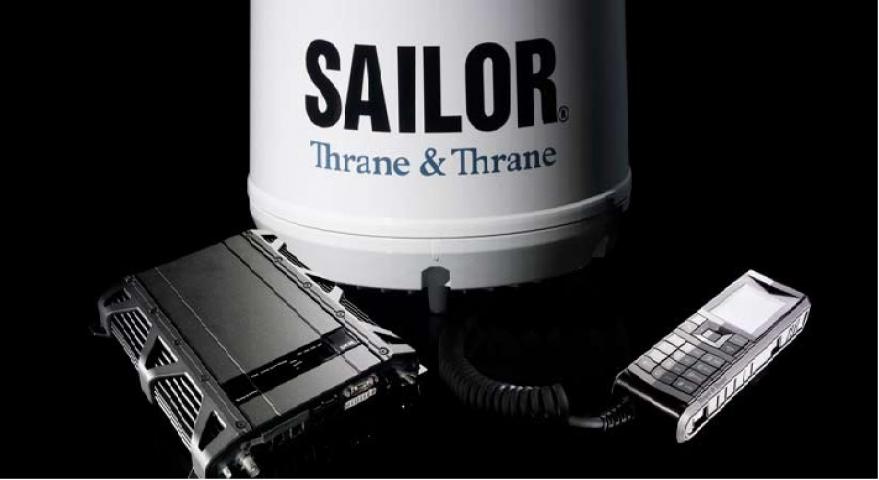
SAILOR 500 FleetBroadband

SAILOR 500 FleetBroadband

The scope of supply for the 2011-2012 race fleet includes SAILOR 500 FleetBroadband, SAILOR 150 FleetBroadband, two SAILOR mini-C systems and VHF radios. Race umpire ribs are equipped with SAILOR VHF fixed radios and organisers carry SAILOR handheld VHF radios during in-port races and the start of every leg. In addition, Volvo Ocean Race’s travelling media teams use EXPLORER 700 BGAN terminals for broadband back-up connections from various shore based spots along the race course.

The SAILOR 500 FleetBroadband will be the central communication hub for each Volvo Open 70 during the race. Its dual role will be to provide the means for navigators to download weather data, which is vital for competitive performance and for Media Crew Members (MCM) to upload race footage, reports and interviews for television and web, helping to grow support for ocean racing on a global basis. The SAILOR 6110 mini-Cs and SAILOR 150 FleetBroadband will also support the media efforts as the yacht telemetry they deliver will be used to create accurate, real-time 3D models for the VOR website and broadcasting.

“I will shoot nearly an hour’s footage a day and have to send between two to four minutes worth back to Volvo for use on the web and television. Once it’s compressed it will only take about 20 minutes to send, which isn’t bad considering it will take that long no matter where we are,” explains Yann Riou, the Team Groupama MCM. “The SAILOR 500 FleetBroadband handles it easily and we’ve been using it without any issues since last winter, so we’re confident that it’s going to perform reliably throughout the race. Having the SAILOR 150 FleetBroadband on board is a great help too. It’s always connected so I’m able to send photos, blogs and articles back to Volvo HQ with ease.”

“The Volvo Ocean Race is a truly global event so our coverage has to be as good in Asia as it is in Europe and North America,” adds Jordi Neves, Technical Director, Volvo Ocean Race. “With professional MCMs recording the action on board and the SAILOR systems used for submission into the content distribution network we’re confident that we can deliver a continuous flow of high quality action for the fans.”

Thrane & Thrane is the Official Sponsor of Satellite and Radio Communications Equipment for the Volvo Ocean Race 2011-2012. This is the third consecutive Volvo Ocean Race that the company has taken on responsibility for providing reliable satellite and radio communication systems to the cutting-edge fleet of Volvo Open 70s, race organisers and officials.

“The Volvo Ocean Race is a great place to demonstrate the kind of extreme environments that we design our equipment to operate in. You could say it’s the ultimate test of SAILOR equipment, but we know it’s already proven in some pretty tough environments and are more than happy for the teams and the oceans to put it through its paces. We’re confident it will just keep on working no matter what they throw at it,” concludes Lars Thrane, co-founder of Thrane & Thrane.

Volvo Ocean Race 2011-12: Nortek navigation capability to PUMA Ocean Racing Team

November 03, 2011

The Norwegian Nortek AS, a company developing, manufacturing and distributing acoustic Doppler products, communicated today that it has cooperated with the PUMA Ocean Racing team to create a modified compact Doppler Velocity Log (DVL) for PUMA’s sailing yacht Mar Mostro Volvo Open 70 competing in the Volvo Ocean Race 2011-2012. The project, which was finished the last year, has brought the successful integration of yacht speed, leeway and in-situ ocean current readings, a secret weapon in the battle to go as fast and efficiently as possible.

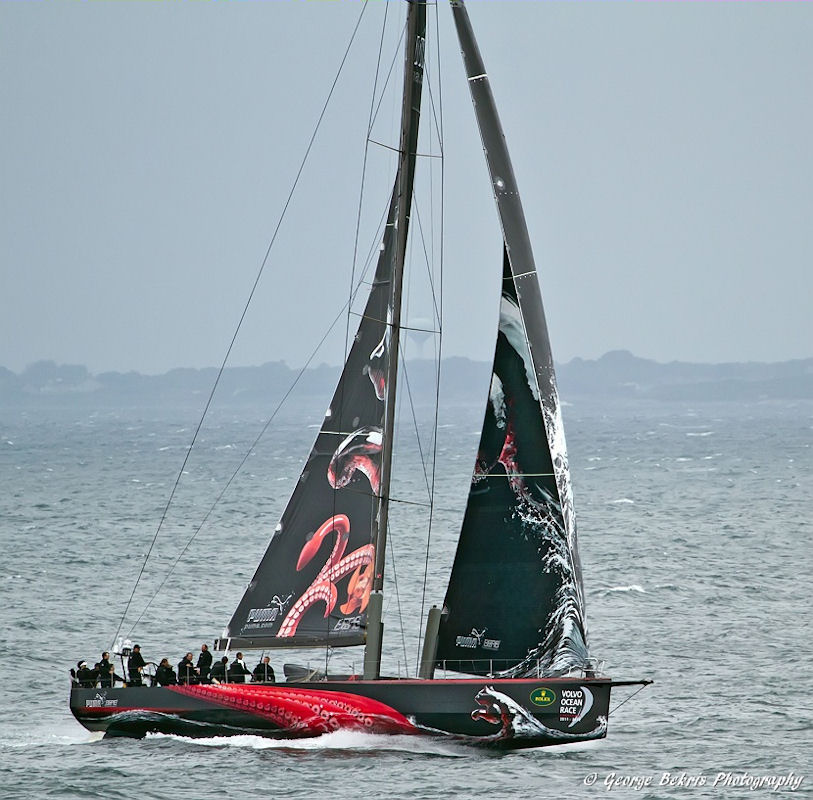
PUMA´s Mar Mostro Volvo Open 70 yacht

PUMA´s sailing yacht Mar Mostro Volvo Open 70 - Credit G. Bekris


“The collaboration between Nortek and the entire PUMA team has resulted in an tool that provides unique information to the sailing crew. They can now measure leeway, a first in sailing, and use it to measure ocean currents much more precisely than ever before,” said Atle Lohrmann, CTO of Nortek.

Nortek started developing this capability during the 2008 Star class Olympic trials with the Norwegian team skippered by Eivind Melleby, also a veteran of the Volvo Ocean Race. Nortek went on to work with the TP52 ocean racing team Caixa Galicia with a predecessor to the existing sensor with Caixa navigator Robert Hopkins.

“This is the biggest advancement in sailing instrumentation since the invention of the GPS,” said Hopkins, who runs performance testing for PUMA and worked with Nortek on the project. “Nortek adapted their new DVL technology to our sailing performance needs, to measure very high speeds along the yacht’s track and very low speeds across it. With Nortek’s history of deploying instruments on buoys in hostile Arctic conditions, we knew that we could trust the Nortek DVL in a race around the world.”

PUMA yacht Mar Mostro running

PUMA´s yacht Mar Mostro running

Leeway is the sideways skidding angle a yacht makes as it sails forward. Leeway can be changed on a Volvo Open 70 yacht by adjusting the daggerboard immersion and canting the keel. The adjustable daggeboards and keel act like wings underwater to counteract the force of the sails. The crew relies on Nortek DVL leeway measurements to optimize PUMA’s sailing yacht Mar Mostro performance at all times, providing the core data upon which every other performance measurement is based.

“I can’t tell you how important it is to finally know how fast the yacht is going in all conditions. We really feel this is the first time yacht speed has been accurately measured without using various types of cumbersome and complex tables within the yacht’s instrumentation. It’s a huge factor for something as simple as a sail change or as complex as routing,” said Ken Read, skipper of the PUMA Ocean Racing team. “Nortek and our entire team, especially the shore crew, worked diligently to make this project a reality. The technology already helped us to win the Transatlantic Race in July, and it will be a key component as we race around the world.”

The Nortek DVL uses acoustic techniques to measure water velocity along each of the four beams. The sensor is mounted in the bottom of the lead bulb of the keel. The acoustic beams are oriented forward, aft and abeam.  Data from each beam is streamed to the on board computer which also receives data from the inertial motion sensor and the keel cant angle sensor. Velocity and orientation measurements are then used to output true forward yacht speed and leeway. Real time currents can be directly estimated by differencing the GPS yacht speed over ground and the yacht speed through the water.

Similar systems were developed for the seismic survey fleet and Nortek recently delivered the first operational navigation system to Fugro-Geoteam in Oslo to be mounted on two Barovane seismic diverters. The diverters keep the towed acoustic streamers separated and like the Puma-DVL, the system measures the angle of attack, the through water speed and ocean currents near the surface. The difference was the space available for the acoustic transponder. “We worked very hard to miniaturize the DVL unit that was installed aboard PUMA’s Mar Mostro yacht,” stated Lohrmann.

The project is an important milestone for Nortek because it demonstrates how well the acoustic Doppler technology performs in very challenging conditions and that the system can be fully integrated into modern navigation systems. The fact that the PUMA Ocean Racing technology team was able to integrate the DVL with other sensors on the yacht is a testament to the quality and sophistication of modern yacht racing.

The PUMA Ocean Racing team sets out on the first leg of the Volvo Ocean Race 2011-2012 on Saturday, November 5, departing Alicante, Spain, for Cape Town, South Africa. The 11-member crew will travel 39,000 nautical miles over nine months, sailing from Alicante to Cape Town, and on to Abu Dhabi, UAE; Sanya, China; Auckland, New Zealand; around Cape Horn to Itajaí, Brazil; to Miami, Florida, USA; Lisbon, Portugal; Lorient, France, finishing in Galway, Ireland in July 2012.

Volvo Ocean Race crews using Kannad R10 Safety Recovery System

October 05, 2011

For the first time in its history, on 29th October, Volvo Ocean Race six Volvo 70 yachts crew members will be carrying a Survivor Recovery System, the Kannad R10 AIS (SRS). Moreover, on each yacht two R10 SRS will be fitted to Ocean Safety’s tried and tested Jonbuoy Recovery Modules. The R10 SRS will automatically start a function if the Jonbuoy is launched. The R10 also fits to lifejackets, thus included in the five out of six teams which will be carrying Kru Sports Pro lifejackets produced by Ocean Safety.

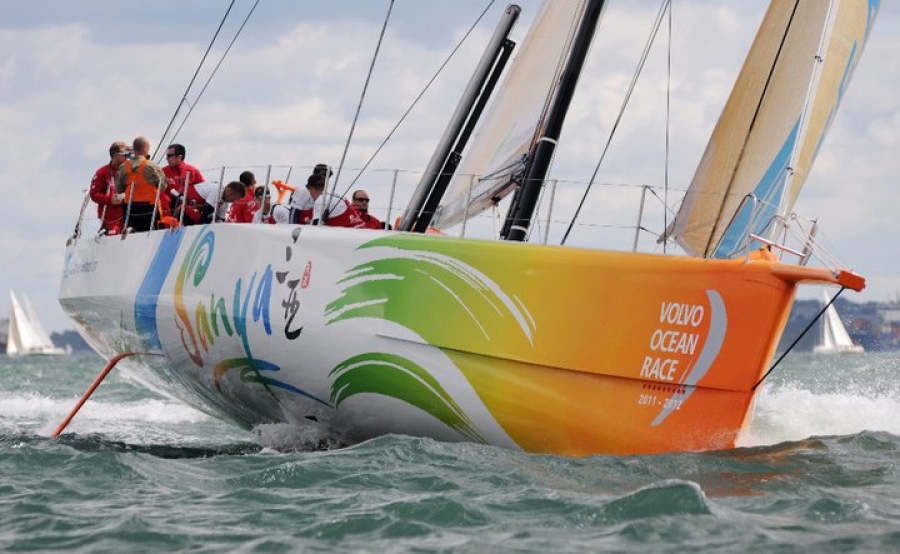
Volvo Ocean Race Team Sanya

Volvo Ocean Race Team Sanya

What makes the R10 SRS so innovative and indispensible is the way it works using AIS (Automatic Identification System) sending out a structured alert message, GPS position and a special identity code directly which will be picked up by AIS receivers on vessels within a four mile radius. The data is very accurate because of the R10’s high precision GPS receiver. The benefits of the R10 mean if a crew member falls overboard, the alert will transmit both onboard the yacht, and also on other vessels in the area.  The yacht will know the person’s position in the sea and have a better chance than ever before of locating and recovering them.

If the yacht itself is in distress, once again, other vessels in the area can rapidly assist, as crew members activate their R10s.  It makes sense that an automatic R10 is also attached to each Jonbuoy so that once a man overboard is supported by the inflated Jonbuoy ‘cradle’ they can also be located and easily recovered from the water.

Mark Hart of Ocean Safety comments, “It is only natural that we would select our  premium products to give the Volvo Ocean Race crews the very best chance of  survival in the unlikely event of having a major problem.  All the equipment we are supplying is designed with withstand the huge demands of the oceans and yet be compact in design for space and weight saving.”

The six yachts are naturally making no compromise to safety.  Each edition of the Volvo race has seen a giant leap forward in advancing onboard safety to protect the crews, and for this gruelling 39,000 mile sprint around the world carrying the R10 SRS provides every crew with the very latest in life preservation, and location and recovery, that technology has developed.

Volvo Ocean Race using Tidetech tactical oceanographic data

October 04, 2011

For the first time in a Volvo Ocean Race, the global ocean current models and sea surface temperature (SST) from Australian oceanographic data specialist Tidetech will be provided to all teams for the 2011-12 event, giving a dynamic element to racing tactics as said by Tidetech director Penny Haire.

Sea temperature and Currents heating up for 2010 Rolex Sydney to Hobart Yacht Race - Tidetech

Sea temperature and Currents heating up for 2010 Rolex Sydney to Hobart Yacht Race - Tidetech

“The Volvo Ocean Race has always been influenced by currents, but the tactical focus has traditionally been on weather in the absence of accurate oceanographic information,” Ms Haire said.

“The combination of SST, current and weather inputs into tactical software will allow navigators to make more informed decisions that could result in a clear performance advantage.”

Ocean currents and trade winds have been relied upon for hundreds of years in trade shipping. Previously data was based on estimates and historical information, providing an average ocean current estimate for a given month.

Tidetech’s scientific team evaluates data from multiple sources including satellites, government agencies and observation (among many others) to establish the exact location of constantly moving currents.

Sea surface temperature is often the critical factor as ocean ‘fronts’ where water changes from cold to warm is where the highest differences of current are likely to be found.

SST can also have an effect on localised winds. Increased temperature can create what amounts to a mini pressure differential above the ocean surface that can alter the wind strength and direction.

Savvy navigators will use the data to position their boats in favourable current of potentially several knots (or avoid heavy current against them).

Volvo Ocean Race marine weather consultant Gonzalo Infante said Tidetech’s data was another tactical element designed to increase the competitiveness of the race.

“Tidetech’s data is about as near to real-time as it is possible to achieve in ocean current predictions,” Mr Infante said.

“Clever tactics will be the deciding factor and if a boat gains even a few minutes it could mean a significant difference in the overall standings.”

Tidetech has provided ocean current data in three consecutive Sydney to Hobart races, supporting the overall and line-honours winners in each race. Other recent accolades include the 2011 Fastnet supporting monohull and multihull record breakers and top three IRC overall boats.

Tidetech is also supplying the 34th America’s Cup with its San Francisco Bay tidal model.