Rolex Fastnet Race Brief

Rolex Fastnet Race Luxury Yacht Charter & Superyacht News

2011 RORC Season’s Points Championship Winners

October 12, 2011

When the 300 places for the Rolex Fastnet Race were filled within 10 days of the entries opening, it became obvious that 2011 would be a notable year for offshore racing with the Royal Ocean Racing Club (RORC). With 300 miles of offshore racing required from each boat before the start of the Fastnet, the early season races were well subscribed with entries and over 100 boats entered three of the qualifying races. Hopes of an easy qualification for the main race of the season (Rolex Fastnet) were dashed by the weather early on. Strong winds and lumpy seas characterised the races and tested the crews and their yachts thoroughly.

Yacht of the Year – Somerset Memorial Trophy:

Rán, JV 72 – Niklas Zennström (GBR)

Yacht of the Year for 2011 has been awarded to Niklas Zennström's JV 72, sailing yacht Rán Credit RolexCarlo Borlenghi

Yacht of the Year for 2011 has been awarded to Niklas Zennström's JV 72, sailing yacht Rán Credit RolexCarlo Borlenghi

The Somerset Memorial Trophy for the Yacht of the Year for 2011 has been awarded to Niklas Zennström’s JV 72, Rán. Niklas and his crew have had an outstanding season, winning IRC Overall in the Rolex Fastnet Race in consecutive years, the first time this has been achieved since Carina II in 1955 and 1957. Rán also won the Rolex Mini Maxi World Series for the second year in the row as well as obtaining a good result in the Rolex Sydney-Hobart Race. Rán is currently planning to head to the Caribbean over the winter to race and the team are looking forward to competing in the RORC Caribbean 600.

Best Performance of a British Yacht Overseas – Dennis P Miller Trophy:

British Soldier, A 40 – Army Sailing Association (GBR)

The Dennis P Miller Trophy for the performance of a British Yacht Overseas, has been awarded to British Soldier. Skippered by Lt Col Nick Bate, the yacht travelled from the UK to the Caribbean to compete in the RORC Caribbean 600 as the first race of the Atlantic Ocean Racing Series in which it was the smallest yacht. They then competed in the Annapolis-Newport Race, Transatlantic Race (Newport to Lizard) and Rolex Fastnet Race, covering 11,000 miles. The yacht had a different crew for each race, including an injured soldier/amputee in each event. In total, 69 soldiers took part, only four of whom had ever crossed an ocean before.

Sail yacht British Soldier, the Army Sailing Association's yacht wins the Dennis P Miller Trophy for best performance of a British yacht overseas Credit Tim Wright - www.photoaction.com

Sail yacht British Soldier, the Army Sailing Association's yacht wins the Dennis P Miller Trophy for best performance of a British yacht overseas Credit Tim Wright - www.photoaction.com

In the IRC Classes the best five offshore races are counted towards the RORC Season’s Points Championship. These were heavily contested and in some of the classes, the results were undecided until after the Cherbourg Race, the last race of the season.

IRC Overall – Jazz Trophy: Tonnerre de Breskens 3, Ker 46 – Piet Vroon (NED)

2011 IRC Overall Winners - Piet Vroon's Tonnerre de Breskens 3 Credit Owen Buggy - www.plugphotography.com

2011 IRC Overall Winners - Piet Vroon's Tonnerre de Breskens 3 Credit Owen Buggy - www.plugphotography.com

As in 2010, Piet Vroon’s Ker 46, Tonnerre de Breskens 3 swept the board in IRC Overall, finishing the season 62.5 points ahead of Niall Dowling’s J/111 Arabella. As well as the trophies for IRC Overall and IRC One, Tonnerre will also collect the Stradivarius Trophy for the best overseas yacht.

Alan Paul Trophy – Consistent High Performance in IRC Overall:

Arabella, J/111 – Niall Dowling (GBR)

The Overall results in IRC, with all races to count, were dominated by a few intrepid boats travelling around the country to also take part in the RORC races not run from the Solent. Niall Dowling’s J/111, Arabella was one of these boats, competing in 10 races over the course of the season and winning the Alan Paul Trophy for consistent high performance in IRC Overall.

Europeans Trophy – IRC Zero: Venomous, CM 60 – Derek Saunders (GBR)

IRC Zero went to Derek Saunders and the CM 60, Venomous. By completing five races, they secured their victory from Bob, Rob Gray and Sam Laidlaw’s Farr 52, who came in second.

Bob also win the Peter Harrison Youth Trophy for the season having taken part in all their races with at least 45% of crew under the age of 25.

Trenchemer Cup – IRC One: Tonnerre de Breskens 3, Ker 46 – Piet Vroon (NED)

IRC One was led from the start by Piet Vroon’s Ker 46, Tonnerre de Breskens 3 and despite good attempts from two other Ker designs: Jonathan Goring’s Ker 40, Keronimo and Mike Greville’s Ker 39, Erivale III, they could not be knocked off the top spot.

Keronimo came second in IRC One with Erivale in third. Freddie Neville-Jones, sailing on Erivale was awarded the Duncan Munro Kerr Youth Challenge Trophy for the crew member under 25 who has sailed the greatest number of offshore miles in the season. In total he raced 1,338 nautical miles, including the Rolex Fastnet Race.

Emily Verger Plate – IRC Two: Joopster, J/122 – Neil Kipling (GBR)

In IRC Two Neil Kipling’s J/122, Joopster came in first with a consistent set of results. Second and third place were close with Ross Applebey’s Oyster 48, Scarlet Oyster coming in ahead of Peter Rutter’s Grand Soleil 43, Quokka 8. Scarlet Oyster relished the heavier conditions, especially in the Myth of Malham and Morgan Cup races where she came first in class.

Quokka was crewed by a team from Sailing Logic who missed winning the Roger Justice Trophy for the best sailing school yacht in IRC Overall, after a good result in the Cherbourg Race allowed their fellow Sailing Logic yacht, Visit Malta Puma, to move ahead in the points.

Grenade Goblet – IRC Three: Foggy Dew, JPK 10.10 – Noel Racine (FRA)

IRC Three was won for the second year in a row by Frenchman Noel Racine’s JPK 10.10, Foggy Dew. With four race wins in class this season, the boat was going to be hard to beat from the very beginning. Foggy Dew was raced fully crewed, but the next four boats in the class were all Two-Handed boats, showing the continual increase in popularity of this discipline. Peter Olden and Nigel Pipe, sailing the A 35, Solan Goose of Hamble and Nikki Curwen and Alex Adams, sailing the J/105, Voador came in second and third respectively.

Cowland Trophy – IRC Four: Jean Yves Chateau’s Nicholson 33, Iromiguy (FRA)

IRC Four was also won for the second year in a row by the same French sailor: Jean Yves Chateau’s Nicholson 33, Iromiguy. They had a good finish to the year winning their class in the Rolex Fastnet Race. This result put them ahead of the next two boats in class: Matthias Kracht’s JPK 9.60, Ultreia! and Ian Braham’s MG 346, Engima. Only 5.4 points separated the second and third places at the end of the season.

Psispina Trophy – Two Handed Winners: Ultreia!, JPK 9.60 – Matthias Kracht (FRA)

Ultreia! was beaten to first place in IRC Four, but managed to hold an unbeatable lead in the Two-Handed Class by the final race in the season. They were so confident of the win in this class that they raced fully crewed in the Cherbourg Race to try and win IRC Four as well. Unfortunately for them, Iromiguy held them off for the victory. Nicolas de la Fourniere and Martin Imbert’s X34, Exile/Mirabaud came back from their win in the 2009 season to try to reclaim the Two-Handed trophy, but could only manage second place with Solan Goose coming in third.

The Assuage Trophy: La Réponse, First 40 – Andrew McIrvine (GBR)

The Assuage Trophy is a championship for RORC members and is awarded to the yacht with the best results from the Cherbourg Race plus 3 other races from the Cervantes Trophy, Morgan Cup, Myth of Malham and Cowes-Dinard-St Malo races. This year the trophy has been won by the RORC Commodore, Andrew McIrvine, with his First 40, La Réponse. Much to the joy of the crew who were disappointed to come fourth in IRC Two, only half a point behind Quokka, after retiring with gear failure from the Rolex Fastnet Race.

A full list of the annual trophies and awards can be found HERE.  These will be presented at the RORC Annual Dinner held at the Banqueting House in Whitehall on Saturday 19th November.

Niklas Zennström’s Rán winner of the Rolex Fastnet Race and the prestigious Fastnet Challenge Cup

August 19, 2011

For the first time in more than 50 years, the Rolex Fastnet Race has a back-to-back handicap winner. Following on from her victory under IRC in 2009, this afternoon the Royal Ocean Race Club has confirmed that Niklas Zennström’s Rán (GBR) is once again the overall winner of the Rolex Fastnet Race and the prestigious Fastnet Challenge Cup.

Past double winners of the race include Jolie Brise (1929 and 1930), yacht designer Olin Stephens’Dorade (1931 and 1933), John Ilingworth’s Myth of Malham (1947 and 1949) and most recently Richard Nye’s Carina II (1955 and 1957). It should be noted that Carina II is not the same boat as the one of this same name being campaigned in this year’s Rolex Fastnet Race by American Rives Potts.

The Judel-Vrolijk designed 72ft Rán finished in Plymouth on Tuesday at 12:53:44 and even then she was looking like a strong contender for the overall prize, but this afternoon her win was officially confirmed by the Royal Ocean Racing Club.

Under IRC, Rán’s time corrected out so that she beat ICAP Leopard (GBR) by 4 hours, 38 minutes and 18 seconds, and Mike Slade’s 100 foot supermaxi in turn a massive 10 hours, 40 minutes ahead of third placed Vanquish (USA), the Oakcliff All American Offshore Team’s STP65.

Niklas Zennström's RÁN have been confirmed as overall winners of the 2011 Rolex Fastnet Race and the prestigious Fastnet Challenge Cup. Rolex/Daniel Forster

Niklas Zennström's RÁN have been confirmed as overall winners of the 2011 Rolex Fastnet Race and the prestigious Fastnet Challenge Cup. Rolex/Daniel Forster

“It’s fantastic. It’s still hard to believe almost. Everyone on the team is very, very happy and very pleased,” said Zennström of his second consecutive Rolex Fastnet Race victory, adding that defending their title was one of his sailing team’s primary objectives for the year. “You may say ‘we’re going to race to win’, and that is really what we were going for, but also these races have so many different variables that you cannot really take into account. Its great when it works out.”

Navigator Steve Hayles agreed: “We like the Fastnet Race and it has treated us well again on Rán. It was a bit of everything and felt like a pretty tough race at times. It was great.

While their campaign in 2009 was well planned, this year Zennström says he tried to take their campaign to a new level. “The way we sailed as a team – we’ve never sailed better and because we were very well prepared, I think we executed very well. We sailed the boat very hard, we were never relaxed, we were very focused all the time and we pushed the boat a lot. When we rounded the Rock, on the way back, we pushed the boat as hard as we could, and I think that we pretty much held our time on the water. I think we lost maybe 40 minutes or even less on Leopard on the way back, so we sailed very, very well. The strategy was great, well-implemented and we didn’t have any crew mistakes. The team did a very good job.”

Rán herself has seen a marked change compared to her two year old self with 500kg shed from her keel bulb at the beginning of 2010. Since then there haven’t been any major changes, although the team have been constantly making small refinements.

According to Zennström, the boat is now well-developed and the crew very comfortable sailing her. “This is the third year we have been racing the boat, and we have done quite a few offshores and I think that is important because not only do we know the boat very well, but we also have very, very good confidence. Having done two Sydney Hobarts with the boat, and one Fastnet Race, and one very windy Middle Sea Race without breaking, we knew even if it was rough the boat could take it and we were confident we could push harder and harder. So that is very important: sometimes not making so many changes in a boat can be a good thing, because you feel the boat is in very good trim.”

Navigator Steve Hayles felt the forecast, while favouring the upper echelons of the Rolex Fastnet Race fleet, wasn’t quite as favourable for them as compared to two years ago. “We knew there was a bit more reaching, and our boat is better upwind. We had to work hard on getting out of the Solent and the Channel and that went pretty well and then we hung on for dear life to be honest…as close as we could.”

Their main competition had been Karl Kwok and Jim Schwartz’s Beau Geste, and there was some friendly rivalry between the two boats as Gavin Brady skippered the Farr 80, but is also acting as tactician this year on Zennström’s TP52 in the Mediterranean. “He slammed (tacked) on us a couple of times in the Solent and once down the Channel. It was a good race,” recalled Hayles.

So will Rán be back to defend her title for a second time? Zennström says it is too early to decide at this stage, but it is something they would certainly strongly consider. “The achievement of winning two back-to-backs is pretty amazing and more than we could have hoped for. After the first win – and when we started to think about this year’s planning – this was the thing we had to go for.”

As of 1700 BST today, backmarker the Pilot Cutter Morwenna still is 30 miles short of the Fastnet Rock with 281 miles to go to reach Plymouth. At present 168 boats remain at sea with 39 retired and 107 finishers.

The Rolex Fastnet Race finishes in Plymouth Harbour. The main trophy for overall victory in the Rolex Fastnet is the Fastnet Challenge Cup. In addition, there are more than 30 other trophies that will be awarded at the prize giving on Friday, 19 August at the historic Royal Citadel. The Citadel, home to the 29 Commando Regiment Royal Artillery, overlooks Plymouth Sound and Sutton Harbour, where the majority of the fleet will berth.

Rolex Fastnet Race: SY Rambler 100 capsized in the Celtic Sea

August 16, 2011

At midnight, Monday 15 August, Eddie Warden Owen, Chief Executive of the Royal Ocean Racing Club received a call from Mick Harvey, Project Manager of George David’s superyacht Rambler 100 (USA). Harvey spoke about the harrowing incident when the 100′ Maxi Rambler 100 capsized in the Celtic Sea during the Rolex Fastnet Race.

George David's Rambler 100 capsizes in the Celtic Sea- Credit- Rolex Carlo Borlenghi

George David's Rambler 100 capsizes in the Celtic Sea- Credit- Rolex Carlo Borlenghi

The incident happened just after SY Rambler 100 rounded the Fastnet Rock at 17:25 BST. At the time,Rambler 100 were leading the monohull fleet and vying for monohull line honours in the Rolex Fastnet Race which started on Sunday 14th.

Mick Harvey’s account of the incident was charged with emotion. The tough Australian, who now lives in Newport, Rhode Island (USA), is a seasoned veteran, but he was understandably shaken by the incident:

“Soon after rounding the Fastnet Rock, the wind went southwest, right on the nose. We were beating into big seas, launching Rambler off the top of full size waves. I was down below with navigator, Peter Isler when we heard the sickening sound of the  keel breaking off. It was instantaneous; there was no time to react. The boat turned turtle, just like a dinghy capsizing. Peter Isler issued a Mayday and we got out of there as quickly as we could.”

The EPIRB had been activated and a number of crew climbed over the guardrails and onto the hull as the boat capsized and helped those swimming to safety. The Atlantic swell made it difficult for the crew to get out of the water however, working together, 16 of the crew managed to scale the upturned hull.

Five of the crew were swept away by the waves out of reach of the stricken Maxi and these included Skipper, George David and partner Wendy Touton who were in the water for two and a half hours. This group linked arms, forming a circle. Valencia Coastguard diverted a local fishing boat, Wave Chieftain to assist, which winched the crew on board. Earlier a helicopter had been scrambled from Shannon Airport helicopter, Wendy Touton was airlifted for medical attention due to the effects of hypothermia and the four remaining crew were taken to Baltimore Harbour where they were re-united with the 16 crew rescued by the Baltimore Lifeboat.

“It was a scary moment. One that I will never forget,” admitted Mick Harvey. “I can’t begin to tell you how relieved I am that all of the crew are safe. The town of Baltimore has given us a wonderful welcome. I can not thank our rescuers and the people of this lovely village enough. Wendy is in Kerry Hospital and doing fine, I am just so relieved that everybody is okay.”

Rolex Fastnet Race to start in 2 days

August 12, 2011

With just over two days left until the start of the Rolex Fastnet Race, a press conference was held yesterday in the Sir Max Aitken Museum in Cowes on the Isle of Wight. It was a case of standing room only for the international press that will be covering the Rolex Fastnet Race, the oldest and most prestigious offshore yacht race in the world.

L-R Charlie Enright (Vanquish), Henry Smith (Yeoman of Wight), Brian Thompson (Maxi Banque Populaire), George David (Rambler 100), Campbell Field & Ross Field (Hupane), Ken Newman (Marinero), Mike Sanderson (Team Sanya), Bernard Stamm  (Cheminees Poujoulat). Photo: RORC/Paul Wyeth

L-R Charlie Enright (Vanquish), Henry Smith (Yeoman of Wight), Brian Thompson (Maxi Banque Populaire), George David (Rambler 100), Campbell Field & Ross Field (Hupane), Ken Newman (Marinero), Mike Sanderson (Team Sanya), Bernard Stamm (Cheminees Poujoulat). Photo: RORC/Paul Wyeth


Eddie Warden Owen, Chief Executive of the Royal Ocean Racing Club summed up the quality and quantity of this year’s race: “The 2011 Rolex Fastnet Race is not just a record fleet, it is a fantastic fleet from professional high performance racing yachts to family owned production yachts raced by corinthian sailors. The biggest yacht is a 140′ Trimaran, Maxi Banque Populaire and the smallest,Brightwork a 30′ cruising yacht. It is an amazing array of yachts, quite outstanding.”

RORC Commodore, Andrew McIrvine will be racing his First 40, La Réponse and the Commodore has had to qualify for this race just like all of the 300 hundred yachts racing under IRC.

“Besides a large fleet of professional teams racing, there are thousands of sailors competing for the Fastnet Challenge Cup. The Rolex Fastnet Race is a challenge for any of the competitors and this year, the Royal Ocean Racing Club has had a really windy season, so in qualifying for the Race, the competitors are very well prepared. This race was sold out in 11 days back in January. It looks like we are going to have a fantastic race and everybody is really looking forward to it,” commented McIrvine.

George David, skipper of Rambler 100, has been enjoying an incredible season, winning the RORC Caribbean 600 overall and taking line honours in last month’s Transatlantic Race. The 100′ canting keel Maxi is the hot favourite to take line honours for the monohull division, but David is not taking anything for granted: “The weather forecast suggests that we should have wind for the race, there is disagreement about the direction with different forecast models, but it looks as though we should have wind of 12-20 knots, maybe more. We think we could have a shot at the record, but we will see how things go. My main concern when racing is that in order to come first, first you have to finish.”

Ross and Campbell Field, the father and son team from New Zealand are both highly accomplished professional sailors, but are new to the Class 40 scene and this will be their first race together on Hupane. There are over 20 Class 40s in the Rolex Fastnet Race, arguably the most competitive fleet assembled this year.

“I have done a lot of sailing with my Dad and we get on just fine. We are new to the class and we decided to enter this race with a very strong field to see where we are compared to the experienced and successful teams, but we are under no illusions, this is a very good fleet of Class 40s. On board, sometimes I call him Dad, other times Ross, it depends on what message we are trying to get across.” said Campbell.

Henry Smith is a squad member of the British Keelboat Academy and will be skippering Yeoman of Wight, which has been loaned to the Academy for young aspiring sailors by former RORC Commodore, David Aisher: “It has always been a personal goal, it is an iconic race and one that I have always wanted to do and this will be my first time. The team on Yeoman are all young, the average age of the crew is 21 and it is very exciting for all of us to be competing, a bit of an Everest really.”

In sharp contrast to the young crew on Yeoman of Wight, Ken Newman will be competing in his 27th Fastnet Race in Marinero. Ken reminisced about his first race: “I am in awe sitting here with these supreme sailors. I am glad to be here, but at the age of 82 and a quarter, I am glad to be anywhere! My first Fastnet was in 1957 when 40 boats left Cowes in a gale and by the time we got to Brixham, we had lost both halliards. I had to row ashore to get new blocks which I don’t think I paid for. How times have changed since then.”

Fastnet Rock

Fastnet Rock

The largest yacht competing in the Rolex Fastnet Race is without doubt the quickest. The 140′ Trimaran, Maxi Banque Populaire is skippered by the legendary Loick Peyron and amongst the 14 crew on board is helmsman, Brian Thompson, holder of over 20 world records. “Banque Populaire is capable of reaching and maintaining a speed of nearly 40 knots for several hours. We recently completed a 360 mile race in 12 hours. My dream would be to finish the race with just one night at sea and get in late on Monday night, but the weather may not cooperate.  We would like to thank the RORC for allowing big multihulls into the race and add an extra dimension to it. This year, it is an unbelievable fleet, the best Rolex Fastnet Race ever, possibly the best ocean race ever.”

The Rolex Fastnet Race starts on Sunday 14th August at 1100 BST. All of the competing yachts will be fitted with the latest tracking systems from Yellowbrick and many of the yachts are capable of sending back messages, pictures and even video of the drama as it unfolds.

Tidetech shows complex tidal influences for 2011 Panerai British Classic Week in Cowes

July 13, 2011

A recently-developed, high-resolution tidal model for the Solent and UK south coast has revealed the complexity of tidal streams and currents in this competitive racing area. The model details an area including Southampton Water, the entire Solent, the southern sectors of the Isle of Wight and the entrance to Chichester Harbour.

Tidetech shows complex tidal influences for 2011 Panerai British Classic Week in Cowes

Tidetech shows complex tidal influences for 2011 Panerai British Classic Week in Cowes

Tidal data of this resolution has previously been the domain of government agencies, oil companies and specialist environmental modelling agencies with access to super computers. Now able to be managed on powerful laptops, the complex calculations required to create the models have been translated into easy-to-view visual tools available to competitive sailors and maritime users.

The company at the forefront of this data modelling is Tidetech, an oceanographic data specialist comprising the world’s foremost tidal surge modelling scientists and navigation experts. Of significant note, Tidetech has been recruited to supply the 34th America’s Cup with its San Francisco Bay model.

Lead scientists Dr Roger Proctor and Dr Roger Flather have between them over 60 years of research experience with the Proudman Oceanography Centre (now the National Oceanography Centre), the world’s leading centre for tidal prediction. Dr Proctor also provided elite sailing support to the British Olympic Sailing Team at five consecutive Games between 1988 and 2008.

Tidetech director Penny Haire said races in the Solent were more often influenced tactically by tides than by wind.

“This new information is so detailed that it will show tacticians how and why one particular side of a course is favoured over another and help them to position their bow in front at the next mark,” Ms Haire said.

“The south coast model clarifies various aspects of Solent currents that many competitors have found tricky in the past… for example, the model clearly shows the area of reduced tide in the lee of the Bramble Bank along with the complexities of the Hill Head region.

“The model shows lots of areas that could well influence competitors’ tactics… it’s quite revealing, as there are areas of localised tidal acceleration that occur within very short distances.

“Over Sturbridge Shoal and at Lepe, for example, there’s a visible half-knot variation within 100m distance and that could make a considerable difference to yachts within this range.”

The detailed information is available in GRIB format but also in an online viewer that allows any subscriber to see the relevant data on a computer, iPad or smart phone and make their own custom tidal atlas which can be downloaded as a PDF and printed for taking afloat.

Tidetech has provided data to vessels in many of the world’s biggest races and regattas including the Rolex Sydney to Hobart, San Francisco Big Boat Series, Melges 32 Worlds and many more.

The south coast model is also being expanded to cover the Dorset coastline in time for the Fastnet race.

Rolex Fastnet Race 2011: Tortoises and Hares

May 20, 2011

The Rolex Fastnet is more than just a race. When the British Isles weather conspires to deliver conditions typical of the time of year it becomes a true test of human endeavour. It is for this reason that the 608-nautical mile race consistently attracts a large and varied fleet: man and machine set against the elements. The 44th edition, which starts from Cowes on Sunday, 14 August 2011, is no exception. The entry list opened in early January and within ten days was closed. The 300-boat limit reached with record speed.

Spectators at the Royal Yacht Squadron Photo credit Rolex  Carlo Borlenghi

Spectators at the Royal Yacht Squadron Photo credit Rolex Carlo Borlenghi

The fateful 1979 race still holds the record for most yachts to start: 303. That number may well be broken this year. Organiser, the Royal Ocean Racing Club (RORC), inundated with requests from the ‘professional’ classes such as the Volvo Open 70s, the IMOCA 60s, Class 40s and Multihulls, has determined that these entrants will be counted above the 300-boat limit: an excellent decision for all those with an ambition to take on one of the biggest, offshore classics in the world of yacht racing.

Sailing yacht RAMBLER, George David Rolex Fastnet Race 2007 Credit - ROLEX Carlo Borlenghi

Sailing yacht RAMBLER, George David Rolex Fastnet Race 2007 Credit - ROLEX Carlo Borlenghi

Speed Machine

The Rolex Fastnet traces its history back to 1925. Held biennially since 1931 (except for a break between 1939 and 1947) the race to the Fastnet Rock, off the southwestern tip of Ireland has attracted a mix of sailing’s royalty – the stars of the sport, and, a huge number of more Corinthian of participants, all ready to test themselves over the course. Little surprise that two of the fastest, most advanced yachts of the age headline the entry-list. Course record holder Mike Slade and the 100-foot (30.5-metre) ICAP Leopard sailing yacht  (GBR) are scheduled to go head-to-head with 2007 rival, American, George David. This year the odds may not favour Slade so much as they did four years ago when he set the benchmark monohull time of 44 hours 18 minutes. David has a new Rambler. Rambler 100 to be precise, the former Speedboat, and generally regarded as the Maxi of her generation … potentially. She has yet to be tested properly against the elite of Europe or the Southern Hemisphere. There are no guarantees in yacht racing, but if the winds are favourable, expect a dramatic dogfight all the way to the finish in Plymouth.

George David, owner of RAMBLER & Mike Slade, owner of ICAP LEOPARD, second and first boats across the finish line Rolex Fastnet Race 2007 ©PhotoROLEX Carlo Borlenghi

George David, owner of RAMBLER & Mike Slade, owner of ICAP LEOPARD, second and first boats across the finish line Rolex Fastnet Race 2007 ©PhotoROLEX Carlo Borlenghi

Winning Machine

After a truly memorable first race in 2009, when they won overall, Niklas and Catherine Zennstrom are returning with their all-conquering 72-foot Rán 2 (GBR). The mostly British crew of the Judel/Vrolijk design have proved her ability on both long and short courses, wrapping up the inaugural Mini Maxi Rolex World Championship in 2010. The Rolex Fastnet, though, is a race that allows powerful legs to be stretched. “We’ve now done quite a lot of offshore races,” remarks Zennstrom, “the Rolex Fastnet is probably the top race together with Rolex Sydney Hobart. As one of the world’s oldest offshore races it has such a pedigree.” Zennstrom believes the fact that it is held every second year is one of its key attractions along with the sheer number of participating yachts.

Niklas and Catherine Zennstrom, RAN, overall winner 2009 Credit Rolex  Daniel Forster

Niklas and Catherine Zennstrom, RAN, overall winner 2009 Credit Rolex Daniel Forster

Winning in 2009 was understandably a “dream come true” for Zennstrom. With the disappointment of pulling out in the storm-ridden 2007 race still fresh, he is not assuming a second win will come easily. “Winning two races in a row is extremely unlikely. However when we planned this year’s races [the Rolex Fastnet] was an obvious choice. We love the challenge and we know the boat is still very competitive in the right conditions. But will we get the right conditions? Last time it was a big boat race, this time it may not and you may end up with a 40-foot cruising boat winning. That’s the nature of the offshore handicap races.”

As the founder of Skype, Zennstrom is one of a myriad of famous names to have taken on the Rolex Fastnet. Not all have been successful in their efforts, but like Zennstrom, many have returned time and again relishing all that the race entails. The list of well-known names from the world of business and commerce who have competed over the 86 year history of the race includes, Charles Dunstone (founder of Carphone Warehouse), media mogul Ted Turner, marketer Ludde Ingvall, Noel Lister (founder of MFI), Sir Maurice Laing (former CEO of Laings), libel lawyer Peter Carter Ruck, Ron Amey (former CEO of Amey) and newspaper magnate Sir Max Aitken. The race has been touched by politics with former Prime Minister, the Right Honourable Edward Heath and in popular culture by Simon Le Bon of Duran Duran.

Measured Machine

The Rolex Fastnet is not just about big yachts and big names. Reaching 300 entrants relies on participation of a considerable number of small, lesser known, yachts and crews for whom the taking part really is more important than the winning, even if deep down they harbour secret ambitions of the glory. With over one third of the fleet represented by boats of 40-foot or less, there are plenty of stories and rivalries to focus on.

One of the lowest rated, and therefore slowest, boats is the Contessa 32 Rainbow (GBR), skippered by Lee Egan. “There are four of us, all in our forties. I have been racing since my early twenties, working my way back from the bow. Chris Dunkerley has been sailing with me for the last three years and is inexperienced enough to enjoy frequenting the foredeck!” says Egan, who has done the race once before and is looking forward to skippering a boat for the first time. Whilst Slade, David and Zennstrom will contemplate a fast ride, Egan expects to be at sea for five to six days.” To be honest we just want to complete the race knowing that we have done everything we can to sail as fast as we can all of the time. If we have some long, windy beats then we should do pretty well but if it’s a light airs race then we’ll be happy to arrive in Plymouth before they have run out of Guinness.”

The main trophy for overall victory in the Rolex Fastnet is the Fastnet Challenge Cup. In addition, there are more than thirty additional trophies that will be awarded at the prize giving on Friday, 19 August at the historic Royal Citadel, home of the 29 Commando Regiment Royal Artillery, overlooking Plymouth Sound and Sutton Harbour, where the majority of the fleet will berth.

The first signal for the start of the 2011 Rolex Fastnet Race sounds at 10:50 BST on Sunday, 14 August.

Rolex Fastnet Race 2011: RORC confirms huge interest in iconic race

January 20, 2011

250 entries within a week brings race close to limit Record-breaking rush to ensure a place

Entry for one of the world’s most popular yacht races opened at midnight on Sunday 9 January and by midday Monday, nearly 100 entries had signed up, with an unprecedented number doing so in the early hours of the morning. The trend continued over the next couple of days when the halfway mark of 150 boats was reached for the race which has a maximum entry of 300 boats. Within a week, 250 boats had entered.

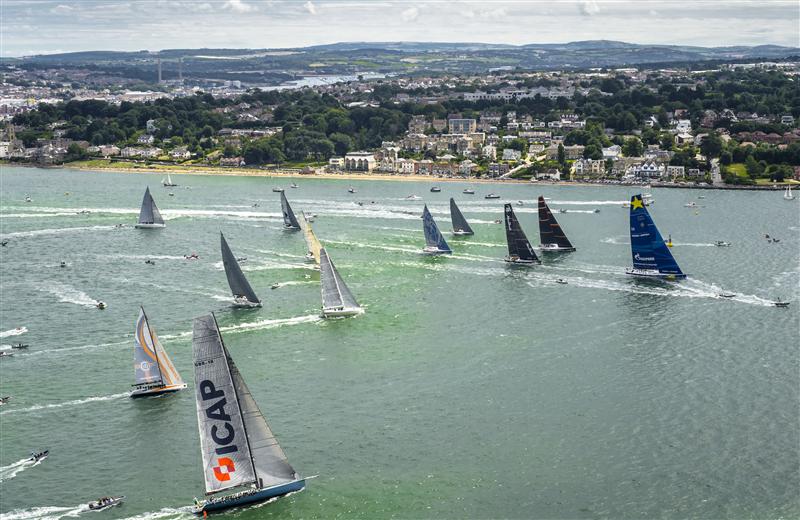
Rolex Fastnet Race 2009 - Photo Credit ROLEX Carlo Borlenghi

Rolex Fastnet Race 2009 - Photo Credit ROLEX Carlo Borlenghi

“We expected an initial rush of interest because people were registering the details about their boat on our REMUS on-line entry system over Christmas,” commented the RORC Racing Manager Ian Loffhagen. “However nothing had prepared us for this unprecedented amount of interest in the race. We are obviously delighted at how popular the race has become with entries from all over the world.”

Officially the first boat to enter was Fred Mundle’s X332 Mardy Gras, only 50 seconds after entry opened. Another notable early entry is Ondeck’s Farr 65 which will be chartered by the British Limbless Ex Service Men’s Association (BLESMA).

Of the high profile race boats entered, the two canting keel 100 footers, ICAP Leopard sailing yacht and Rambler 100 will be the ones battling to take line honours in the Race. Mike Slade’s ICAP Leopard and George David’s previous Rambler had a huge fight in the 2007 Rolex Fastnet Race, with Leopard taking the silverware. However, this year, George David has chartered the Juan K designed Speedboat, re-named Rambler 100, which will put Mike Slade under a lot of pressure.

“The Rolex Fastnet is an iconic race,” said Slade. “We would not miss it for the world and we are pleased to see our American friend George David coming back with a new boat. It will make for a terribly exciting race.”

Also entered is the 2009 Rolex Fastnet Race winner, Niklas Zennström’s J.V. 72, Rán, hoping to make it two in a row, but he will have strong competition from RORC Caribbean 600 Race winner, Hong Kong’s Karl Kwok in his Farr 80, Beau Geste; 2009 Rolex Middle Sea Race winner, Andre Soriano in his Mills 68 Alegre, as well as a group of very competitive 52’ grand prix racers.

Leading this 50 footer pack is the 2010 Rolex Middle Sea Race winner, the TP52 Lucky, owned by Breyon Ehrhart from the USA and four boats from Germany who are making a serious attempt to win the race this year: Uwe Leben’s RP57, Scho-Ka-Kola; the SKWB’s J.V.53 Bank von Bremen and Haspa Hamburg and Norddeutsche Vermögen, both from Hamburgischer Verein Seefahrt.

There are 15 Class 40’s entered so far and the next biggest classes are the Sigma 38 and First 40.7s, with 14 boats each and so far, 14 different countries will be represented in the 2011 Rolex Fastnet Race.

Trish Jenkins

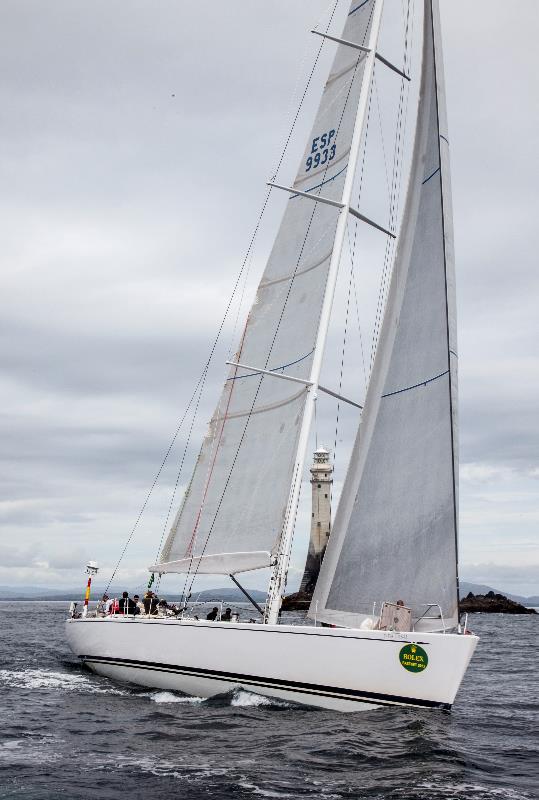
Overall winner, sailing yacht Rán, at the Fastnet Rock. Photo Rolex  Carlo Borlenghi

Overall winner, sailing yacht Rán, at the Fastnet Rock. Photo Rolex Carlo Borlenghi