Oceana Brief

Oceana Luxury Yacht Charter & Superyacht News

OCEANA uses innovative system to detect microscopic particles of crude oil in the Gulf of Mexico

September 08, 2010

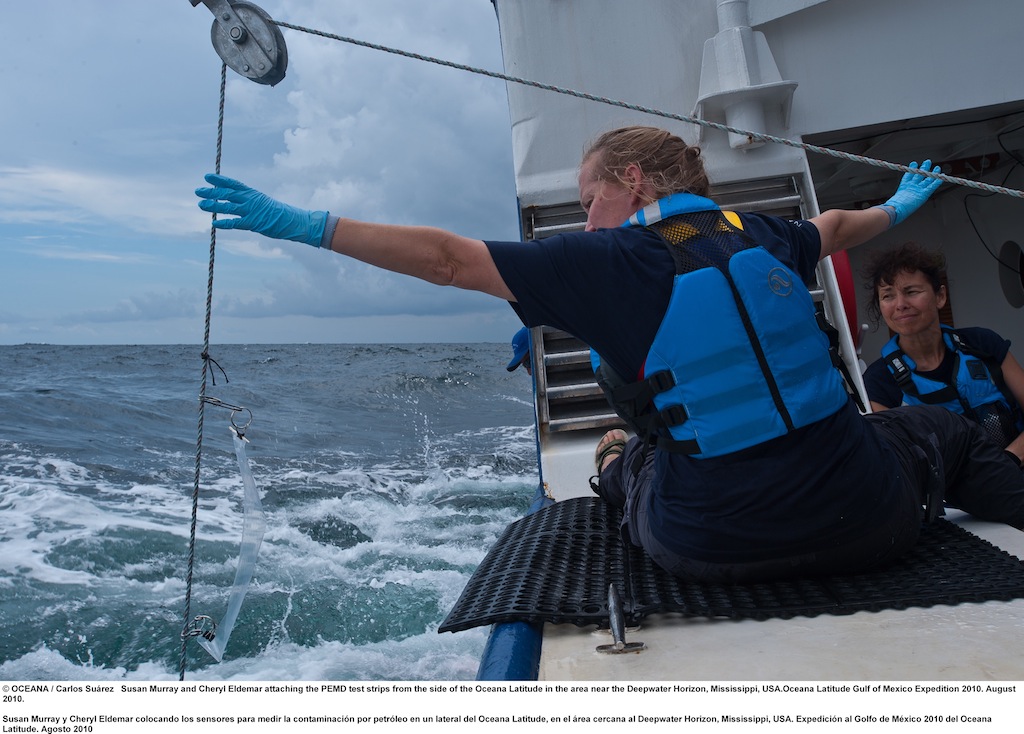
Oceana, an international marine conservation organization, has placed a series of stations for measuring toxic hydrocarbon pollution around the BP Deepwater Horizon in the Gulf of Mexico. This pioneering project will make it possible to detect the toxic fraction of petroleum hydrocarbons dissolved into the waters that surround the damaged rig. It will also evaluate the plume of hydrocarbons that was detected last June and announced two weeks ago heading away from the Deepwater Horizon wellhead toward the southwest at a depth of hundreds of meters.

Image courtesy of Oceana/Carlos Suarez

The group of scientists participating in the expedition, led by oceanographer Xavier Pastor aboard the Oceana Latitude, has invested two weeks in installing and recovering the measuring system. The project was designed by oil pollution specialist Dr. Jeffrey Short, one of the United States Government’s researchers who tracked the effects of the Exxon Valdez spill when he was part of NOAA. He was also on the scene in Galicia to study the evolution of the situation produced by the catastrophe brought on by the Prestige.

Image courtesy of Oceana/Carlos Suarez

Now, from his position as Oceana’s Pacific Scientific Director, he is working to prevent new offshore oil operations in Alaska from starting up. Short explains that no other group has used the very sensitive system of sensors like Oceana’s despite the fact that the use of dispersants has fragmented the crude particles to make them invisible. When the measurements are analyzed, we will obtain reliable data on the extent and intensity of the area’s true pollution.  We believe this study will go a long way towards answering questions about how long the toxic components of oil will last in the deep waters of the Gulf, and whether their concentrations are great enough to cause adverse effects on biota”.

Image courtesy of Oceana/Carlos Suarez

Oceana’s group of researchers aboard the Latitude has installed hundreds of vertical measuring sensors at sixteen points on the Gulf. They range from the surface down to a depth of two thousand meters, distributed at a depth of every 100 meters. After a four-day interval to allow the sensors to absorb dissolved hydrocarbons, the ship’s crew retrieved the sensors for chemical analysis. The results from these analyses will make it possible to determine the levels of pollution from toxic hydrocarbons in the area that the BP rig occupied; and also in other areas of the Gulf to the southwest.

According to Xavier Pastor, Director of Oceana for Europe and in charge of this expedition, ”the research carried out by the team led by my colleagues, Jeffrey Short and Susan Murray, is one of the most important and ambitious projects of the ones included in  Oceana’s expedition to the Gulf of Mexico. The campaign began at the beginning of August and will last two months. These measurements will be supplemented with the dives at different areas of the Gulf by Oceana divers and the use of two submarine robots that can reach depths of 300 and 700 meters respectively”.

Oceana gives an update on their Gulf Of Mexico research expedition

August 25, 2010

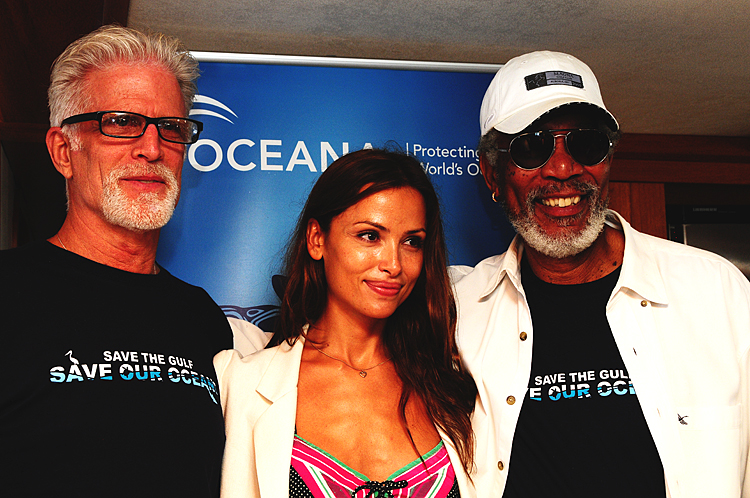
Oceana, celebrity activists including Morgan Freeman and Ted Danson, together with their corporate partner Nautica have met yesterday in Mississippi to give an update on the first part of the two month research expedition in the Gulf of Mexico. The meeting also talked about their  deepwater oil exploration efforts near the Deepwater Horizon wellhead.

Oceana celebrity supporters - © OCEANA Eduardo Sorensen

Oceana talked about its efforts to document vulnerable habitats from the Florida Keys to Panama City at risk from future oil spills, including the results of its project to tag whale sharks, a species at risk from Gulf oil disaster.  The news conference was held aboard of the Oceana Latitude Vessel, which will spend the next few months researching BP oil gusher’s effects on marine habitats.

According to Xavier Pastor, the Executive Director of Oceana Europe who is leading the expedition, reports stating that the oil in the Gulf of Mexico has disappeared have been grossly exaggerated to mislead the public about the severity of the situation.

In fact, since Oceana’s expedition began earlier this month, two new scientific studies have shown that:
1) nearly 80 percent of the estimated 200 million gallons of oil that has spewed into the Gulf since the explosion is still present
2) oil from the Deepwater Horizon oil disaster has been found on the sea floor.

Oceana Protecting Worlds Oceans

This next leg of the expedition will concentrate on using state-of-the-art sensors to plot any underwater oil plumes near the Deepwater Horizon well, including the utilization of ROV to investigate the area known as The Pinnacles of the coast of Alabama.

The research expedition is taking place aboard the Oceana Latitude vessel, a 170 foot ship adapted to serve as a research and diving platform. The expedition employs specialized divers, underwater photographers and videographers as well as ROVs to analyze the magnitude of the oil spill and its effect on sensitive habitats and marine species.

Oceana’s experts and scientific collaborators are tagging several shark species to monitor their migration patterns and study their ability to avoid oil contaminated areas, in addition to taking samples of fish larvae, plankton and adult fish. Oceana’s scientists from both sides of the Atlantic are also collaborating with the National Aquarium and several universities, including the University of Miami.

It has been stated by the attendance, including Ted Danson, who is on Oceana’s board of directors, Morgan Freeman, an Oceana supporter and others, that the offshore drilling puts Gulf’s many vital, pristine marine habitats in harm’s way.

“The risks of new offshore oil drilling are just too high, ” Danson stated.

Morgan Freeman expressed his opinion by saying the gusher was a result of too many risks taken to reach the oil in the well, which was about 5,000 feet below the surface.

“I know that what happened here is just a result of speed and greed,” said Freeman.

Gov. Haley Barbour showed his concerns, that a moratorium on offshore drilling would terminate many Gulf Coast jobs, however Ted Danson expressed his believes in replacing the lost jobs if the government would place more emphasis on producing clean and renewable energy technologies on the Gulf Coast, as told to Sun Herald.

Ted Danson also expressed his gratitude to those supporting Oceana expedition, as well as his sympathy to those affected by the disaster.

“Our heart goes out to everybody in this region – Mississippi and the Gulf – who have the Gulf in their blood and whose livelihoods have been interrupted because of the spill,” Danson said.

“We don’t take being here in your backyard lightly. Thank you.”

Oceana Announces Launch of Gulf of Mexico Research Expedition to Assess Long-Term Impacts of Deepwater Horizon Oil Spill

August 09, 2010

Oceana to Use ROVs, Specialized Divers and Satellite Tags to Investigate Effects of Oil on Coral, Fish, Shark and Sea Turtle Species.

Oceana, the largest international organization focused solely on ocean conservation, announced today the launch of its 2010 Gulf of Mexico Expedition that will assess the long-term impacts of the Deepwater Horizon oil spill. Oceana will use remotely operated vehicles (ROVs), specialized divers and satellite tags to investigate the effects of oil in the Gulf on coral, fish, shark and other marine species. Oceana will also document areas that may be in danger if the oil is captured by sea currents and transported towards southern Florida or if another oil spill occurs in this area in the future. To date, an estimated 200 million gallons of oil has spilled into the Gulf since the explosion April 20, 2010.

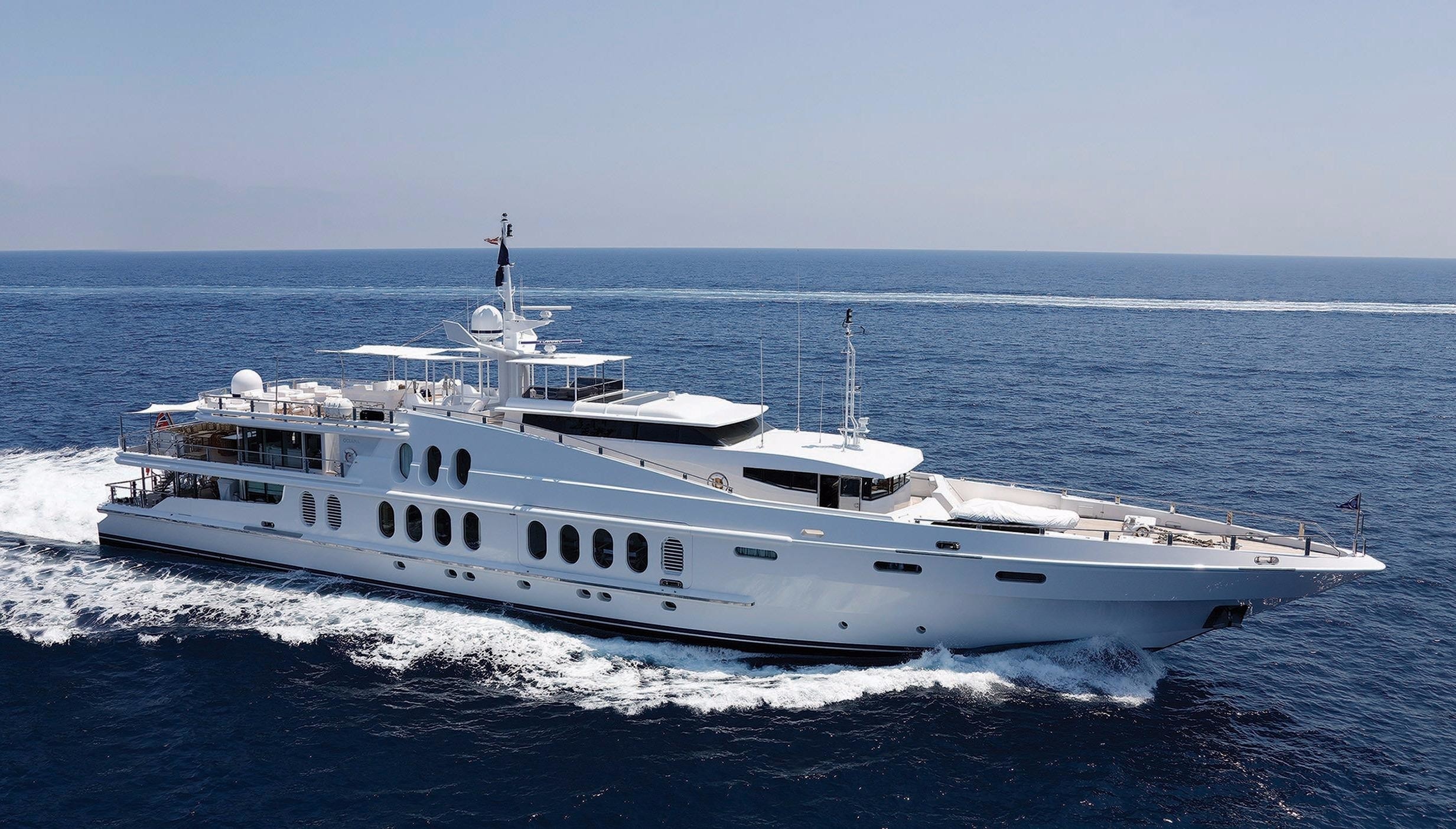
Oceana Latitude

Oceana Latitude

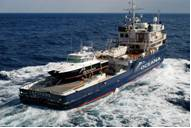
For this research expedition, Oceana has chartered the Oceana Latitude, a 170 foot work ship capable of sailing in both shallow and deep waters, and adapted to serve as a diving platform. The expedition, led by oceanographer Xavier Pastor, vice president for Oceana Europe, will set sail from Fort Lauderdale, Fla., Sunday, August 8, 2010.

“The Deepwater disaster is a horrible experiment on the Gulf of Mexico ecosystem,” said Pastor. “Oceana’s expedition will help to answer important questions about what is happening under the water in the Gulf.”

Oceana’s scientists from both sides of the Atlantic will begin their work in the Florida Keys before sailing into the Gulf. The scientists, directed by Dr. Michael Hirshfield, senior vice president for North America and chief scientist at Oceana, will work with professional divers, underwater photographers and videographers as well as two ROVs (one capable of descending up to 3,280 feet and filming in high-definition) to analyze the magnitude of the oil spill and its affect on sensitive habitats and marine species. Oceana will also tag several shark species, including whale and hammerhead sharks, to monitor their migration patterns and study their ability to avoid oil contaminated areas as well as take samples of water, fish larvae, plankton and adult fish.

Dr Jeff Short takes an oil sample from the Gulf of Mexico

Dr Jeff Short takes an oil sample from the Gulf of Mexico

“Most of the public’s attention has been on the visible oil on the surface of the Gulf and the beaches and marshes,” said Dr. Hirshfield. “Oceana wants the public to understand the impacts of the unseen, underwater oil that is damaging marine wildlife and habitats in the Gulf and will likely continue to do so for years to come.”

Oceana’s Pacific science director Dr. Jeff Short, one of the world’s leading experts on oil spills that participated in the Exxon Valdez clean-up efforts, will use cutting-edge science to map the subsurface oil plume. Dr. Short has already travelled to the Gulf where he collected water samples.

During the expedition, Oceana will collaborate with the National Aquarium as well as several U.S. universities, including the University of Miami. Oceana will also release reports in the coming weeks that describe the impacts of oil on marine species.

Patch of thick oil

Patch of thick oil

Oceana continues to urge Congress and the U.S. government to ban all new offshore drilling and support a shift to clean, carbon-free alternatives.

Oceana launches expedition to assess long-term effects of Gulf of Mexico disaster

July 22, 2010

The Oceana team is to identify possible oil spreading moves, carry out tests to detect unnoticed contamination, and tag migrating sharks and turtles. Oceanographers Xavier Pastor and Mike Hirshfield will lead a team of scientists supported by a high-definition underwater robot (ROV) and specialised divers.

the oceana logo

Oceana announces the launch of its 2010 Gulf of Mexico Ocean Expedition that will include a team of scientists from both sides of the Atlantic with experience in the most serious oil spills of recent decades. The objective is to go beyond the work done by other organisations, by assessing the long-term impact of the BP spill. Possible oil spreading moves will be identified in order to study the effect on sensitive habitats and migratory species tagging will be conducted to survey their capacity to avoid contaminated areas.

Oceana is one of the few international organisations dedicated exclusively to marine conservation. For this campaign, Oceana will charter the vessel Latitude, a 51 metre long range expedition charter ship capable of sailing in both shallow and deep waters, and adapted to serve as a diving platform. The research ship will set sail from Fort Lauderdale (Florida) in two weeks and will work intensely for two months in the Gulf of Mexico.

Expedition yacht LATITUDE

The crew will include professional divers who have worked with the organisation on other campaigns, as well as prestigious international photographers and videographers. The expedition will also use two underwater robots (ROV), one with the capacity to descend as far as 1,000 metres and film in high-definition. The ROVs will document the presence of the spill in the water column and coast, and analyse the impact on fauna and flora, including shallow and deep water corals off the western coast of Florida, amongst other important areas of the Gulf of Mexico.

turtle

The expedition will be lead by oceanographer Xavier Pastor, Executive Director of Oceana Europe, widely experienced in disaster response to previous oil slicks. Participation in the expedition from the U.S. includes Dr. Mike Hirshfield, Chief Science Director at Oceana, who will head the expedition’s scientific team; and Dr. Jeff Short, one of the world’s leading experts on spills, who participated in the work to clean up the Exxon Valdez spill and continues to work on its current repercussions.

“The expedition aims to assess the spill’s long-term impacts and detect contamination that remains unnoticed at the moment,” explains Xavier Pastor. “We will identify the ecosystems that have been affected and those that may be in danger if the oil is captured by sea currents and transported towards southern Florida, as well as those that may be seriously affected in the area if another accident like this one occurs in the future. All of this information will be made available to scientific and governmental institutions and will help endorse campaigns to pressure authorities to change the energy model in favour of clean energies.”

bluefin tuna

The project includes shark and sea turtle tagging in order to monitor their migrations and study their ability to avoid contaminated waters. In addition, samples of fish will be taken to analyse the degree of hydrocarbon contamination. The Gulf of Mexico is an important reproduction and feeding area for a variety of species, including endangered species like bluefin tuna. The affected area is the only place of the world, aside from the Mediterranean, where this species spawns.

The team of scientists will also take samples of sediments, larvae, plankton and water. Dredges and bongo-type nets will be used in collaboration with universities from the United States.

Oceana already documented the fragile ecosystems of the Bahamas during its 2005 Transoceanic Expedition on board the Oceana Ranger research catamaran. At that time, marine scientists and divers studied the decline of species like the Nassau grouper, and the difficult state of sharks, turtles and corals in those waters, compiling scientific data to justify the conservation proposals that the organisation continues to work on today.

LATITUDE underway

Since the spill was acknowledged Oceana continues to urge Congress and the U.S. government to ban all new offshore drilling. In addition, reports on the spill’s impact on various species in the area are being drafted.

In the energy field, Oceana develops intense campaigns in favour of offshore wind energy and is one of the few non-governmental organisations concentrated on specific problems like the acidification of marine waters due to increased emissions of CO2 and its impact on corals and marine organisms with calcareous skeletons. Oceana has also publicly opposed petroleum prospecting in the Mediterranean, especially in Spanish and Italian waters.

Oceana

July 22, 2010

The Oceana Organisation was founded in 2001 and it is the largest international organization which is focused solely on ocean conservation, protecting marine ecosystems and endangered species.

Oceana has offices in Europe, North America, Central America and South America which work together on a limited number of strategic, directed campaigns to achieve measurable outcomes that will help return our oceans to former levels of abundance. The Oceana Ocean Organisation believes in the importance of science in identifying problems and solutions and scientists work closely with our teams of economists, lawyers and advocates to achieve tangible results for the oceans.

Oceana, a Planet Green NGO partner, is an organization that is at the forefront of ocean and ocean-life conservation. They have set forth campaigns to stop dirty fishing, destructive trawling, to protect sharks, sea turtles and people from mercury-contaminated seafood. They also work towards ending subsidized fishing and have advocated for reduced greenhouse emissions.

Oceans cover the majority of the earth’s surface, but we rarely ever visit them. They are the ultimate fly-over country. Oceans, however, contain an abundance of life, including phytoplankton which generate most of the oxygen that we breathe. So, you see, we kind of need oceans.

Oceana has over 300,000 members from all over the world, and you can become a member by signing up to be a Wavemaker. But you don’t have to join to support the ocean. You can donate or you can use their pocket seafood guide to distinguish what fish are endangered and what fish are OK to eat. Plus, they have a list of wonderful tips that can teach you how to live in sync with your planet’s oceans.

The Problem

The oceans are vast, but they are not immune to human influence. We have already altered or destroyed many marine ecosystems and driven million-year-old species to the brink of extinction. According to a study published in Science, less than 4 percent of the oceans remain unaffected by human activity.

We are taking too many fish out of the water.
In the last few decades, commercial fishing has evolved into a high-tech, heavily subsidized industry that uses cutting-edge electronics, computer systems, huge amounts of fuel and miles of gear to find and catch more fish in remote places formerly out of bounds to fishermen.

Amber Valletta

The U.N. Food and Agriculture Organization (FAO) says that at least 75 percent of seafood species are overexploited, fully exploited or recovering from depletion and need more effective and precautionary management.

We are putting too many pollutants in the water.
Mercury is a toxic pollutant emitted by land-based industrial plants. This mercury finds its way back into our food chain via our seafood with potentially serious consequences. According to the U.S. Environmental Protection Agency (EPA), one in ten American women has enough mercury in her blood to pose a risk of neurological damage to her developing baby.

Meanwhile, offshore fish farming, rather than taking the pressure off wild seafood species, results in increased overfishing to feed the farmed fish as well as the despoiling of seafloor habitat. Concentrated fish waste dropped from the open-water pens blankets the ocean bottom, snuffing out oxygen and life.

Last and perhaps most alarming, carbon dioxide is making our oceans warmer and more acidic . As a result, corals and other creatures at the base of the ocean food chains have trouble forming shells. Without a drastic reduction in carbon dioxide emissions, many of the world’s coral reefs will disappear and entire ocean ecosystems may collapse.

We are squandering the oceans’ resources.
Destructive fishing practices that include driftnets, longlines and bottom trawls are ruining ocean ecosystems by indiscriminately killing fish and other wildlife, including seabirds and marine mammals. Each year, more than 16 billion pounds of bycatch are thrown overboard thanks to wasteful fishing techniques.

Bottom trawls drag heavily weighted nets along the ocean floor in search of fish or crustaceans in a practice akin to clearcutting a forest in order to catch a rabbit. Centuries-old habitats such as coral gardens are destroyed in an instant by bottom trawls, pulverized into barren plains. Endangered sea turtles drown on longline hooks while sharks have their fins sliced from their bodies, which are then tossed overboard.

© OCEANA and Soledad Esnaola

The Oceana Goal
Oceana was created to identify practical solutions and make them happen. The good news is that we can restore our oceans to their former glory. In many cases, laws governing fishing and pollution already exist – we simply need to enforce them and ensure that management and industry obey a few commonsense principles.

To most effectively protect the world’s oceans, Oceana is:

MARINE-FOCUSED: Oceana is 100 percent dedicated to fighting on behalf of oceans.

GLOBAL: Oceana has campaign offices in North America, South America, Central America and Europe.

CAMPAIGN-DRIVEN: Oceana channels their resources towards a limited number of strategic, directed campaigns to achieve measurable outcomes that will help return our oceans to former levels of abundance. Some of our campaigns are regional, others are international.

FACT-BASED: Oceana believe in the importance of science in identifying problems and solutions.

Please visit oceana.org for more information

Prince Albert II of Monaco offers his Patronage to Bal d’Oceana at the Rendezvous in Monaco 2010

June 25, 2010

Boat International Media and marine conservation organisation Oceana are delighted to announce that the inaugural Bal d’Oceana gala on 25 June will take place under the High Patronage of His Serene Highness Prince Albert II.

‘It is a great honour to have the patronage of the sovereign of Monaco for our gala,’ said Executive Vice President of Oceana Jim Simon. ‘An accomplished marine conservationist, HSH Albert II is someone who – like Oceana – is deeply committed to tackling the urgent problems facing our oceans.’

Bal d’Oceana is the official charity fundraiser of The Rendezvous in Monaco, an annual event for superyacht owners, their friends and families to enjoy four days of on-the-water activities and a glittering land-based social programme in one of Europe’s most glamorous yachting destinations.

The Rendezvous in Monaco

Entrance to the Bal d’Oceana is not limited to attendees of The Rendezvous and all members of the yachting community, residents and visitors to Monaco are invited to join the celebrations.

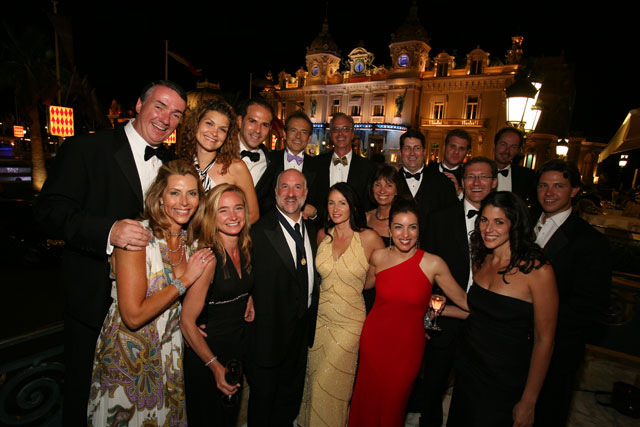
Bal d’Oceana ticket holders will enjoy a champagne reception, four-course dinner and dancing to live music. They will have the opportunity to celebrate the oceans and support the work of Oceana with longtime ocean conservationist and Oceana board member Ted Danson and his wife, actress Mary Steenburgen (right). All proceeds from Bal d’Oceana will support Oceana’s campaigns to conserve the ocean.

For tickets to Bal d’Oceana, please contact:

Mimi Hemphill
Tel: +1 202 467 1926
Email: mhemphill@oceana.org

Individual tickets are 1,000 Euros. Tables are also available for 8,000 Euros and seat ten individuals. A substantial share of the ticket price will be tax-deductible to donors under U.S. law.

Graff Diamonds to sponsor The Rendezvous in Monaco 2010

June 23, 2010

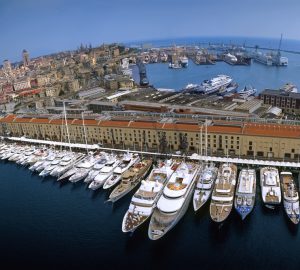
As dusk falls over Port Hercule, thirteen of the world’s finest and most recently launched superyachts are now berthed along the privatised Quai des Etas-Unis as their owners prepare for four days of first-class hospitality, glittering gala dinners and on the water fun at the twentieth annual 2010 Rendezvous in Monaco. 

The Rendezvous in Monaco - The Yacht Hop

Graff Diamonds are the latest addition to an impressive list of partners and sponsors supporting this exclusive event.

The House of Graff is synonymous with the most fabulous jewels in the world.  The name symbolises rarity, beauty, excellence and above all, the best quality craftsmanship and diamonds. A diamond company extraordinaire, Graff produces polished diamonds from the rough sourced from mines around the world, making it one of the world’s leading diamond companies.

With over 30 boutiques worldwide including their flagship store on New Bond Street, London, the timing of The Rendezvous ties in beautifully with the opening of Graff’s new store inside the iconic Hôtel De Paris, Monte Carlo’s most exclusive hotel.

‘We are delighted to welcome back old friends to Monaco and look forward to forming new friendships and unveiling our brand new store to guests of The Rendezvous’, commented Madame Nicole Rey, Manager. 

On the penultimate day of The Rendezvous, Madame Rey will host a private Champagne Cocktail at the Graff boutique for select Rendezvous guests, followed by a Ladies Luncheon at Le Grill, one of the exclusive Hôtel de Paris restaurants, with a fantastic view of the harbour. 

The Rendezvous in Monaco

Tickets to Bal d’Oceana at Hôtel de Paris on Saturday evening, the official gala fundraiser of The Rendezvous in Monaco in association with marine conservation charity Oceana are still available to purchase. 

The Rendezvous in Monaco - The White Party


For tickets to Bal d’Oceana, please contact: 
Francesca Garola
T: +33 643 91 41 01  E: info@superyachtrendezvous.com