ICAP Leopard Brief

ICAP Leopard Luxury Yacht Charter & Superyacht News

Transatlantic Race 2011: Superyacht Maltese Falcon and sailing yacht ICAP Leopard finish

July 14, 2011

Newport, R.I. USA (July 13, 2011) – Yesterday, as the sun was setting on the Cornish coast, ICAP Leopard, skippered by Clarke Murphy (New York, N.Y.), passed The Lizard to finish the Transatlantic Race 2011 at 20:42 UTC. Since the 4th of July when ICAP Leopard snapped its bowsprit, there has been no whinging from on board. Sailing yacht ICAP Leopard did not even report the breakage until several days after the incident. After the finish, Clarke Murphy was quick to praise the crew.

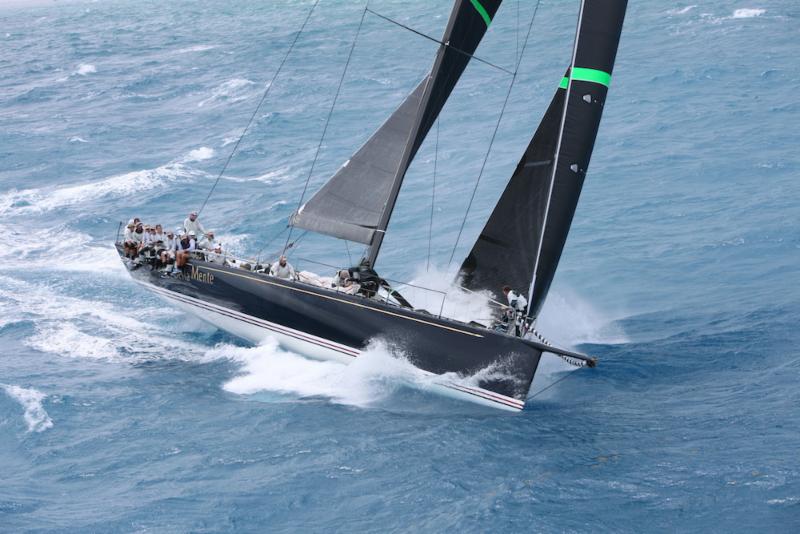
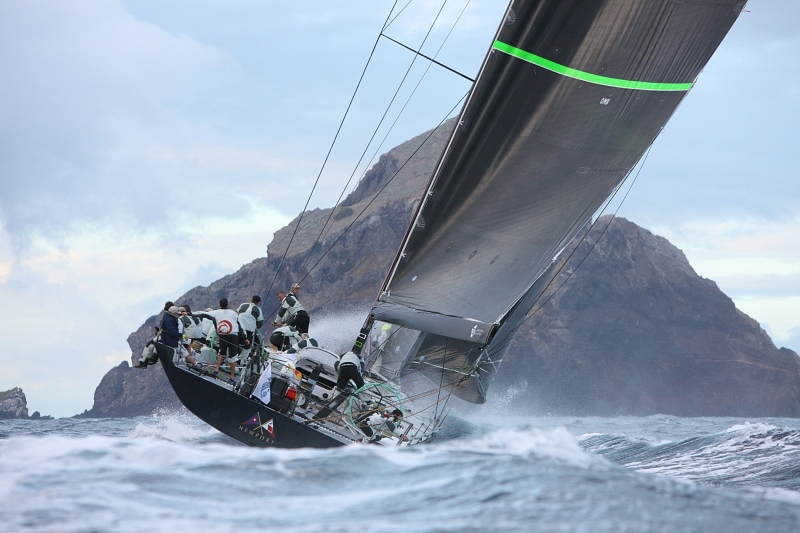
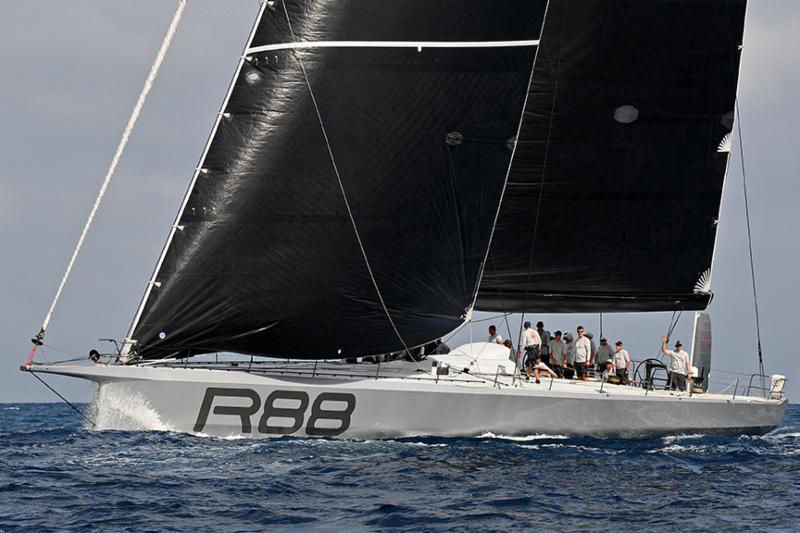
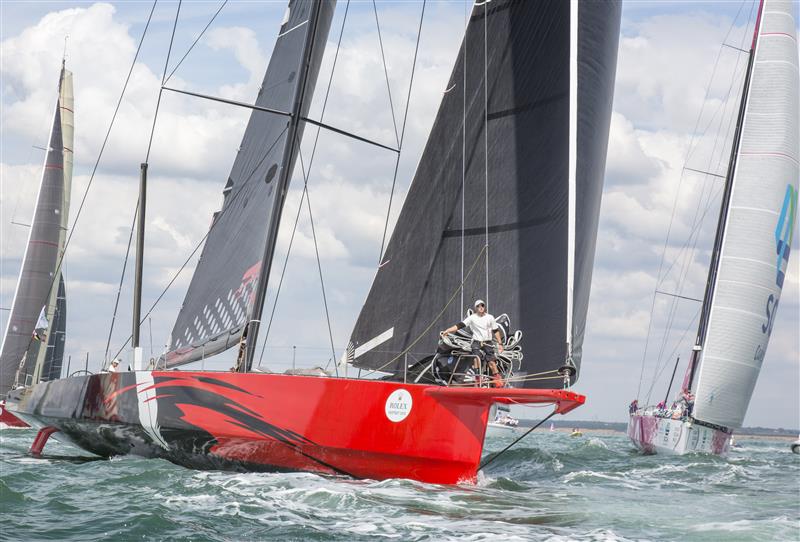
ICAP Leopard (shown at start) sailed the majority of the Transatlantic Race 2011 with a broken bow sprit.  It has now finished. (photo credit TR2011Billy Black)

ICAP Leopard (shown at start) sailed the majority of the Transatlantic Race 2011 with a broken bow sprit. It has now finished. (photo credit TR2011Billy Black)

“To break the sprit 36 hours into the race was a shock and incredibly frustrating. The first focus was to make sure we were still safe and then to keep us in the race. The sprit was bouncing into the hull, hanging off the bobstay, but after having recovered it and checked the hull, we were back racing again in 40 minutes. We had to change our strategy, think on our feet, and to cross the Atlantic in nine days was a great achievement from the position we were in. The crew has been outstanding in every department, and there has been no lack of humour in this crowd, or lack of ribbing. We still had a good time, and the chocolate thieves were caught eventually! This is an incredibly experienced group of people with great character who could adapt and keep us going.”

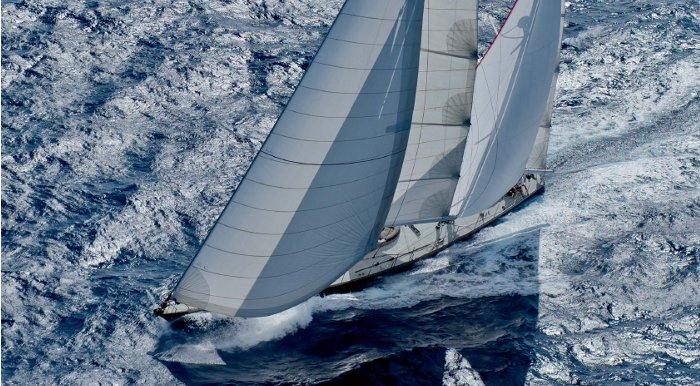
Superyacht Maltese Falcon during hte Transatlantic Race 2011. Image copyright Billy Black.

Superyacht Maltese Falcon during hte Transatlantic Race 2011. Image copyright Billy Black.

The superyacht Maltese Falcon received high praise from other competing yachts, and rightly so. The skill of the crew was there for all to see right from the start when the immense superyacht tacked in confined quarters to perfection, casting an enormous shadow on the spectator fleet. Later in the race, the crew on the Cookson 50 Jazz was aghast as the Maltese Falcon gybed their enormous three-masted rig time after time to stay in the pressure.

Last night, just after 0100 UTC, the Maltese Falcon arrived at The Lizard, and the magnificent 289’ Perini Navi sent a heartwarming message back from the racecourse, written by crewmember Sean Truscott.

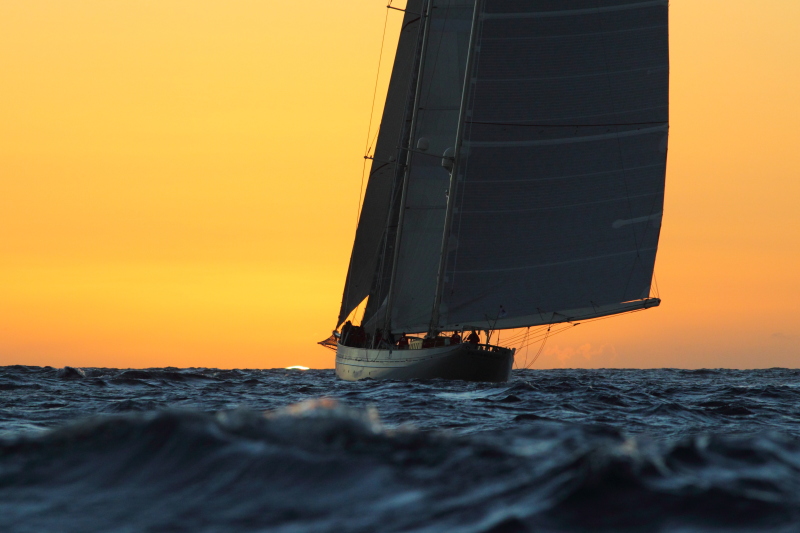
Sunset from onboard sailing yacht Maltese Falcon, which has now finished the Transatlantic Race 2011

Sunset from onboard sailing yacht Maltese Falcon, which has now finished the Transatlantic Race 2011

 “A jubilant crew brings the Big Bird to the line at The Lizard, and the race has ended for us. This is no time to mourn our loss to Phaedo, which has our sincerest congratulations for their outstanding victory. With Maltese Falcon built not as a race boat but a large sailing super yacht, we are proud of our performance and proud to have been part of this spectacular event with all her challenges. Thank you to all the organisers, sponsors and participants. It was wicked!

“The remaining hours of our race presented us with an awe-inspiring seascape view of the setting sun over Bishops Rock. Tonight, as the props turn for their first time since the start, the moon sets to our stern, a large yellow orb. Sadly we cannot linger to enjoy the festivities and the camaraderie with the other crew, as our purpose and business hails us back to the Med, but we wish we were able to, and the fleet still at sea we wish the best.”

ICAP Leopard and Maltese Falcon may not have tasted victory at The Lizard, but their performance and attitude has been commendable and a credit to the sport.

Keep Calm and Carry On

For the remaining 19 boats yet to finish the Transatlantic Race 2011, progress is agonisingly slow. Most of the yachts out on the racecourse are approximately 250 miles from the finish, and looking at the tracker, it resembles the start line for a foot race, with the competitors waiting for the starting pistol.

Fair winds still elude the yachts; however, more wind is expected to arrive from the south or southwest in about 24 hours’ time, which should increase in strength, giving the yachts a roaring finish into The Lizard. Most of the yachts should finish the Transatlantic Race over the coming weekend.

The big decision at the moment is whether to try to make it to the southern coast of the island and pick up breeze from the land or to stay to the south, where the breeze should fill in first. Tony Lawson’s Class 40, Concise 2, skippered by Ned Collier-Wakefield (Oxford, U.K.) is heading for the Irish coast.  The young British team have seen their substantial lead over class rival Dragon, skippered by Mike Hennessy (Mystic, Conn.), evaporate to just a few miles. Similar anguish must be present on Carina, skippered by Rives Potts (Essex, Conn.). Their main rival, British Soldier, skippered by Nick Bate (Falmouth, Cornwall, U.K.) is now in a threatening position, but the British Army team does owe Carina a considerable amount of time in IRC Class Four.

The morale on board the yachts still racing will have become a very important factor towards their performance. After many days at sea, living in close quarters with the same people, tempers can and do get tested. Sleep deprivation and dwindling food supplies adds tension to the mix. “Keep calm and carry on” is an old phrase that has become popular again, especially with relevance to the late-2000 recession. These would be wise words for the competitors in the Transatlantic Race 2011 to cogitate, if they want to get the result that their performance deserves.

Sponsors of the TR 2011 are Rolex, Thomson Reuters, Newport Shipyard, Perini Navi and Peters & May, with additional support by apparel sponsor Atlantis Weathergear.

Transatlantic Race 2011: Magical Moments

July 12, 2011

Newport, R.I. USA (July 12, 2011) – Dreams — of deep sleep and wholesome food — have come true, as three more Transatlantic Race 2011 class winners arrived at The Lizard in the south of England today.  While the sailors have put to an end the days of going without, memories of the adventure will linger forever.

Zaraffa Reichel Pugh 66-footer at the start of Transatlantic Race 2011 Newport RI  Photo Credit TR2011 ©Billy Black

Zaraffa Reichel Pugh 66-footer at the start of Transatlantic Race 2011 Newport RI Photo Credit TR2011 ©Billy Black

Just after sunrise sailing yacht Zaraffa, a Reichel Pugh 65, passed The Lizard to finish the Transatlantic Race 2011 with skipper Huntington Sheldon (Shelburne, Vt.), who, at age 80, is believed to be the oldest competitor in the race.  S/Y Zaraffa completed the 2,975 nautical mile course in less than 12 days and was over 400 miles ahead of any other yacht in Class IRC Three, winning the class by a handsome margin.  Notably, on Zaraffa, Sheldon took both line honors and the overall win of the 2003 Daimler Chrysler North Atlantic Challenge, which also started in Newport, but finished in Hamburg, Germany [with a course time of 13 days, 15 hours, 7 minutes and 28 seconds].  He subsequently donated the yacht to the U.S. Naval Academy (Annapolis, Md.) and chartered it back for this event.

The Gunboat 66 Phaedo finishing the Transatlantic Race 2011 - Photo by Richard Langdon Ocean Images

The Gunboat 66 Phaedo finishing the Transatlantic Race 2011 - Photo by Richard Langdon Ocean Images

In the two-boat Open Class, Lloyd Thornburg (St. Barthelemy), skipper of the Gunboat 66 Phaedo, was ecstatic when the Lamborghini-orange multihull crossed the finish line in light air.  With a 100-mile lead, Phaedo was the victor in a David and Goliath battle with the magnificent 289’ superyacht Maltese Falcon.  

“It has been an epic adventure,” said Thornburg of the race via satellite phone.  “We enjoyed the RORC Caribbean 600 so much and it [the Transatlantic Race 2011] just seemed like the next step.  During the windy part of this race, we were screaming along in big seas.  That was pretty exciting and sometimes hair-raising, especially when flying a hull at night!  The last few days, however, were slow.  Fortunately, Phaedo has plenty of onboard entertainment — I think our movie count was 25 films.

“It has been a wild and amazing experience with some incredible memories.  The highlights for me were seeing water so clean it was the color of blue Gatorade; and, when we were becalmed, we had a shark circling the boat which was very eerie.  Crossing the Atlantic, you lose track of time and it gives you the feeling like you have gone into space.  Now we are heading back to life on land; we are all looking forward to sleeping through the night and we are all tired of freeze-dried food.  I think that we will all be tucking into a full English breakfast when we hit the dock at Southampton.  Our hearts really go out to the boats that are still out there, some of them must be having a real rough time of it, knowing that it will be days before they get in.”

Jazz, Chris Bull’s Cookson 50 which is being skippered by Nigel King (Lymington, U.K.), was the fifth yacht to finish the Transatlantic Race 2011 and appears to have won IRC Class Two.  “We set out with a clear goal to deliver a top sailing performance worthy of this team, regardless of the final result,” said King.  “The guys have never wavered from the challenge and have done so with smiles all the way.  Once again ocean racing shows to me why it is the ultimate challenge – it’s a total privilege to be the skipper of this team.”

As Jazz approached the finish, several of the crew reflected on the best moments of the race across the Atlantic.

Navigator Mike Broughton (Hamble, U.K.) described “a marvelous minute of offshore racing” in his first sighting of a blue whale and the sight of dolphins riding a bow wave.  “Uncharacteristically, I saw two of these magical mammals slightly misjudge their flight paths and tap the bobstay with their tails.”

Australian Brendan Garner (Victoria) felt privileged to have been given the opportunity to race across the North Atlantic.  “A new experience for me was helming at 20 knots of boat speed, pitch black at night, heavy fog, three degrees of water temperature and the crew on iceberg watch.  High adrenalin sailing.”

For Anthony “Ski” Haines (Cowes, U.K.), ocean racing at its very best was launching downwind in the mid-Atlantic at 20+ knots and “seeing the whole boat and crew working so well, to the point where we did not have to think about anything …except going as fast as possible.”

And, for a sailor making his first transatlantic crossing, it was a defining experience.  “I have climbed my mountain,” said Christian Ripard (Valetta, Malta) after sailing almost 3,000 miles.

There remain 21 yachts out racing on the North Atlantic Ocean, including the S&S 42, Sasha. With over 800 miles to the finish, the beautiful, sleek yacht likely has a week more at sea.  Skipper Albrecht Peters and his wife Erika (Hamburg, Germany) have owned and raced Sasha for over 30 years and have just two other crew onboard, Christine Beech and Ron Melton both from New Zealand.  For many people three weeks at sea is a long time; the Albrecht’s, however, have sailed Sasha through more than 110,000 miles of ocean and are very much at home.

Transatlantic Race 2011: PUMA’s Mar Mostro sailing yacht declared provisional winners

July 12, 2011

Newport, R.I. USA (July 11, 2011) – PUMA’s Mar Mostro is not only the second boat across the Transatlantic Race 2011 finish line at The Lizard on the south coast of England (at 05:40 UTC on July 11) but also the current overall standings leader based on corrected time.  Skipper Ken Read (Newport, R.I.) and crew completed the 2,975 nautical mile course in 7 days, 11 hours and 40 minutes.  After careful calculations, the race committee has confirmed that none of the 24 yachts still racing has a mathematical probability of beating PUMA’s Mar Mostro on corrected time, and they shall be declared provisional winners of IRC Class One and IRC Overall for the Transatlantic Race 2011.

PUMA Ocean Racing Team hard at work before the finish (photo courtesy of PUMA Ocean Racing Team)

PUMA Ocean Racing Team hard at work before the finish (photo courtesy of PUMA Ocean Racing Team)

“We entered the race with zero expectations, just like the other IRC handicap racing we’ve done this year,” said Ken Read.  “We wanted to learn the boat and the crew.  Now here we are in the position of possibly winning a race that we didn’t expect to win.  We are pleasantly shocked.  We didn’t break anything, the sails held up, the team is certainly coming together, and there’s not a single negative to this race.  It was a great experience.”

PUMA’s Mar Mostro reached a maximum speed of just over 30 knots early in the race, traveling 551 nautical miles on day three.  By day five, however, light air slowed their pace towards the finish at The Lizard and the last several hundred miles were slow going.

“The finish was excruciating,” said Read as he detailed a bizarre twist to the finish.  “We approached The Lizard knowing we had to get there quick because the current was about to change and go against us.  As we entered the English Channel the breeze was dying steadily to the point where the current did change.  Literally, when the race committee said we were finished, we were stopped and about to throw the anchor as we would have been going backwards with the current. ”

PUMA finished the 2011 Transatlantic Race early this morning and is awaiting their corrected time standing  (photo courtesy of PUMA Ocean Racing Team)

PUMA finished the 2011 Transatlantic Race early this morning and is awaiting their corrected time standing (photo courtesy of PUMA Ocean Racing Team)

While PUMA’s Mar Mostro is now making its way to the team’s summer training camp in Lanzarote, Canary Islands, Rambler 100, which took line honors yesterday and established a new record with an elapsed crossing time of 6 days, 22 hours, 8 minutes and 2 seconds, has made its way under motor to Endeavour Quay (Gosport, Portsmouth, U.K.) where the 100’ Maxi will be based until competing in the Rolex Fastnet Race next month.  

“Puma made it through the windless zone better than us,” said George David (Hartford, Conn.), the skipper of Rambler 100 who was quick to compliment Read and his team.  “Maybe they had a better roll of the dice or maybe they just outdid us.  PUMA’s Mar Mostro is a 2011-edition Volvo 70 and has a world-class crew, so to just lose out on handicap is not such a bad thing.  Our time was the fastest average speed that any monohull has ever crossed the Atlantic Ocean and we have got to be very happy with that.”

Meanwhile back out on the North Atlantic where 24 boats are still racing, sailing yacht Jazz, a Cookson 50, has opened up a big lead on the other competitors in IRC Class Two.  With 240 miles to go, Jazz expects to get to the finish line early evening Tuesday and have a cushion of about 270 miles over Varuna and Shatki.

“We have cracked sheets after having a light spot during the early hours and then we have been on the wind by mid morning,” said Jazz navigator Mike Broughton (Hamble, U.K.).  “The highlight of the morning has been a welcome onto the continental shelf by, at times, an escort of over 40 dolphins.  Seeing groups of them speed in from the side at about 30-40 knots, then arc in to parallel our course and slow down on and ride our bow waves is an awesome sight that even the most seasoned sailors never tire of seeing.”

In IRC Class Three, the Zaraffa yacht, skippered by Huntington Sheldon (Shelburne, Vt.), looks like a certainty for the class win and has just about 100 miles left to finish the race.  Unfortunately, it could take some time yet as there is a complete lack of decent wind in the vicinity of The Lizard, so much so that Zarraffa is now well north of the rhumb line — in the Celtic Sea — looking to pick up breeze.

The leading boats in IRC Class Four still have over 500 miles left to race.S/Y Carina, the McCurdy and Rhodes 48 skippered by Rives Potts, Jr. (Essex, Conn.), is still leading on the water, but the Army Sailing Association’s British Soldier, with lighter displacement, has made up substantial miles.  The British Army crew is 60 miles behind Carina but the new wind is due to fill in from the west and British Soldier should get into fresh pressure before Carina.  

View from Superyacht Maltese Falcon the 289’ Perini Navi during the Transatlantic Race 2011 - Photo by Jeremy Smith

View from Superyacht Maltese Falcon the 289’ Perini Navi during the Transatlantic Race 2011 - Photo by Jeremy Smith

In the Open Class, sailing yacht Maltese Falcon. was never going to be able to compete with Phaedo in light air. The 289’ Perini Navi  weighs 1100 tons, while Phaedo is a mere 17 tons.  Phaedo is nearly 200 miles ahead of Maltese Falcon with just over 100 miles to the finish.

As for the two Class 40s, Dragon has started reeling in Concise 2.  “We have had one heck of an opportunity over the past 48 hours, riding what has seemed like a private seam of pressure,” said Mike Hennessy (Mystic, Conn.) who is sailing Dragon double-handed with Rob Windsor (East Northport, N.Y.), while Concise has six in crew.  “As a result, we have clawed back something like 200 miles that Concise was able to put on us with their brilliant run in the middle of last week.  Now comes the tricky bit, as our low pressure catches up to their high pressure.  Are we far enough out on the leading edge of our system that it will pull us right up to their stern?  How will the passing lanes play out as we cross below Ireland?  Will we end up in the same mess they have been wallowing in?  Questions to ponder over our oatmeal this very chilly morning.”

Sponsors of the TR 2011 are Rolex, Thomson Reuters, Newport Shipyard, Perini Navi and Peters & May, with additional support by apparel sponsor Atlantis Weathergear.

Transatlantic Race 2011: Sailing yacht Rambler 100 wins LINE HONORS

July 10, 2011

Sailing yacht Rambler 100, skippered by George David (Hartford, Conn.) crossed the finish line of the Transatlantic Race 2011 on Sunday 10th July at 16h 08m UTC. The elapsed time for Rambler 100 was 6d 22h 08m 2s. It has established a new record for the 2,975 nautical mile course from Newport, RI to Lizard Point, South Cornwall, UK, which is to be ratified by the World Sailing Speed Record Council.

Rambler 100 team celebrating at the Lizard Point finish in South Cornwall, U.K. (photo credit TR2011 Mark Lloyd)

Rambler 100 team celebrating at the Lizard Point finish in South Cornwall, U.K. (photo credit TR2011 Mark Lloyd)

Rambler 100′s George David Reflects on Transatlantic Crossing       

Rambler 100 skipper George David (Hartford, Conn.) spoke of his satisfaction after taking line honors in the Transatlantic Race 2011, just minutes after crossing the finish line at The Lizard, Cornwall, U.K.

“It was really nice to see David Aisher from the Royal Yacht Squadron greet us on the line with some Cornish pastries and some champagne and beer. We feel pretty good; it was a remarkably fast time.

Transatlantic Race 2011 Sailing yacht Rambler 100 wins LINE HONORS - Photo by Mark Lloyd

Transatlantic Race 2011 Sailing yacht Rambler 100 wins LINE HONORS - Photo by Mark Lloyd

“For the first 80 hours of this race we were ripping along; towards the end we hit a few holes in the wind, but the net speed average was 15.7 knots across the Atlantic, which I think is going to prove a record in its own right–as a speed record for any transatlantic race. We feel pretty good about that.

“Kenny Read is about 100 miles behind us with his PUMA Team. The odds are he is probably going to win the race on corrected time, but we will see what happens over the next 15 hours, which is about the amount of time that we give them.  We will keep a look out on the tracker, and we will see when the time expires, but just like politicians, we are not going to concede just yet.

“Flying along at 28 knots is an exhilarating experience but one that concentrates the mind. Rambler is a finely balanced machine and anything can go wrong and there are huge forces opposing each other.  If those forces go out of balance, bad things can happen very quickly. But as I say this has been an exhilarating race, where we have been well out of sight of land, completely unsupported and in a high performance machine, which you are taking close to the edge, for a very long time–that is, without doubt, exhilarating.”

Transatlantic Race 2011 - Record holding Rambler 100 (photo credit TR2011Mark Lloyd)

Transatlantic Race 2011 - Record holding Rambler 100 (photo credit TR2011Mark Lloyd)

Rambler 100 crossed the finish line of the Transatlantic Race 2011 on Sunday 10th July at 16h 08m UTC.

The elapsed time for Rambler 100 was 6 days, 22 hours, 8 minutes, 2 seconds.

It has established a new record for the 2,975 nautical mile course from Newport, R.I. to Lizard Point, South Cornwall, U.K., which is to be ratified by the World Sailing Speed Record Council.

Transatlantic Race 2011: Head Out Of The Boat

July 10, 2011

Newport, R.I. USA (July 9, 2011) – For the last 24-hours of the Transatlantic Race 2011, light air has persisted for virtually the entire fleet — frustrating the progress of nearly every boat.  Small gains in these conditions can be turned into massive advantages as finding breeze under a patch of cloud or during a rainsquall can deliver huge percentage gains and those few precious miles can mean getting into new breeze, hopefully hours before the opposition.

Sailing yacht Carina (photo credit TR2011Amory Ross)

Sailing yacht Carina (photo credit TR2011Amory Ross)

All of the yachts in the Transatlantic Race 2011 have access to detailed weather forecasts, and global weather models like NOAA’s GFS (National Oceanic and Atmospheric Administration’s Global Forecast System) are great tools for understanding the broad weather pattern.  They run, however, at a resolution of 60km and are unlikely to pick up the local effects out in the Atlantic, especially as the fleet encounters land-produced effects.  Weather forecasting may have been around for over 100 years, but a sailor’s experience is often more reliable than any computer models.  A well-known yachting term, ‘head out of the boat’ is a very poignant factor right now.  Finding breeze in these fickle conditions is golden.

Rambler 100, skippered by George David (Hartford, Conn.), looks to be the odds-on favorite for line honors and is expected to cross the finish line at The Lizard, on the south coast of England, around mid-day Sunday, July 10.  PUMA Mar Mostro, skippered by Ken Read (Newport, R.I.) has taken a two percent time penalty allowing them to stack sails and is still currently leading IRC Class One on corrected time — although not the race overall.

Carina, the McCurdy and Rhodes 48 skippered by Rive Potts, Jr. (Essex, Conn.) which started the race on June 26 has that honor (current overall race leader).  There will probably be a national holiday in the yacht’s hometown if they pull off a win against such esteemed opposition.  Unfortunately, Carina was barely making any headway today and still has well over 700 miles to go.  Potts and his crew will be praying for more wind and the team will be doing everything they can to find it.  While looking to have a win in IRC Class Four sewn up, Carina only needs to average about five and a half knots to see them seriously challenge for the overall title.

In IRC Class Two, Jazz navigator Mike Broughton (Hamble, U.K.) reported via satellite phone this morning to say that they had found a fairly consistent breeze from the northwest and were making good headway.  Jazz is a firm favorite for taking class honors and still has an outside chance of taking an overall victory after time correction.

“The boat is immaculately clean, something that the crew all pride themselves in,” said Broughton confirming that – apart from the diet — all is well onboard.  “This morning we are enjoying some freeze-dried granola for breakfast, which is definitely our favorite energizer in the mornings.  However, every other day we have freeze-dried scrambled egg and I have to say that once we get ashore, I will be happy not to see that particular delicacy for a very long time.”

In IRC Cass Three, Zaraffa, the Reichel Pugh 65 skippered by Huntington Sheldon (Shelburne, Vt.), has just over 500 miles to go, along with a virtually unassailable lead in its class.  And in the Open Class, Phaedo, skippered by Lloyd Thornburg (St. Barths), has understandably enjoyed the lighter breeze, far more than its heavy weight opponent yacht Maltese Falcon.  The Lamborghini orange Gunboat 66 has skipped away some 40 miles ahead of the Perini Navi.

While the end of the race is approaching for the front runners, spare a thought for Mike Hennessey (Mystic, Conn.) and Rob Windsor (East Northport, N.Y.), who are sailing the Class 40 Dragon double-handed and who updated their progress by satellite link.

“In the past 24 hours we have achieved three milestones: We reached the most remote point we will get to in this race:  825 miles to Cape Spear, Newfoundland, to the west and 825 miles to Great Skellig Island, Ireland, to the east and 700 miles to Kap Farvel, Greenland to the north. I have no idea if any of those places even have a port we could get into, but it’s nice to know where you would have to bail out to!

“We passed the 1000-mile mark, with 980 some odd miles to go to the finish.  We have had our first upwind work of the entire race.  Currently slapping our way through short chop on our way east, under gray and cold skies.”

Transatlantic Race 2011: Joy and Pain

July 10, 2011

Newport, R.I. USA (July 8, 2011) – Breaking news from the North Atlantic is that just over 24 hours into the Transatlantic Race 2011, at 20:20 UTC on July 4th, ICAP Leopard had a major problem onboard when the bowsprit broke off on the 100’ Maxi yacht.  None of the crew was injured and the boat is still structurally sound, but the failure will have had significant effects on the yacht’s performance over the last four days. The ICAP Leopard yacht crew is obviously in a defiant mood; they have not only stayed in the race, but also have a real chance of winning on corrected time.

Onboard the 289' Superyacht Maltese Falcon (photo credit Jeremy Smith)

Onboard the 289' Superyacht Maltese Falcon (photo credit Jeremy Smith)

After three days of fast, adrenaline-pumping, downwind sailing in Atlantic swell, the leading boats in the Transatlantic Race 2011 have started to slow down.  There is a complex weather scenario around the fleet and the front-runners are in a transition zone between two weather systems with the result that boat speeds have fallen like a stone.  This has renewed hope for the chasing pack, which is still in pressure.  These boats are catching up with the leaders in their respective classes, but they too must negotiate the tricky, tactical part of this fascinating race.  It may seem counterintuitive, but light headwinds provide some of the most grueling conditions for the crews; the myriad sail changes mean hard physical work and just about every sailor out there will be feeling the effects of fatigue compounded by poor diet and lack of sleep.

The big tactical decision, as the yachts enter the transition zone, is angle of attack.  The yachts will be aiming to cross the doldrums in the wind at its narrowest point, minimizing the drop in boat speed.  This is not straightforward, however, as the pressure system ahead of them is a moving target and getting the boat into the correct position is a complex equation, one that will be different depending on where each boat is on the racecourse.

In IRC Class One, Rambler 100, skippered by George David (Hartford, Conn.), has slowed down to under half the speed achieved in their near record-breaking run of yesterday and the true wind has clocked around to the north, barely more than five knots.  However, the apparent wind created by Rambler 100 is allowing them to achieve over 10 knots of boat speed while another effect of this apparent wind is that they are now beating into this breeze.  If Rambler 100 has a weakness, it is beating into light air and PUMA’s Mar Mostro, skippered by Ken Read (Newport, R.I.), is reeling them in.  This morning, the two yachts were almost side-by-side on the water.  Beau Geste, skippered by Karl Kwok (Hong Kong), has kept to the rhumb line and is the most northerly yacht of the entire fleet.  Before the race, tactician Gavin Brady (Annapolis, Md.) commented that Beau Geste would need a variety of conditions to have a chance to win on corrected time and it would seem those wishes are coming true; perhaps their angle of attack to the north will pay big dividends.

Sailing yacht ICAP Leopard was still 100 miles behind Rambler 100 and PUMA’s Mar Mostro, but achieving a boat speed of over 17 knots gave fresh hope to ICAP Leopard skipper Clarke Murphy (New York, N.Y.).

Below is a video from ICAP Leopard during the Transatlantic Race 2011 after the bowsprit broke off on the 100’ Maxi yacht

“We are ripping along, it’s been a great ride and it still is,” said Murphy.  “We can see that yachts are parked up in front of us and we are still going fast and we are talking through the options that we have to take advantage of that.  The next day and a half could be the most important part of the race for us and so we are pushing as hard as we can. This race just started again and we are full in the new race.”

In IRC Class Two, Jazz, the Cookson 50 skippered by Nigel King (Lymington, U.K.), has seen its lead reduced and Varuna and Shakti, the two Rogers 46s behind them, are a big threat, especially after time correction.

“They are a big worry,” confirmed King by satellite link.  “Right now, we are barely making headway and we are fighting for every ounce of boat speed.  One of our greatest motivations is to do our best for the owner of Jazz, Chris Bull.  He cannot be with us due to family commitments and doing the best we can is our way of rewarding him for the gesture of letting us carry on and do this race without him.  All of the crew on Jazz is digging deep and morale is high.”

In IRC Class Three, Zaraffa has been a contender for the overall handicap prize since the start of the race.  “Zaraffa is a great boat with an excellent crew,” said skipper Huntington Sheldon (Shelburne, Vt.) speaking via satellite phone this morning.  “And although we slowed up for about an hour today, we believe we are through the ridge of high pressure and will be back up to speed very soon.  The weather models we have been looking at, and I am sure they are similar to the ones that are on the tracker, have not always been totally accurate but all is good on board and we are enjoying a fantastic race.”

The young team on the Class 40 Concise 2 lead by Ned Collier-Wakefield (Oxford, U.K.) is finding conditions tough on board.  “We are now beating into a northeasterly wind with a following sea, which is not the most comfortable angle for a Class 40,” said navigator Luke McCarthy (Cowes, U.K.) by satellite phone.  “The crew is all pretty tired and we are looking forward to finishing this race in a few days’ time.  It looks as though we will be into better conditions soon, but for the meantime it is hard going on Concise at the moment.”

By sharp contrast to life aboard the 40’ Concise 2, with six crew living in cramped, damp and difficult conditions, the 16 crew on the 289’ Perini Navi superyacht Maltese Falcon  are working hard but enjoying far more comfortable surroundings.  Recent pictures sent back from the Maltese Falcon show fabulous fare from a galley fit for a gourmet chef, a king size bed with crisp linen bed sheets and even a steam bath.

Life aboard the 26 yachts in the Transatlantic Race 2011 varies considerably, but one thing that will be common to all is fatigue.  Even on Maltese Falcon, running systems and maintaining the yacht is an arduous task for the crew.  Over the last few days, the adrenaline levels on board the racing yachts will have been spiking.  However, now that the boats have slowed, the come down off the adrenaline high will be huge.  How the sailors cope with this fatigue will become extremely important.  Concentration levels are of the utmost importance when driving the boat and trimming the sails.  With such a change in weather scenario ever present, navigators and tacticians will need to be at the top of their game just when their eyelids are begging to close.

Transatlantic Race 2011: Close, But No Cigar

July 08, 2011

Newport, R.I. USA (July 7, 2011) – Although conditions in the North Atlantic for the 26 yachts competing in the Transatlantic Race 2011 put at least one on pace to break speed sailing records, the existing record, set in 2008, will stand for a while longer.  Via satellite link, navigator Peter Isler (San Diego, California) detailed the knarly conditions of the last 24 hours aboard Rambler 100, which left Newport bound for The Lizard on July 3 (the final start of the three staggered starts for the participating yachts).

Sailing yacht Rambler 100 team - photo credit TR2011-Billy Black

Sailing yacht Rambler 100 team - photo credit TR2011-Billy Black

“As the sun sets on the fourth day of the Transatlantic Race, the crew aboard Rambler 100 has settled into the shipboard rhythm of the four-hour watches.  The drama this afternoon has been our watch on the numbers for our 24-hour run.  We’ve had some awesome sailing and in the end came just 12 miles shy of the 596 nautical mile (nm) 24-hour record set by the Volvo 70 Ericsson 4.

Sailing yacht Rambler 100 photo from offshore - photo courtesy of Rambler 100

Sailing yacht Rambler 100 photo from offshore - photo courtesy of Rambler 100

“Our 24-hour run from 1400 EDT yesterday to today was 582 miles.  Each hour we kept calculating, hoping for an increase, but the best we could do was 584 nm between the 1500 hours and the same for the 1600 hours.  The breeze has backed off a bit now, so the numbers are starting to decrease a bit.

“That was fun to watch – but the team’s focus is firmly on the race – sailing hard, making good decisions and no major mistakes.  This boat is so big, that every sail change takes a long time.  The sails are so heavy, the loads so great – that every step of the process takes time and often shared hands on the heavy loads.

“Looking forward – the big tactical decision that could decide this race is coming up tomorrow morning (our clocks are still on Newport R.I. time!), when it looks like the clocking wind will favor the other gybe for the first time since we started.  That’s always interesting after a few days sailing on one tack – getting used to the feel of going the other way.  The timing of the gybe is crucial because it looks to set up the track of the boat through probably the lightest winds we will see in this race… at the boundary between the low over Labrador and the low that’s been hovering over Ireland.  It looks like we are going to have some very light winds for what looks like about four hours before we connect into the northwesterly from the eastern low.

“So we’ll pick a ‘lane’ tomorrow morning – with the breeze still nice and fresh.  A few hours later we’ll see how our choice panned out as we enter the light air.  The weather models have a much harder time predicting the conditions in light winds compared to stronger winds (right now its blowing 23 knots) so there’s a bit of voodoo and luck involved.”

Indicating it was “time for a nap before all the action,” Isler signed off and sent along photos of the Rambler 100 team averaging over 24.5 knots of boat speed for over 26 hours.

Transatlantic Race 2011: Locked and Loaded

July 07, 2011

Newport, R.I. USA (July 6, 2011) – In the last 24 hours, the arrival of big breeze and sea state for the fleet in the Transatlantic Race 2011 has seen boat speeds whipped into near record-breaking pace.  Rambler 100 has just recorded a 12-hour run of 288.8 nautical miles, and, with the breeze building, a new world record is a definite possibility.  By comparison, the standing 24-hour monohull world record was set by the Volvo 70, Ericsson 4, at 596.6 nautical miles in October of 2008.

Rambler 100 Navigator Peter Isler (photo credit TR2011Jan Harley)

Rambler 100 Navigator Peter Isler (photo credit TR2011Jan Harley)

“Some awesome sailing out here,” said Peter Isler (San Diego, Calif.), navigator for Rambler 100.  “Down below its like riding in a subway car, hurtling along at full speed.  Up on deck it’s like being on … well, one of the world’s fastest monohulls in big breeze just sending it.  No more smooth seas, no more cruise-y ride, it’s all on now and the boys (and girl) on Rambler 100 are loving it.  It is very wet everywhere… especially on deck where visibility is only a few dozen yards in fog.”

The second boat on the water in IRC Class One is PUMA’s Mar Mostro, this is the first time the latest version of the Volvo Ocean Race yacht has raced and the ‘sea monster’ is an absolute flier, having recorded a boat speed of 28 knots today.

“Right now, we are doing 25 knots,” said Ken Read (Newport, R.I.) by satellite phone. “We are really delighted with the boat’s performance and a lot of credit should go to the shore crew who has done as good a job as the sailing team.  While we have literally been heading straight for England since we left Nantucket Shoals, there is an area of light winds up ahead.  But right now, we are sailing really fast and enjoying the ride.”

On sailing yacht ICAP Leopard, skipper Clarke Murphy (New York, N.Y.) is having the time of his life:

“This cat can run!  Leopard is aptly named this afternoon as she blast reaches, scampering across the North Atlantic at 25 knots of boat speeed.  She is all speed and jumping through and across the waves like her namesake cat on land.  Though foggy, the boat is performing and the ride is a thrill.  Like a 100’ foot kayak flying through rapids.  The day started out gray as we hit the Labrador Current and the fogbanks settled in with little visibility, though the breeze held.  But for several hours it was torrential, torrential rain as we tested the foulies and seals on our boots.  Fairly quiet on deck at that point!!  The rain abated and as predicted the breeze built a knot per hour to the current consistent 25 knots.  Everyone who is on deck perches in the stern quarter, egging on the helmsman and the speedo with bravado and an occasional hoot as we surpass the watch before.”

In the Open Class, Phaedo, the Gunboat 66, has enjoyed the best of the duel with superyacht Maltese Falcon thus far and are still some miles ahead.  However, the rising seas and extra breeze is propelling the 298’ Perini Navi at some pace and they are most definitely closing the gap.

PUMA's Mar Mostro, skippered by Ken Read (photo credit TR2011Billy Black)

PUMA's Mar Mostro, skippered by Ken Read (photo credit TR2011Billy Black)

In IRC Two, the yachts are also showing some ballistic pace.  Jazz, skippered by Nigel King (Lymington, U.K.), is still the class leader on the water.  However, Varuna, driven by Jens Kellinghusen (Hamburg, Germany), is now only 19 miles astern and probably leading the class after time correction.

“As I am sitting (working) on the laptop the boat lifts out of a wave,” said Kellinghusen via satellite link of the thrilling ride.  “Check the speedo.. 22…24…25,8…29 knots!  This is what we came for; Varuna is alive and the boys are loving it.  Everybody is on deck, just the helmsmen sleep every hour to be able to drive our grey lady with the concentration she needs.  The boys are working hard to keep up the speed.  A great team effort.”

Huntingdon Sheldon (Shelburne, Vt.), skipper of Zaraffa, is still way out in front in IRC Class Three and could well be a contender for the overall winner.  The Reichel Pugh 65 turned south of the rhumb line today and is currently in a transition zone between two weather systems but should get into fresh pressure before tomorrow.  The next weather system could provide near gale-force conditions and Zaraffa could ride the system all the way to the finish.  If they do, the Canadian-born skipper could well be in line to win his second Transatlantic Race, on corrected time.

In IRC Class Four, Carina, skippered by Rives Potts, Jr. (Essex, Conn.) is no longer the closest boat to the finish.  Zaraffa has overtaken Carina and many more are sure to follow.  Carina, however, is very much the favorite to win the class.  The crew on Carina has now been at sea for over 10 days and apart from wildlife nothing else will have existed outside the 48’ boat, save miles and miles of ocean.  Onboard is Dirk Johnson, Jr., who, at 16 years of age, is the youngest sailor in the race.  Also onboard is his father, Dirk Johnson, Sr., an experienced offshore sailor who will no doubt be teaching his son about life on the ocean.

Transatlantic Race 2011: Sailing yacht Rambler 100 Sets The Pace

July 06, 2011

The Maxi Yachts that started on July 3 from Newport, R.I. to The Lizard in southeast England have been making fantastic progress in the Transatlantic Race 2011.  Little in the way of tactics have come into play thus far, as all six yachts in IRC Class One have been taking the direct route, coaxing every knot of speed out of their powerful machines.

Sailing yacht Rambler and Mar Mostro at the start of the Transatlantic Race 2011 - Photo by Dan Nerney.

Sailing yacht Rambler and Mar Mostro at the start of the Transatlantic Race 2011 - Photo by Dan Nerney.

Rambler 100 has been averaging close to 20 knots and with just under 2000 miles to go is predicted to finish on the 10th of July.  The Juan Kouyoumdjian-designed 100’ canting keel maxi is on course to set an exceptional benchmark for a transatlantic.

“Great sailing, so far, aboard Rambler 100,” said navigator Peter Isler (San Diego, Calif.), confirming by satellite link that Rambler 100 is fully in the groove.  “By our calculations we did a 464-mile 24-hour run from the start.  That’s a 19.3 knot average!  Great sailing for sure.  We’ve had basically the same sail combination up since turning the corner at Nantucket Shoals.”

On the water Rambler 100’s nearest competitor is PUMA Mar Mostro, skippered by Ken Read (Newport, R.I.).  PUMA has taken up a slightly more northerly position and is in good breeze, however, the Point Alpha ice gate is looming and the Volvo 70 may need to alter course towards the east to leave the mark of the course to port.  Nearly one hundred miles behind Rambler 100, sailing yacht ICAP Leopard, skippered by Clarke Murphy (New York, N.Y.), is south of the rhumb line and enjoying better breeze than the two rivals in front.  Even at this early stage in the race, it looks as though Rambler 100 will take the spoils — as long as they do not suffer any major gear failure.

The Oakcliff All American Offshore Team, racing aboard the Reichel Pugh-designed Vanquish, is under no illusions about the quality of the opposition, but the experience is a massive education for the young team, as they explained in their blog:

“We obviously have our work cut out for us, but morale is great and everyone’s just happy to be out here.  Winds and waves are forecasted to build over the next 24 hours as the low we left Newport in slides further to the North and compresses with the Atlantic High to the Southwest.  Twenty-five knots on the quarter should make things a little more interesting!”

Meanwhile in IRC Class Two, front-runner Jazz, skippered by Nigel King (Lymington, U.K.), is trying to hit a moving target.  The Cookson 50 has altered course north, aiming for a low-pressure system, and, if Jazz can connect with it, this will result in high wind speeds from a very favorable direction.  This move north also avoids an area of little wind to the south of Jazz.  The German Rogers 46s, Shakti and Varuna, have been unable to take this northerly route as they have remained south to pass the ice gate, and it will be interesting to see if they follow Jazz.

Cookson 50 Jazz in Start Two of the Transatlantic Race 2011 © Amory Ross

Cookson 50 Jazz in Start Two of the Transatlantic Race 2011 © Amory Ross

In IRC Class Three, Zaraffa, skippered by Huntington Sheldon (Shelburne, Vt.) is still the class leader.  Ambersail’s move south saw the Lithuanian crew make up good ground, however, the advance was short lived.  Ahead of Ambersail lies an area of little wind and they should make the move north, effectively sideways, to get into pressure.

In IRC Class Four, Carina, skippered by Rives Potts, Jr. (Essex, Conn.), has been the star of the show.  In the last 24 hours, however, their competition has most definitely caught up some miles.  Carina chose a southerly route, while the Army Sailing Association’s British Soldier, among others, stayed to the north.  British Soldier has advanced 30 miles on Carina, but the American team is still over 170 miles ahead.

Ned Collier-Wakefield’s (Oxford, U.K.) Concise 2 is currently 60 miles ahead of Dragon, skippered by Mike Hennessy (Mystic, Conn.).  The two Class 40s have been enjoying some fast-reaching conditions and are now fully offshore many miles from land.

“Dragon passed the longitude of Point Alpha and now the next mark of the course is Lizard Point, a mere 1800 miles down the road,” reported Hennessy in a message revealing his thoughts as they head out into the Atlantic.  “Funny enough, our entire race thus far has been within about 100 miles of land.  Now we are heading off into that big open space in between, the wild blue yonder.  See you on the other side.”

There are some highly amusing blogs and uplifting commentary coming from the racecourse.  Crossing the Atlantic on sail power is a life-changing experience and the race blogs bring those feelings to life for a worldwide audience.

“Life onboard is going well and the boat is looking tidy and shipshape which makes all the difference,” said Christian Ripard (Valetta, Malta), explaining by satellite link what life is like for the crew on Jazz.  “Our food is good, considering it’s freeze-dried, but already, after six days, I look forward to eating some fresh salad or something with a bit more crunch to it.  WOW!  Just got a call on deck, we just missed a huge whale by 50 feet.  Last night was pretty crazy too….bombing down waves at 20 knots in thick fog with NO visibility is pushing one’s fate.  My wife Jackie is probably right in thinking that anyone in his right mind doing this is fit for the loony bin.  Sometimes I think she’s right…..but, actually experiencing this sort of stuff is somewhat overwhelming and beautiful.

Hearing the snoring of the off-watch crew is also something which I come out here time after time to find comforting….knowing that you can go to sleep and truly trust that the guys on deck will keep you safe…. that’s something we sailors have…. a bond very difficult to find when one is on dry land…..  So back to my call of duty on deck, Mike Broughton wants to get back on his nav table to check our progress and work on our next move… bring it on!”

Transatlantic Race 2011: Final Start

July 04, 2011

Newport, R.I. USA (July 3, 2011) – One of the greatest moments in the history of offshore racing took place today with the final start of the Transatlantic Race 2011 setting six yachts on their course from Newport to The Lizard off the southeast coast of England.  And as the six magnificent yachts hoisted their sails you could almost feel the huge crowd of spectators gathered at Castle Hill hold their breath as they observed the fastest ocean-going monohulls to have ever been built in 145 years of transatlantic racing.

Sailing yacht Rambler and Mar Mostro at the start of the Transatlantic Race 2011 - Photo by Dan Nerney.

Sailing yacht Rambler and Mar Mostro at the start of the Transatlantic Race 2011 - Photo by Dan Nerney.

Prior to the start, George David (Hartford Conn.), skipper of Rambler 100, paid tribute to the four yacht clubs that came together to make this race a reality.  “This race was only conceived 18 months ago and without the support of New York Yacht Club, the Royal Yacht Squadron, the Royal Ocean Racing Club and the Storm Trysail Club, it would have never happened.  It is a dream race that has become a reality.”

Clarke Murphy (New York, N.Y.), competed in the previous edition of the race and was delighted to return to take up the reins of sailing yacht ICAP Leopard.

”Leopard has a phenomenal crew who are also a great bunch of guys, and I have been looking forward to this for a very long time.  We have done a lot of racing together, but all of those races have been the build up to this.  For me and the crew, the Transatlantic Race is what it is all about.”

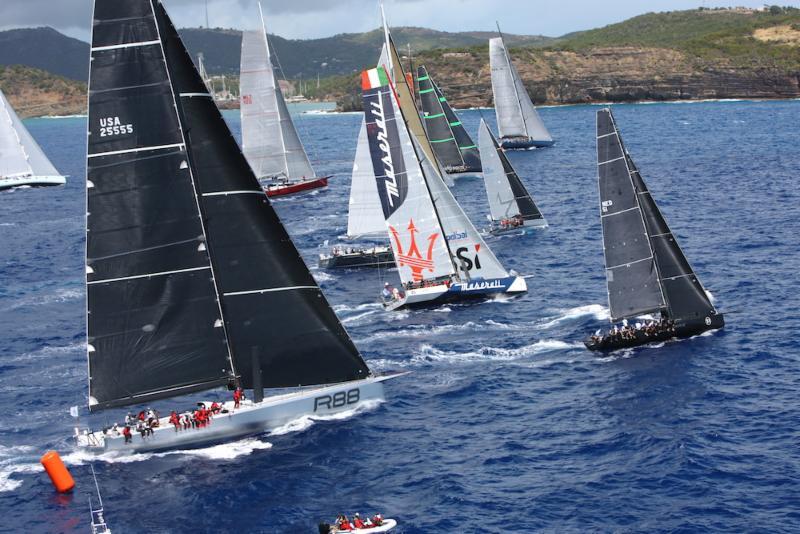
A weather front arrived as if by magic, and with the wind speed at the top of the rigs approaching 15 knots, the six yachts cruised the starting area like reef sharks ready to attack.  As the starting gun sounded from Castle Hill Light, the Maxi fleet powered up and the sound of immense loads echoed across the water as sheets were pulled on and rigs raked back to propel the high-performance racing machines out towards the open ocean.  The sheer power on display was awe-inspiring, as the fastest yachts in the Transatlantic Race 2011, searing through the water, foam hissing at the rail, started on their one-way ride across the untamed Atlantic Ocean.

Beau Geste, the Farr 80 skippered by Karl Kwok (Hong Kong), got the best start and sped away toward Brenton Point.  Puma Mar Mostro, skippered by Ken Read (Newport, R.I.), was next to cross the line followed by Rambler 100 and ICAP Leopard.  Vanquish was caught up in the Maxi mêlée and was stalled as the two 100-footers powered up on either side of the 65’ yacht crewed by the Oakcliff All American Offshore Team.  For the young crew aboard Vanquish, this is a ride of their life, lining up against the best in the world.

Beau Geste and PUMA Mar Mostro continued up the right-hand side of the course, playing touch and go with the rocky shoreline, while Rambler 100 and ICAP Leopard seemed locked in their own private tussle as the fleet headed offshore.  The magnificent 115’ ketch, sailing yacht Sojana, with a mahogany interior, is far heavier than her sporting rivals and skipper Peter Harrison (Reigate, U.K.) will surely be hoping for more wind.

For the yachts in IRC Class Four, which took the first race start on June 26 and are now a week into their journey, it’s a case of the rich getting richer.  Rives Potts Jr. (Essex, Conn.), skipper of Carina, leads the class with only the classic yawl Nordwind for company.  British Soldier is now 200 miles astern.

Jazz, the Cookson 50 skippered by Nigel King (Lymington, U.K.), is nearly 700 miles ahead of today’s starters and leads in IRC Class Two.  Jazz is struggling for breeze at the moment, but a low-pressure system located just to their north is tantalizingly close.  This area of wind is moving west, however, and if they can get to it, they will be carried swiftly along; if they don’t, they will be left to wallow in the short seas and little wind that it leaves behind.

Meanwhile, Huntington Sheldon, skipper of the Reichel Pugh 65, Zaraffa, is a happy man today.  Zaraffa is now in the breeze after a day of fickle wind.  And, as predicted, the Lithuanian Volvo 60, Ambersail, have made a big gain to the south and have been the fastest boat in class over the last 24 hours.

In the Open Class, Phaedo, skippered by Lloyd Thornburg, has been enjoying some great wind after moving south on Friday afternoon.  Superyacht Maltese Falcon, on the other hand, has been playing the shifts up the coastline of Nova Scotia, putting in a myriad of gybes.  Those who thought that the 298’ art deco superyacht would be coasting across the Atlantic are very mistaken.  The two highly distinctive yachts look like they are coming back together after over 50 miles of separation and it will be interesting to see which one will be out in front.  The two Class 40s also parted company after following the same line for the first 48 hours.  Concise 2, skippered by Ned Collier-Wakefield (Oxford, U.K.) went south and Dragon did not follow; the two yachts are now 70 miles apart on the race track.

All of the 24 yachts competing in the Transatlantic Race will be carefully planning their next move as they can never fully work out what lies ahead of them.  The yachts that have already settled into the race know one thing for certain, the magnificent yachts in IRC One will be coming on fast and almost certainly Rambler 100 or ICAP Leopard will overtake them before long:  just four hours into the race, Rambler 100 was exceeding 18 knots boatspeed and had already covered 40 miles.