Marine Ecology Luxury Yacht & Superyacht News

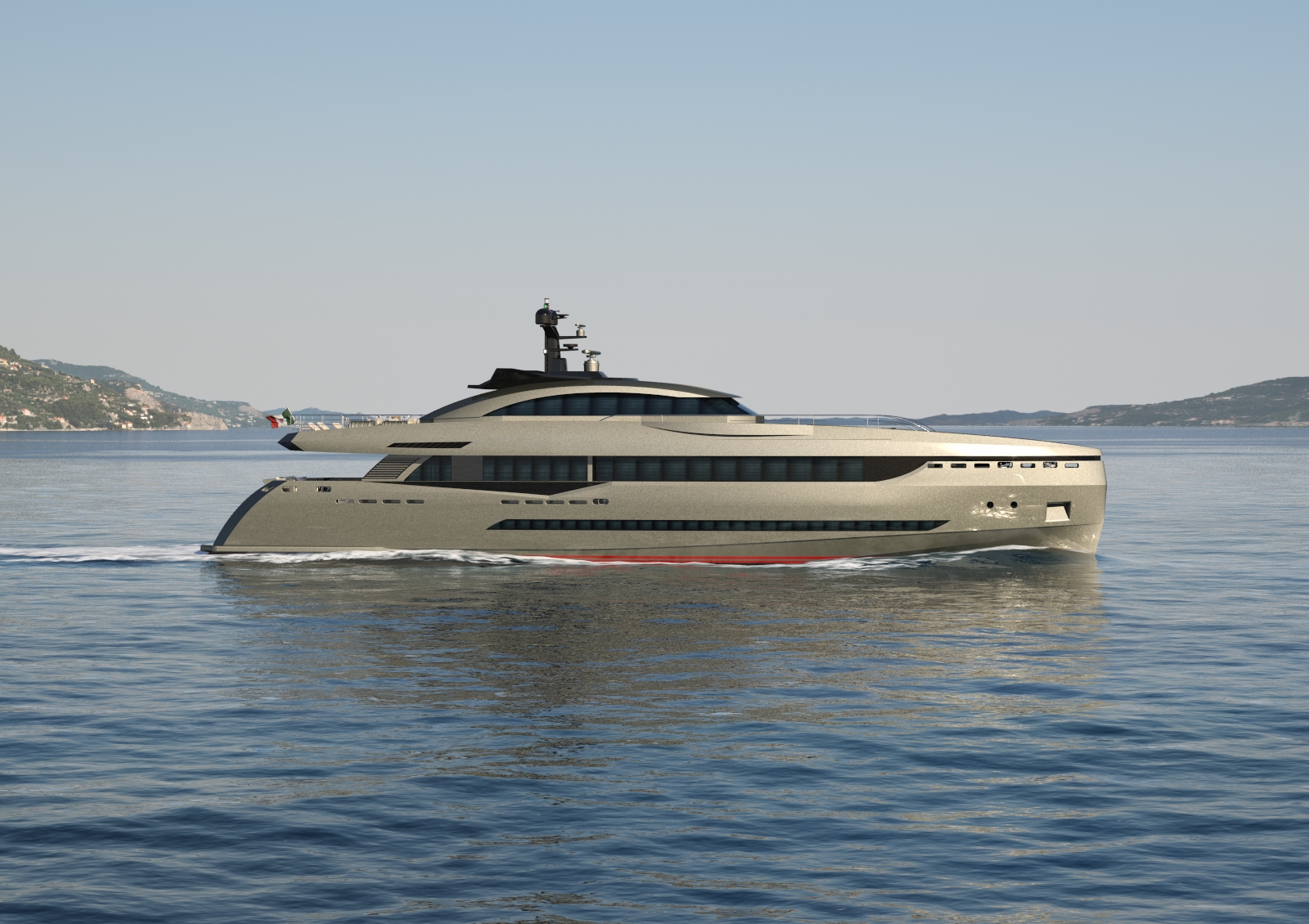
Ghost G180 Hybrid Superyacht by Ghost Yachts

November 15, 2010

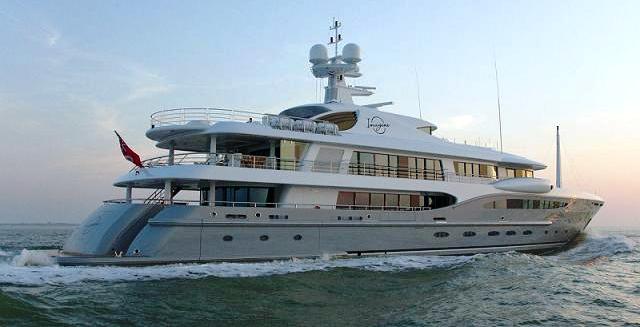
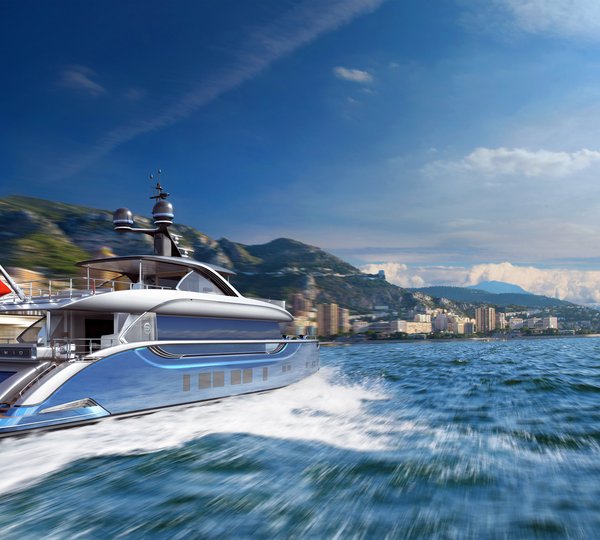
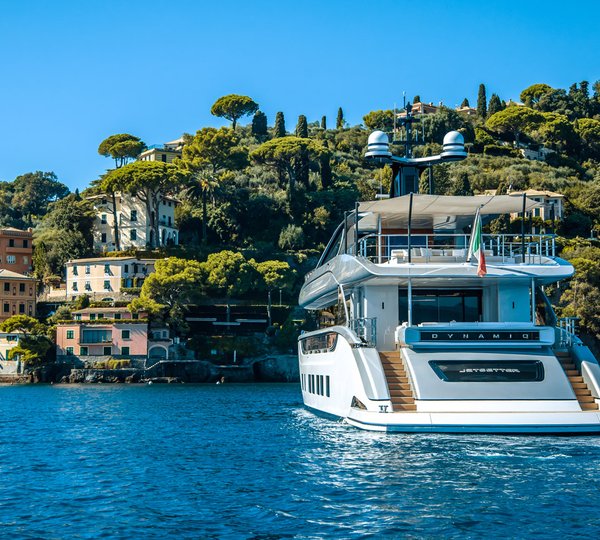
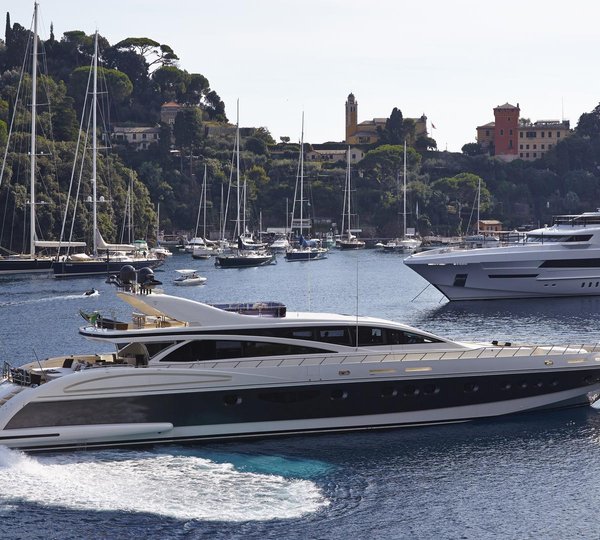
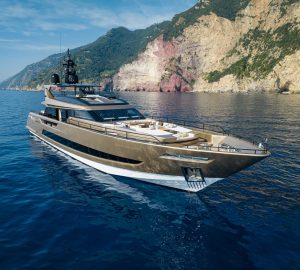
Ghost Yachts and the Italian design studio Gloss Design have joined forces with Imtech Marine & Offshore on the development of the superyacht Ghost G180H, the first full hybrid superyacht. The G180H was initially presented nearly a year ago and is Ghost Yachts next step towards more sustainable, innovative and efficient super yachts.

Ghost G180 hybrid superyacht by Ghost Yachts

Ghost G180 hybrid superyacht by Ghost Yachts

A solid foundation

Ghost Yachts used its Ghost G180 platform for the hybrid yacht. Its Fast Displacement Hull Form (FDHF) by Van Oossanen & Associates  offers the required efficiency to operate a large yacht with a relatively modest propulsion power. Imtech’s smart Hybrid system combined with Van Oossanen’s revolutionary FDHF have proven to be a perfect combination for a sustainable and efficient yacht. During the development of the system, Imtech managed to unravel the initial complexity of the Hybrid system and shaped it into a compact and sensible unit. Ghost Yachts reduced the required technical space by dividing the Hybrid’s technical space in two levels. The silent parts of the hybrid system like the Power Electronics Panels, batteries, and main switchboard are located on the lower deck while the four Volvo Penta D16G generators are located in an insulated engine bay underneath the electronics room. The Ghost G180H is propelled by two completely new electric Voith Inline Propulsors (VIP) of 750kw each. These high efficiency hubless steerable pods have an integrated electric motor and eliminate the need for propeller shafts and rudders. The Voith VIP’s and Imtech’s Hybrid system result in an extremely silent and vibration free propulsion system. The Hybrid system operates in seven different modes ranging from battery only to full hybrid operation. Each mode is specifically designed to ensure an optimal efficiency in every situation. The system is controlled by Imtech’s new IMAS variable frequency drives control system, with interfacing and remote control via the FT NavVision IPMS system.

Smart interior

The G180H has been thoroughly reviewed to learn about the power consumption in navigation and at anchor. The prime consumers have been reviewed to see how much power could potentially be saved. To reduce the power requirement for the chillers and fancoils the G180H’s windows are coated with a ceramic film that blocks out up to 80% of the sun’s heat producing infrared light.

The HVAC system is assisted by a cold water storage to extend the operational time of the system during battery only operation. The interior of the yacht is also designed to require less energy from the HVAC system. The main salon and dining room, for example,  are equipped with four generous lateral sliding doors which provide access for a natural breeze that flows through the superstructure. The layout will create a more natural and balanced climate inside this large space by virtually connecting it to the outside areas. Van Berge Henegouwen reworked the AV and communications systems to optimise power consumption. A thorough review of the systems’ components and the extensive use of LED lighting guaranteed a lower energy consumption.

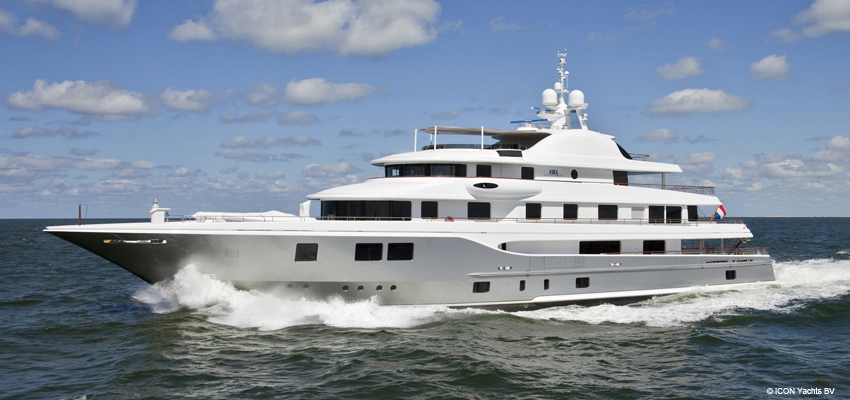
Ghost Yachts' Ghost G180 hybrid superyacht

Ghost Yachts' Ghost G180 hybrid superyacht

Remarkable results

Ghost Yachts has compared the G180H to a number of modern displacement yachts with a comparable length and volume. The overall fuel consumption was reduced by a vast 30% while the fuel consumption for hotel operation showed savings of up to 50%. The performance of the yacht is perfectly in line with today’s superyachts offering a cruising speed of 15.5 knots with a range of over 4500nm at a 13 knots passage speed.

“Developing the G180H was very rewarding.” Björn Moonen of Ghost Yachts explains. “In the beginning I approached the project with suspicion rather than enthusiasm. I was convinced that a hybrid system would be too complicated, too big and too expensive to build.” he continues. “The Imtech engineers were clearly not sharing my opinion. They developed the hybrid system’s layout with my concerns as starting point. When I saw the first technical layout and reviewed the space requirements, the enthusiasm started to grow, especially when we reviewed the overall efficiency data. It was impossible not to be excited by the enormous potential of the system .”

“All pieces of the Hybrid puzzle came together on the G180H” Imtech’s Sales Manager Marien van der Deijl explains. “Diesel Electric propulsion systems often require a lot of concessions in terms of performance and interior space on a yacht of this size. This time we were dealing with a combination of an optimal hull shape and a pair of Voith Rimdrives that matched perfectly with the available power of the DE hybrid system”.

On the horizon

Parallel to the development of the G180H, Ghost Yachts also finalised the technical development of their most popular yachts, the G180L and the <500GT G180V. These models also shared from the benefits of the hybrid’s development, confirming the need for efficiency to create speed. The G180V offers a 32knots cruising speed and a 36knots top speed. An updated centre boost unit gives the G180V a top speed of nearly 50 knots. The efficiency of the yacht is probably best displayed with a range of 4750nm at a passage speed of 15 knots. Ghost Yachts continues with the development of the Ghost G180K, their first sailing yacht which is expected to be presented next spring.

The world’s first Carbon Neutral speed boat – the Guardian S Class by Sauter Carbon Offset Design

October 18, 2010

A Mercedes Benz Blue-Hybrid Tender that demonstrates to the boating community how it can reduce “Global Warming Pollution” by 280 million metric tons per year.

The Carbon Fibre Guardian S Class is a is 45 knot Solar Hybrid Vessel powered by an EPA car regulated Mercedes Benz Bluetec engine coupled to a Carbon-Grossbauteile electric motor. When combined with other currently available technology her Fuel Consumption and GHG Emissions are 50 to 100% lower than any speed boat ever built.

Guardian S Class Tender - the worlds first Carbon Neutral Speed Boat. Image Credit SauterCarbonOffsetDesign.com

Guardian S Class Tender - the worlds first Carbon Neutral Speed Boat. Image Credit SauterCarbonOffsetDesign.com

The Guardian’s Lithium ion UPS provides a Zero Carbon cruising range of up to 50 nautical miles while her plug-in SunPower array generates enough free energy to motor Carbon Neutral for up to 1,000 nautical miles a year.

Richard Sauter head of design comments “Taking advantage of existing advances in Green Technology, the Guardian S Class leads the way in attacking one of the major causes of global warming and in doing so lays the foundation for the only marketing force likely to revitalize the boating industry in the face of ever increasing fuel prices ”.

While many look to revitalizing inland waterways, doing so without regulating the inevitable increase in pollution that will come as a result, will not benefit the related communities. By employing catalytic dry exhaust systems, Solar Hybrid power boats like the Guardian S Class are actively protecting rather than contaminating marine bio-systems.

Guardian S Class Tender - the worlds first Carbon Neutral Speed Boat. Image Credit SauterCarbonOffsetDesign.com.

Guardian S Class Tender - the worlds first Carbon Neutral Speed Boat. Image Credit SauterCarbonOffsetDesign.com.

The EPA estimates that registered recreational boats in the USA alone produce a staggering 375 million metric tons of Co2 per year. Carbon Neutral power boats that follow the Guardian’s example can reduce that figure, by on average 75%, thereby reducing “global warming pollution” by 280 million metric tons per year.

It will be interesting to see what green superyachts of the future will have a Carbon Fibre Guardian S Class tender as part of their water sport toys and amenities available for personal use and charter guests.

Currently available technology present in the Guardian S Class Tender

Parallel Mercedes Benz Bluetec V6/ Carbon-Grossbauteile Electric power generation
All Carbon Fibre construction / CGB GmbH
Optimum SunPower 315 Solar Cell deployment.
400 IPS Duoprop propeller system.  
Advanced Wave Piercing Hi-speed displacement hull.
Plug-in Lithium ion UPS rated at 50Kwh.

Guardian S Class Specifications

Length 900cm
Beam 210cm
Draft 50cm
Passengers 8 to 10
Weight 1.8tons
Max speed 45 knots
Mercedes Benz BleuTec V6 / Carbon-Grossbauteile electric motor diesel/electric
Total Power 300kw
Fuel diesel/battery
Zero carbon motoring range 50nm
Fuel and CO2 reduction 50 to 100%
Annual Carbon Neutral cruising range <1,000nm

The Hi-performance Carbon Neutral Guardian S Class is at the forefront of the Green Power Revolution.

Dometic’s In-duct Breathe Easy™ Air Purifier wins the IBEX Innovation Award

October 07, 2010

Dometic Marine, the world leading supplier of marine air conditioning, has won an industry-renowned IBEX Innovation Award for its new In-duct Breathe Easy™ Air Purifier.

Dometic Marine Wins the IBEX Innovation Award

On accepting the prestigious IBEX Innovation Award, Frank Marciano, President, Dometic Marine said: “I am delighted to accept this award on behalf of Dometic Marine and our innovative team of engineers. Having been at the forefront of the marine air conditioning industry for over fifty years, with the Cruisair, Marine Air and Condaria brands, we continue to focus on improving what we do so we do not fall behind the competition. The adoption of this state-of-the-art indoor air quality technology will soon be standard equipment aboard every air conditioned cabin cruiser in the world! The testimonials that we receive every day on this product make me feel good that we are improving people’s quality of life on the water. Special thanks to Bill Liptak who’s tireless efforts have made this low maintenance product, with it’s patent applied for features, not just another me-too!”

The In-Duct Breathe Easy Air Purifier is specifically designed to work within the ducting of a yacht’s air conditioning system. Operating silently, it purifies and cleanses air using Photocatalytic Nano-Mesh Technology with UV light. Each time the air circulates it is further purified.

The unit takes up little space and if retrofitted will require no alterations to be made to the vessel’s existing air conditioning unit.  There is no need for any mounting hardware as a section of the A/C ducting is cut out and the circular In-Duct Breathe Easy tube simply inserted, then the ducting is reattached to it.  The Breathe Easy is available in sizes to match all standard duct diameters.

Dometic Marine's In-duct Breathe Easy™ Air Purifier

The In-Duct Breathe Easy unit is also highly relevant for installation during a vessel’s refit and refurbishment as during such extensive work there are a myriad of solvents and glues used all of which give off dangerous odor-free emissions.  Coupled with the smell of new fabrics and carpets a recently refurbished vessel, although looking in pristine condition could contain highly contaminated and polluted air. Frank Marciano, President of Dometic Marine said, “I recently visited a 95ft yacht built in 2004 that developed a serious mold problem that was making the crew sick. To alleviate the problem, the captain had all of the air conditioning ducts replaced and installed our In-Duct Breathe Easy Air Purifiers. Within days the boat’s crew could actually perceive that they were breathing cleaner air. It makes me proud to offer such an incredible solution to our customers.”

Marciano continues, “I think boaters are used to dealing with some sort of odor onboard due to residual effects of the boat’s high humidity environment, especially if a boat is not used everyday and the air gets stagnant. With this revolutionary new product, people don’t have to live with odors anymore. I used to have odors on my 30ft cabin cruiser, but since I put in the Breathe Easy Air Purifier they are completely gone!”

The health risk of inhaled mold could be heightened onboard a boat as dampness is common, cabin spaces are more difficult to ventilate with fresh air, and excessive exposure to contaminants is more likely due to long periods of time spent aboard.

Oceanco Honored at the International Seakeeper’s Society’s annual Bal de la Mer

October 07, 2010

Oceanco was singled out and honored at the recent International Seakeeper Society’s annual Bal de la Mer held in conjunction with Yachts International Magazine at the 100-year-old Oceanographic Museum in Monaco on 23 September 2010.

Bal de la Mer


Mr. Mohammed Al Barwani, Chairman of Oceanco, joined the International Seakeeper’s Society (ISKS) as its newest founding member. Barwani states, he is “personally and professionally committed to helping conserve the world’s oceans.” When ISKS Chairman, Michael Moore acknowledged him on stage, Barwani said that he became a founding member “on behalf of all of the employees at Oceanco.” Additionally, Oceanco was a corporate sponsor for the fund raising gala. The black tie gala included a live and silent auction, and a sit down dinner held in the unique environment of the Museum’s aquarium, surrounded by tanks of live fish.

The ISKS, founded in 1996 by a group of yacht owners, developed an automated atmospheric monitoring system that could be installed on yachts and provide data to scientists at Scripps and NOAA—among other institutions—on the health of the oceans. Oceanco installs these Seakeeper 1000™ monitoring units on all the yachts they build.

Each year at the charity Bal de la Mer, the ISKS presents an award to an individual who has demonstrated an extraordinary commitment to ocean conservation. This year the award was presented to His Serene Highness Prince Albert II the day after during an intimate reception, in front of founding and board members of the ISKS.

Azimut Yachts aims for eco-sustainability

October 03, 2010

From the successes of today, a contribution for tomorrow’s world. Azimut Yachts illustrates the results of its environmental responsibility plan and presents the Magellano 50, the motor yacht with the highest level of ecocompatibility ever reached.

Magellano 50 Motor yacht - Credit Azimut Yachts

Magellano 50 Motor yacht - Credit Azimut Yachts

Paolo Vitelli, President of the Azimut Benetti Group, today presented the results of the environmental sustainability programme that Azimut Yachts has put into action as an integral part of its development plan.

The sustainability plan passes through a multiplicity of actions. Azimut Yachts obtained ISO 14001 certification, the first amongst the boatyards building large leisure craft, by virtue of a coherent and effective management system addressed to reducing the environmental impact of its activities. Furthermore, since 2004 it utilises the Core Infusion lamination system and in 2007 the research was started into the use of paints and resins with low environmental impact.

In fact, Azimut Yachts has the most important research centre in the world in the nautical sector, committed to the study of innovations and immediate application in favour of the end user. Sensitive to eco-compatibility for several years now, as demonstrated by the installation of photovoltaic panels on the Azimut 55 in 2004, or the development of the Electric Diesel Motor for the Benetti’s Ambrosia in 2006, the Azimut Benetti R&D Centre has intensified the level of attention on these themes in the last few seasons.

“We have made extraordinary steps forward regarding production processing and product”, underlines Vitelli, “If we can present a motor yacht now on the market that reaches the maximum level of eco-compatibility and built in low environmental impact boatyards, most of the merit must go to investments in research”.

Amongst the most interesting research frontiers investigated by Azimut’s R&D Centre is certainly the development of hybrid propulsion engines that actually permit navigation with an almost total lack of noise and a reduction of consumption on short day trips. The revolutionary Easy Hybrid system unites these extraordinary potentials with the maximum facility of use. In fact, you can shift from the traditional system to the electrical system and vice versa, either manually or automatically, which effectively permits the use of electric motors during slow navigation, including manoeuvres and the phases of entry and exit from marinas.

A yacht is a complex system and the engine is only one of the elements to be taken into consideration. To maximise the level of eco-compatibility, it is necessary to intervene on all aspects; from the hull to the finishes. The strategy adopted by Azimut Yachts has been to follow the principles dictated by RINA and to apply the objective of the RINA Green Plus Notation, which has meant the research and introduction of an extraordinary packet of innovative solutions; high performance propellers, LED lighting, and the use of new anti-UV films applied to the windows to improve thermal efficiency. Furthermore, more eco-sustainable materials have been introduced; the most recent FSC woods, FSC green teak with structural and aesthetic qualities that are comparable or superior to solid wood.

Experimentation was driven even to the introduction of nanotechnology to develop a longer lasting anti-fouling product with a lower impact on the marine environment. The addition of “nano-structured” products based on antibacterial and ionised mineral salts allows increasing the anti-fouling protection, both in terms of effectiveness and duration over a period of time.

Azimut has gone further than the requirements of the RINA Green Plus. In fact, design planning attention was addressed to the respect for the environment, such as research into textiles using natural fibres, the use of leather treated without using chromium, as well as the use of handles finished by bio-chroming.

The research continues towards new frontiers with the investigation of an innovative composite material to reduce environmental impact during product processing and during their final disposal. The first application can be found on the Magellano 50; the dashboard is manufactured in a bio-sandwich material derived from biodegradable linen fibre with the core in FSC cork and ecological resin with 55% of natural substances.

Motor yacht Magellano 50 - Credit Azimut Yachts

Motor yacht Magellano 50 - Credit Azimut Yachts

The Magellano Collection, which last year launched a new, more-attentive navigation philosophy towards the environment, restoring value to the experience of travelling by sea, was the natural candidate to receive all these solutions. Only one year after the launch of the Magellano 74, the Magellano 50 was previewed at the International Boat Show in Genoa, the only motor yacht under 60’ to attain the RINA Green Plus notation. This goes to show how important results can be produced by a company sustainability plan rooted along the whole value chain; from the development of concepts for alternative low environmental impact boats and passing through “clean” production processes.

Magellano 50 Exterior - Credit Azimut Yachts

Magellano 50 Exterior - Credit Azimut Yachts

Magellano 50 raises the bar of eco-compatibility in the area of motor yachts to levels that have never been reached before. Designed to navigate long distances and in all weather conditions, the Magellano 50 motor yacht is an ecological project right from its concept, inasmuch as it suggests to boat owners a new ideal of navigation; efficient and pleasant at various speeds.

“Azimut Yachts represents excellence,” says Paolo Vitelli, “we intend to remain the sector leader for a long time yet. As we see it, this means we must be the leader in sustainability. Our strength lies in the ability to look to the future, to keep our thoughts and ideas one step ahead: “thinking ahead”. The environment and the sea are part of our heritage and as such they must be defended and protected. In the interests of everybody”.

Superyacht Exuma awarded Green Plus Platinum certificate

September 30, 2010

The Picchiotti 50m megayacht EXUMA, the first motor yacht built by Perini Navi from the Vitruvius® series has been awarded the Green Plus Platinum certificate, as well as the Green Yacht of the Year award in recognition for her proven commitment to environmental excellence. The Green Platinum award is the highest calibre green certificate a yacht can achieve.

Super Yacht Exuma - photo credit to Giuliano Sargentini and Michele Lombardo-M1 Media by courtesy of Perini Navi

Super Yacht Exuma - photo credit to Giuliano Sargentini and Michele Lombardo-M1 Media by courtesy of Perini Navi

Rina, one of the oldest classification societies in the world, established its commitment to environmental excellence by launching the goal-based class notation, GREEN PLUS. The notation is completely voluntary and is based on an environmental performance index, which covers all aspects of the vessel’s impact on the environment, including, but not limited to, carbon emissions

Rina grant the notation to new vessels such as superyacht Exuma that make a significant investment in design solutions, onboard equipment and operational procedures that offer an improvement in environmental performance beyond the minimum levels that are required by international regulations on environmental protection.

From the outset of the design process, the owner, the architects, Philippe Briand, Vitruvius Yachts Ltd and the shipyard, Picchiotti, were determined to create and build the ultimate environmentally friendly explorer yacht.

The key focus of the superyacht design was to reduce consumption and CO2 emissions. One of the main ways that motor yacht EXUMA achieved was by significantly reducing the yacht’s drag in the water when compared to other more traditional displacement yachts. M/Y Exuma’s Briand optimised hull form enables the yacht to glide through the water with as little resistance as possible. Superyacht EXUMA’s hull has an extensively tank-tested, stretched waterline length which has a reduced transom immersion, a plumb bow and clean aft sections that allow for easy flow on the propellers. With a lower centre of gravity, resulting in less pitching and rolling, the added drag associated to ship motions is kept to a minimum. In addition, Vitruvius Picchiotti balanced luxury yacht Exuma’s superstructure volumes to further save on weight.

During megayacht Exuma’s sea trials earlier this year in June, yacht Exuma achieved a speed of 12 knots and corresponding engine revolutions of 1400 rpm, which resulted in an impressive eco-friendly fuel consumption of only 9.8litres per nautical mile. No other comparable motor yacht has ever achieved this low consumption rate.

SuperYacht Exuma On water - photo credit to Giuliano Sargentini and Michele Lombardo-M1 Media by courtesy of Perini Navi

SuperYacht Exuma On water - photo credit to Giuliano Sargentini and Michele Lombardo-M1 Media by courtesy of Perini Navi

Superyacht consulting specialists Alpha Marine Consultancy (AMC) join RINA.

September 21, 2010

Alpha Marine Consultancy (AMC) the superyacht consulting specialists have joined forces with RINA the international classification society.

AMC have recently signed a consultancy agreement with RINA. Stefan Whitmarsh, AMC’s Managing Director, is delighted with this move forward and will announce this at the forthcoming Monaco Yacht Show.

Stefan Whitmarsh from AMC said:

“In today’s maritime operations the environment is one of  the most important consideration for owners, operators and classification societies. AMC can offer a turn key solution centre for owners, operators and shipyards to make a real difference to the environment, and potentially reduce operational costs of the vessel”.

 ”This Partnership with RINA will put AMC in the best position to consult with our customers on all aspects of superyacht experience, from design, build, operation and classification. Together we will now be able to focus on RINA’s environmental policies Green Plus and Green Passport “.

RINA Logo

RINA Logo

Megayachts more eco-friendly with Green Yacht Systems

September 17, 2010

Many megayacht and super yacht captains are concerned with the environmental footprint left by their vessels and with current regulations in place; they can’t afford to not be.  Possibly the most far-reaching step toward protecting the waters is to keep oil out of the discharge.  This can be accomplished with Arid Bilge Systems’ new Green Yacht System.

Arid Bilge Systems Logo

Arid Bilge Systems Logo

This system utilizes seven basic components, which work together to divert water from the overboard discharge and send it to a gray water tank or back to the bilge, if it reaches 15 PPM or more.  The end result is a dry bilge and verification of a clean discharge.

The first component in the Green Yacht System is the Arid Bilge, a dry bilge vacuum system that removes water from up to nine separate compartments and discharges it from the central unit at a controlled flow rate up to 17 GPH.  Three different models of Arid Bilge Systems are available.

The second component is the Eco Friendly Discharge Companion II, a coalesce-type, three chamber oily water separator.  It captures the bulk of the hydrocarbons commonly found in bilge water.  The oil floats at the top of the central chamber and is viewable through a sight-glass window.  The standard version has a lift lid for easy removal of the accumulated oils.  This gravity-feed unit has no moving parts and is easy to maintain.

Arid Bilges' Eco Friendly Discharge Companion 2

Arid Bilges' Eco Friendly Discharge Companion 2

A simple sump is the third component in the Green Yacht System.  Because the Eco Friendly Discharge Companion is a gravity-feed unit, this sump is needed to collect the flow and propel it through the cartridges.

Then, the bilge water moves through the fourth component, a pair of Mycelx polishing cartridges.  This step lowers the PPM level further to assure a level discharge.

The fifth component is the flow stabilizer.  This component assures a stable flow, since small bubbles and high flow can falsely trigger the Deckma Hamburg Oil Monitoring Device.

The Deckma Hamburg Oil Monitoring Device is electrically connected to the alarm and control box.  This device is approved by the US Coast Guard as oil pollution prevention equipment.  It has been tested in accordance with IMO Resolution MEPC.107(49).  Pre-wired to the control and alarm box, if power is turned off to the control box, the device would also turn off, resulting in overboard discharge shutdown.  The Oil Monitoring Device can be programmed for the Canadian 5 PPM mandate while travelling through the Great Lakes.

The final component is a Y-valve or overboard discharge sump.  It’s spring-loaded to automatically divert the flow back to the bilge or a gray-water tank in the event of a power failure or alarm condition.  When a sump is installed, it receives its power from the alarm and control box.  In the event of an alarm or power failure, the sump stops running and will eventually overflow back to the bilge, preventing a discharge above the 15 PPM mandated level.

The Green Yacht System is installed on the 2010 M/Y Cortina of Newcastle Shipyards.  The ship’s captain, Nick Murphy, appreciates how the system enables the volume and type of oil leaked to be observed.

“It’s instrumental to keep watch over the bilge and potential leaks and it helps detect problems early,” said Captain Nick.  “The system is space-saving, flexible and it keeps the bilges dry.  Arid Bilge’s Green Yacht System is a great alternative to other unreliable methods of keeping oil out of the discharge.”

Finding an oil stain in a dry bilge makes it a breeze to locate and fix the source of that leak.  In the long run, the yacht becomes more reliable, and smaller repairs are made sooner before more serious damage is done.  The Green Yacht System is helpful to both yacht owners and the environment.

Superyacht hull optimisation by BMT Nigel Gee

September 15, 2010

James Roy, Yacht Design Director at BMT Nigel Gee, a subsidiary of BMT Group Ltd, the leading international maritime design, engineering and risk management consultancy, draws from his experience in the design of numerous superyachts and commercial vessels to explore the practical limitations of optimising superyacht hulls.  Together with his colleague, Naval Architect Rob Sime, they provide insights and reasoning for the process differing from that in the field of commercial vessel design.

A properly optimised bulbous bow can offer significant savings

Operating costs and fuel costs in particular are the biggest driver in the commercial vessel market. The desire to reduce these costs has always provided a focus for the optimisation of the vessel’s hull to develop efficient ships with minimal powering requirements; even a significant investment in hull form optimisation at the design stage can quickly achieve a payback.

Large yachts however spend far less time at sea than commercial vessels and consequently, for an average yacht, fuel costs represent a far smaller proportion of annual operating costs. Additionally for those who own and operate these yachts the adage that, “If you have to worry about filling her up then you probably can’t afford it” holds true and cost is in general not an issue. However with rapidly increasing fuel prices, ever more stringent environmental legislation and the desire to be seen to be green, there is increasing focus in the superyacht industry to improve efficiency.

An optimised 85m yacht about to undergo physical testing

Large yachts tend to have relatively high hotel loads and, given the relatively low hours at sea, much of today’s focus within the industry is on reducing generator fuel burn through energy efficient technologies. However hull efficiency remains a very significant part of the overall through life efficiency, and whilst optimisation of a yacht hull is often undertaken, it is typically compromised by other factors relating to the functional aspects of the design. It is these factors that present different challenges to the optimisation of a commercial vessel.

Flow Visulisation Tests

BMT Nigel Gee undertakes optimisation across both the yacht and commercial vessel industries. Critically our work is not limited to the pure naval architecture of the optimisation process but also to complete vessel design and engineering (from concept through to delivery) allowing valuable insight into how the processes differ between yachts and commercial vessels. BMT Nigel Gee chooses to adopt a methodical approach in developing a hullform. This makes use of optimisation techniques predominantly based on experience, married with an appropriate level of computational analysis. With modern computer techniques it is very easy to launch into the generation of 3D lines too early in the process without sufficient focus on a formal optimisation methodology. Additionally the use of Computational Fluid Dynamics (CFD), whilst of significant potential value, has its limitations. Where utilised, such techniques must in our experience be tempered with optimisation variable limitations specific to large yachts gained from practical experience, some of which will be cited as specific examples in this article.

Generic image - hull lines plan in blue print

Our hull design process begins with three critical parameters; displacement, length and speed.  The latter two variables define the Froude number which gives an indication of the basic hull type, where to set our goals and how challenging they will be to achieve.  With a commercial vessel there will be a well defined operating profile with target speeds often derived from analysis of required transit times or freight rates vs. optimum voyage speed analysis. This is not so for yachts where the cruising speed and maximum speed are often decided upon by the captain or the owner. Additionally there is no defined, or even typical, operating profile to apply so deciding the optimisation point in an analytical manner can be very difficult. It is also often the case that the maximum speed desired may be subject to one-upmanship resulting in a large difference between the cruising speed and the maximum speed, further complicating the optimisation process.

Generic image - hull lines plan.jpg

With a well executed project, part of the job of the naval architect is to try and influence the owner’s decisions to bring the target speeds and optimisation point to sensible parameters. This is often a difficult job!

The third variable in our initial assessment is the displacement in relation to length and the next step is to undertake an assessment of the yachts overall design concept.  Is the vessel a slender, low volume design or a beamy, high displacement motor yacht? These factors have a critical influence on the direction that we follow, as displacement in relation to length is the most influential parameter on resistance.

With a commercial vessel the naval architect will be in control of the design intent behind the concept. This is rarely the case with large yachts where the stylist (aka the Yacht Designer) will have defined the design intent and many of the defining features of the yacht. These will have already been laid down and “sold” to the owner. It then becomes the job of the naval architect to work with the stylist to try and maintain as much of that design intent whilst quantifying the compromises that may have to be made in order to improve the hydrodynamic efficiency of the overall design.

Optimisation of appendage alignment (Roll Fins)

Additionally at this stage we will undertake a preliminary stability assessment in order to confirm that the beam, often already decided by the stylist, will be acceptable. In conjunction with this, preliminary powering estimates will also be made to verify the space reserved for the main machinery space.

Following the initial assessment we set target values for the optimisation of key form coefficients and parameters including block, prismatic and maximum sectional area coefficients, longitudinal centre of buoyancy and floatation, wetted surface area and immersed transom area.  If a bulbous bow is to be used the basic parameters are set down; bulb type, centreline profile shape, sectional area and immersion. Additionally the effects of appendage and propulsion system integration are considered including propeller diameter, tip clearance and rudder configuration amongst others.

Optimisation of bulbous bows using Computational Fluid Dynamics

It is normally at this point that many of the aforementioned features of the stylist’s design intent start to present barriers to effective optimisation. Two examples spring to mind. The first is a 100m motor yacht where the arrangement of the design had been centred around a central vertical ‘feature’ staircase running from the tank deck right to the sky lounge of the yacht. The longitudinal location within the yacht was fixed by the stylist and considered immovable. The end result of this was that the engine room had to be pushed relatively far aft in the design, resulting in a less than optimum LCB, form coefficients and steep buttock angles, all contributing to an increase in resistance. The second example was an 85m motor yacht where the design featured a large swimming pool in the aft lazarette (commonly called the ‘beach club’ on large yachts). In order to accommodate this, and integrate the shaftline, the hull had to be deepened aft resulting in increased transom area and non optimal LCB: The consequence of which was a significant increase in vessel resistance and reduced propulsion coefficients.

The next step in our process involves optimisation of the sectional area curve.  This is an exercise which is often forgotten but achieving the correct area profile is critical in achieving a set of hull lines which combine the desired characteristics with efficient hydrodynamic performance. We will generally start with the sectional area curve for a basis yacht such that we have a known and quantified baseline. Once the sectional area curve has been developed to our satisfaction we can modify the parent lines to obtain the optimum midship section shape and area distribution.

At this stage we must also consider further practical constraints which limit our ability to achieve the desired sectional area shape. Many of these are common to both commercial vessels and yachts alike, such as integration of the selected propulsion system. However some are in general limited to yachts only, for example roll fins on yachts are designed for operation at zero speed. In the absence of hydrodynamic lift they generate the required righting moments by being over sized (typically 30-40% greater area than conventional roll fins) and operating in a paddle fashion. These large fins are often constrained in their longitudinal position by internal arrangements and frequently present a serious challenge to integrate within the beam-keel envelope whilst maintaining an optimised sectional area curve and undistorted waterlines.

Bow thrusters are another common challenge on yachts. Typically, in an attempt to maximise internal volume for accommodation, they are pushed very far forward in the general arrangement. This can lead to fuller forebody waterlines and sections with the resulting half angle of entrance being increased significantly to achieve the minimum required tunnel length.

Having developed set of lines optimised to the principal parameters, as far as possible, within any accepted compromises, the next step in our process involves more refined consideration of section shapes, waterline shapes and buttocks. Generally by this stage we will have a clear idea of the mix of characteristics we are looking to incorporate; partial propeller tunnels, required return in stern buttocks and forward waterline curvature are all parameters which we optimise at this time. The use of CFD can be useful at this stage to compare the impact of subtle refinements and to assist in positioning appendages such as bilge keels or to study theoretical flow patterns in areas of special consideration.

An excellent example of a design where efficiency has not been overly compromised by function is the 73m motor yacht Silver (2008). In this case the GRT of the design (internal volume, and therefore function) has been restricted in order to save weight resulting in an internal volume of only 60% of a typical 73m. The result is that a high length beam ratio can be adopted together with a high length displacement ratio.  This resulted in the vessel achieving a 27 knot maximum speed with only modest levels of propulsive power. It is evident in this design that the owner has accepted fewer functional luxuries in order to achieve a fundamentally efficient design; less accommodation space, no helicopter pad, no large swimming pool etc.

The optimisation of a yacht hull is beset with challenges, many beyond the control of the naval architect. In the interest of ensuring efficient hydrodynamics, BMT Nigel Gee attempts to manipulate the yacht’s layout such that the impact of these constraints are minimised allowing the highest level of optimisation to be achieved. However the dynamics of the particular project, relationships and parties involved often means that on many large yacht projects significantly higher levels of compromise are required than would be expected for a commercial vessel. Educating the client and stylist in a quantified manner as to the impact of compromise is as much part of the design process as the naval architecture. Ultimately it is up to the client to decide how much compromise they are willing to accept but involvement of a naval architect at the very early design stage of a project will ensure that the hydrodynamics and design intent of the stylist can be harmoniously integrated with minimal compromise.

Prince Albert II of Monaco Foundation launched WOOD FOREVER

September 09, 2010

Providing access to water to as many people as possible, conserving biodiversity, putting forward solutions to curb climate change and its effects: these are the three key action areas to which the Prince Albert II of Monaco Foundation is dedicated.


Wood Forever

A concentration of these three issues can be found in one sole ecosystem: the tropical forests.

Within the framework of its “Monaco makes a commitment against deforestation” initiative, the Prince Albert II of Monaco Foundation and the MC2D Association are launching “Wood Forever” which aims to sensitize all those involved in the yachting market, professionals and clients alike, to only use wood certified as originating from sustainably-managed forests.

The Monaco Yacht Show has naturally decided to give financial backing to this initiative and will play host to the launch of “Wood Forever” at the 20th edition of its Show, thus becoming one of the protagonists in this fight against deforestation.

The tropical forests are home to over 75% of the Earth’s biodiversity and their destruction is responsible for more than 20% of all greenhouse gas emissions. The main cause of this massive and alarming destruction stems from the lack of economic development of this resource.

It is only by sustainably managing our forests and certifying their exploitation that we can really enhance their value. By using certified wood we are able protect these forest expanses and their biodiversity, whilst equally respecting the populations living there. The yachting sector is a large consumer of wood, whether its intended use be for decoration or construction. As such, it is clearly one of the main vehicles for making individuals aware of their own responsibility. We will only be able to stem and perhaps halt deforestation if everyone commits to only using certified wood.

“Wood Forever” is the catalyst of a movement already adopted on certain construction sites at the request of clients who are increasingly concerned about the environmental impact of the construction, decoration and future use of their yachts. The Foundation wishes to speed up and amplify this movement since yachting is a domain of excellence, the window of the luxury industry and of know-how. Whilst the yachting sector often judges itself on the measure of quality of its creations, it must also set an example by displaying virtuous and socially-aware behaviour. This is the message that the Foundation intends to convey to the market as a whole.