Legal & VAT Yacht Issues Luxury Yacht & Superyacht News

Italy passes welcome new regulations to reduce superyacht bureaucracy

May 18, 2011

In a move that is sure to bring many smiles in the luxury yacht industry, Italy has recently passed new laws, called the Decreto Sviluppo, which will have the effect of reducing much of the unnecessary bureaucracy surrounding the Italian marine and superyacht sector. It will also help in creating a simplification of much of the bureaucracy related to general superyacht activities.

Superyachts including Lady Lola in Portofino Harbour in Italy

Superyachts including Lady Lola in Portofino Harbour in Italy

The UCINA (Italian marine industry federation) president Anton Francesco Albertoni says “The government has finally outlined a policy for the marine industry after two difficult years,” and “We welcome it as an acknowledgement of the impact our sector has on the economies and job sectors of coastal areas — and now wait for the various administrative departments to adopt these measures which the marine industry has spent so long fighting for.”

The UCINA is hailing the recently introduced Decreto Sviluppo (Development Decree) legislation as a major step forward for leisure boating in Italy.

The new Italian yachting legislation opens the way for the building of 40,000 yacht berths and will bring in around 10,000 jobs in marine services. There has also been an elimination of the building permit needed for the construction of floating pontoons.

BOATING REGULATIONS in Italy

Legislative reforms, information, culture, events and boating tourism are the activity areas on which UCINA strategically invests in order to achieve the objective of developing the Italian boating market; the double benefits is supporting an important industrial sector and creating economic and social development in many Italian areas.

Renewal of regulations

The concrete path that has been undertaken in order to encourage the development of Italian industry in the last twelve months is articulated – at the institutional level – by UCINA projects on the main legislative, tax, administrative and environmental topics, which are supposed to complete the renewal of the boating regulations. The work of the association aims at achieving goals on a regular basis so to obtain the regulatory stability for this sector thus contributing to a positive and long-lasting development. Code and regulations of the boating sector; a new global legal system intended for the Chartering and Lease activities, a new framework law for Protected Marine Areas; the Boating Sector’s capacity, i.e. port characteristics and features and sea-land logistics for small boats; training. These are the main projects on which UCINA has been working with the Government and Institutions during the last twelve months, even though the economic and political situations were not favourable.

UCINA, the Italian marine industry association (Unione Nazionale dei Cantieri e delle Industrie Nautiche e Affini) is a non-profit organization for the development and promotion of the boating sector, as well as encouraging knowledge about the sea and boating tourism.

UCINA, with headquarters in Genoa, is a member of Confindustria (the Confederation of Italian Industry), and participates in that group’s Transportation Committee as well as Infrastructure Committee.

The Isle of Man Ship Registry Grows Superyacht Sector

May 05, 2011

The Isle of Man Ship Registry 2010 report shows growth in the superyacht sector. For more details download the report here: The Isle of Man 2010 annual ship registry report.

In every bay where superyachts group to berth or drop anchor, Manx-registered vessels are becoming ever more prevalent. Where once only one or two flags adorned the aft end of the great majority of the world’s most prestigious yachts, the names Douglas, Peel, Castletown and Ramsey now lie beneath the fluttering red ensign and Isle of Man surveyors can be seen, in our distinctive bright red overalls, from Fort Lauderdale to Zhuhai, and from Jakobstad to Cape Town.

The Isle of Man ship registry logo

The Isle of Man Ship Registry success in continuing to attract a share of the highest quality new and existing yachts demonstrates the continuing high regard which the Isle of Man Ship Registry commands among builders, management companies and owners. From the initial contact with the building yard onwards, every member of our team strives to demonstrate an attitude of excellence.

The Isle of Man Ship Registry’s approach to inspection during the yacht new build process continues with the tested format of making three visits. They attend at the pre-build meeting during which we discuss the yacht’s basic design, focusing primarily on aspects related to compliance with the Large Commercial Yacht Code.

At this stage, the division of responsibility is explained to Class, building yard and owner’s representative and our emphasis on open communication is reiterated.

The vessel under construction is attended twice more – once at the mid-build stage, when structural fire protection is nearing completion and the provision of life-saving and fire-fighting appliances is being finalised, and once again shortly prior to delivery so that any last minute problems between Class and the yard can be dealt with as necessary.

Bahamas to develop a dedicated superyacht registry

March 03, 2011

Superyachts that frequent The Bahamas are familiar with the duty-free and/or flag-state services they offer – now the Bahamas are developing its own dedicated superyacht registry.

While superyachts have been able to register under the Bahamian flag for some time, they were technically grouped under the ship registry. However, according to The Bahamas Maritime Authority, the megayacht ranks have been growing to the point that a separate structure seems more logical.

Bahamas Flag

Bahamas Flag

 As a result, the Bahamas Martime Authority began creating The Bahamas Yacht Code in late 2009 for the registration and management of what it terms “Large Commercial Yachts.” The new Bahamas Yacht Code will apply to yachts from 24 meters (79 feet) load line length and up to 3,000 gross tons. Declared non-commercial yachts will be recommended to comply with those standards.

 “As you are no doubt aware, we have an impressive ship register, one of the largest fleets in the world with over 52 million in gross tonnage,” said the Bahama’s prime minister, Hubert Ingraham to more than 200 participants at the opening ceremonies at the third annual Bahamas International Maritime Conference and Trade Show being held at the Our Lucaya Resort in Grand Bahama.

“We look to the growth of a Mega Yacht Registry. It is not our goal, however, to have the biggest fleet in the world.  What we desire is to have the best.  I hope that you agree with me when I say that we are well on our way toward achieving this goal.”

Mr. Ingraham said the government is also proud that the country is on the White Lists of all of the world’s Port State Control regimes.

The Bahamas Maritime Authority is currently speaking with Bradford Marine Bahamas to help it develop and promote the new yacht registry.

Bradford Marine Bahamas has a purpose built facility that has been accommodating superyachts since the late 1990s. It has 2,500ft of docks that benefit from 25ft-deep water. It can also haul out yachts of up to 230ft using an on-site floating drydock. Larger megayachts can be serviced next door at Grand Bahama Shipyard thanks to a partnership agreement.

Charter Superyachts Receive new Spanish Canary Islands Registry Tax Exemption

March 02, 2011

A tax exemption for superyachts listed with the Canary Islands Special Registry and  has recently been agreed by the Spanish government.

The official announcement on Spain yacht charter tax follows a series of meetings with the yachting industry and Canaries Registry officials. It was made in response to a binding legal consultation with the Spanish maritime authorities.

Many are calling the tax change an important step forward which will inevitably further help open up Spanish waters to the international superyacht charter industry.

The Special Registry rules and regulations are interpreted so that the Spanish matriculation tax would not be applicable to yachts listed over 100t and used for charter.

The Canary Islands Spain

Contact a tax specialist for any advice on yacht tax.

Changes in French VAT Exemption for Commercial Vessels

January 18, 2011

As expected, France has published a change in its VAT law and policy relating to commercial vessels. Published as Article 70 of Law No 2010-1658 of 29 December 2010 amending Article 262 of the unified French Tax Code, the Code Général des Impôts, the change now limits VAT exemption only to those commercial vessels operating on the high seas. In a measure underlining the importance of the “high seas” requirement in this change, ships’ provisions supplied to inshore fishing vessels are now also excluded from exemption. The change is effective from 1 January 2011.

Since May 2004, France has sanctioned a VAT exemption for all commercial vessels (including commercial yachts) meeting three cumulative conditions: be registered as a commercial vessel at any Flag State registry, have a permanent crew and be earmarked for charter. This regime, often referred to in yachting circles as the French commercial exemption (FCE), meant that yacht owners and operators transacting in French territorial waters did not have to register for VAT and charge VAT on charters. Moreover, they benefited from tax-free fuelling and provisioning of their vessels. The regime proved popular with those yacht owners who didn’t wish to operate within the VAT system as registered persons.

The European Commission

The European Commission

However in March 2010 the European Commission launched infringement proceedings against France, declaring that French legislation in this area was not in line with wider European Union VAT law, as it unduly extended eligibility for exemption. The Commission cited, in particular the absence of any stipulation in the relevant French law (as opposed to EU law) that “use for navigation on the high seas” was a condition for the exemption of those vessels carrying passengers for reward or used for the purpose of commercial  activities. The Commission therefore demanded France change its legislation so as to comply with EU law.

The changes that France has now introduced are in response to that demand. But as tax-free commercial yachting was the main beneficiary of the FCE regime, it now looks set to be the main casualty of the change.

We explore the implications of this significant development in our next Yachting VAT Note, out soon. But should you wish to discuss the issues associated with this change in the meantime then please contact Ayuk Ntuiabane or Grant Atchison.

Any questions or comments relating to this article should be addressed to mail@moorestephens.co.im

Stop the press
Ayuk Ntuiabane – Director
ayuk.ntuiabane@moorestephens.co.im
S ayuk.ntuiabane.msiom

Grant Atchison – VAT manager
grant.atchison@moorestephens.co.im
S grant.atchison.msiom

Clive Dixon – Director
clive.dixon@moorestephens.co.im
S clive.dixon.msiom

Moore Stephens Consulting Limited
PO Box 25, 26-28 Athol Street
Douglas, Isle of Man

This bulletin is prepared by Moore Stephens Consulting Limited. Yachting VAT Note is designed to keep readers abreast of current developments and trends. It is a general guide only and is not intended to be comprehensive. No liability is accepted for the opinions it contains, or for any errors or omissions. In all cases you should seek professional advice specific to your circumstances. Printed and published by © Moore Stephens Isle of Man, member firm of Moore Stephens International Limited, a worldwide association of independent firms.
January 2011.

Port Vauban, Antibes, France

PGI’s breakfast briefing on Italian Superyacht Law and Tax

October 12, 2010

A breakfast briefing on Italian Law and Tax proved to be an unusual yet popular way for many key industry players to kick off their week at this year’s Monaco Yacht Show.

PGI's ROUND TABLE MEETING - MONACO YACHT SHOW

Hosted by the Yachting Team at Puopolo Geffers Iacobelli & Partners and organised by SuperyachtEvents, the breakfast briefing was a unique occasion for operators in the specialised area of yachting tax to exchange experiences and network. The key topic of the meeting, held at the Hotel de Paris on Wednesday 22nd Sept, was “Superyachts: Italian Tax and Legal Issues. The lessons we have learnt and how to be safe in the future”. Attendees ranged from lawyers to insurance specialists, brokers, banks and other operators who were all interested in solving problems concerning the comprehension and application of the Italian yachting tax regulation in force.

PGI's ROUND TABLE MEETING - MYS 2010

There was a highly vivid debate among the attendees on the fiscal treatment reserved within the EU territory to companies that perform chartering activities by utilizing so-called “commercial yachts”. Particular attention was paid to violations of tax and customs laws, which have brought operators of the shipping industry to carefully reconsider the terms of application of certain laws that -especially in the EU are still uncertain and not fully harmonised, such as: shipyards allowing the assignment of contracts with main subcontractors or suppliers; equipment and other major items to be assembled on board to be registered and labelled in the name of the owners; shipyards may need to work on a more “open books” basis and allow more control of finance and expeditures by an owner’s team; shipyards may want to consider ” renting” out their facilities to owners rather than being the sole contractor; constant mediation procedure provided by the contract to solve problems as soon as they arise in order to avoid delays in payments and performance of contractual obligations; Italian law provides for a new voluntary mediation scheme that may be adopted in the case of yacht construction contracts; and finally, not to seek cheap prices as this has shown to be detrimental in the long run.

PGI Breakfast Briefing at the 2010 MYS - Image courtesy of PGI

One of the conclusions on Italian tax drawn from the breakfast was as far as Italy is concerned, it’s possible to minimize fiscal risks. There are no operational standards that can automatically apply to client’s specific needs or to the business scenarios in which they operate and therefore, it’s up to the professional consultant to create a business model tailored to meet the client’s specific needs. EU countries in general allow preventive ruling whereby tax payers can address the tax authorities in order to obtain the prior approval of the fiscal aspects related to a specific operational structure that they intend to implement. The system assures transparency and cooperation between the taxpayer and the tax authorities and is intended to prevent certain types of tax inspections from taking place.

Isle of Man Yacht Forum members at the 2010 Monaco Yacht Show

September 10, 2010

Isle of Man Yacht Forum has announced their attendance at the 2010 Monaco Yacht Show, with several of their member companies bringing with them a large amount of knowledge, skills and expertise in the large yacht industry.

This expertise includes; yacht registration, finance, management, tax and VAT services, corporate services, crew recruitment, administration and payroll services and compliance and technical services.

Commented Robert Tobin, Chairman of the IOMYF:

“Since the Forum was founded the large yacht industry in the Isle of Man has grown considerably, as has the number of quality businesses which provide services for the industry. In our first year of existence about ten representatives from member companies attended the Monaco Show. This year I expect there to be nearer one hundred.“

The extent to which the Isle of Man Yacht Forum Members are involved in the superyacht industry can be judged by the increasing number of yachts which are managed through Isle of Man trusts and companies. The last year alone has seen several well known large yachts enter Manx waters to complete their importation or flagging requirements.

“Being based in one of the most reputable international financial centres, and a highly respected Flag State, gives the Forum members a politically stable, modern and efficient platform from which to conduct yachting business around the world.”

France Commercial Yacht VAT Exemptions Challenged by EU

July 28, 2010

The challenge has come rather sooner than expected. The European Commission, which jointly with the Court of Justice is the guardian and enforcer of European law, has formally asked France to change its legislation granting VAT exemption for certain transactions involving vessels. The Commission considers that the scope of France’s current VAT exemption goes beyond what is permitted by EU law as contained in the VAT Directive.

“So the immediate impact of trimming the FCE regime may be to re-instate customs controls and deny suppliers of commercial charters in France the right to tax-free fuelling and provisioning that they have enjoyed so far. Those businesses would have to seek the more traditional avenues of inter-EU VAT mitigation, which lie in joining the VAT system as registered persons in a suitable EU territory.”

A day of reckoning has loomed ever since the French legislator introduced a VAT exemption regime that included all yachts in commercial use in May 2004. Article 262-II-2o, 3o, 6o, and 7o and Article 291-II-5o of the French Tax Code, until then applicable only to merchant ships, were extended to assimilate yachts earmarked for commercial charters. That single act, now commonly known as the French Commercial Exemption (FCE), opened a freeway for superyachts into France, a key Member State of Europe’s fiscal club. All that a yacht needs under the regime is to hold a commercial registration certificate from any Flag State; have a permanent crew; and be disposed to charter. Customs entry and exit formalities for such yachts were scrapped. Charter activities that the yachts undertake in France are treated as exempt from VAT. And the yachts enjoy tax-free fuelling and provisioning on top of all that.

The European Commission

The French regime however contrasts sharply with those in other EU Member States, which have no such exemptions in law. The regime has been a boost to the yachting industry in recent years. Among other things, it has pushed the concentration of large yachts in France to an all time high. It has even influenced other EU countries, such as Italy and Malta, who tolerate some features of the regime, albeit without specifically changing their national law. That makes the Commission’s attack on the French regime truly momentous and significant. To the more conservative EU Member States looking on the FCE, France had literally taken a wrecking ball to the EU fiscal fence – a bold demolition job. Reckoning that it has broken ranks technically, France is now being asked by the Commission to step back into line and put the fiscal fence back up at her end of the EU. There may also be an implied warning to France’s admirers to be less dazzled.

Trimming Sharply

The Commission’s charge against France is that it has unduly extended eligibility for VAT exemption to all vessels used for commercial activities, while it should be limited only to vessels used for navigation on the high seas. The ‘on the high seas’ qualification is central, for two reasons. Firstly, it falls within the contextual setting of Article 148 of the VAT Directive, which is entitled ‘Exemptions related to International Transport’. The Commission maintains that the scheme and purpose of that article means that qualification applies to all the sea-going vessels mentioned in the said provision, but only if their activities take place on the high seas. Secondly, exemptions themselves are independent concepts of EU VAT law that must be interpreted strictly, since they constitute exceptions to the general principle whereby any supply of goods or services supplied for consideration by a taxable person is subject to VAT. The transactions concerned in this article are exempted because they are treated as ‘exports’. Therefore when transposing that Directive into national law, no Member States should exercise the discretion they have by linking the exemption to any additional requirements, particularly if, like the FCE three-condition rule, they unduly compromise the object of the law. By not stipulating use for navigation on the high seas as a condition for the exemption, says the Commission, the current French national law fails on both counts. It allows a wider scope of vessels and their activities to be covered by the VAT exemption.

France on its part is entitled to reason that all it had done by way of the FCE was to implement the exemptions envisaged by the VAT Directive through objective criteria specific to the modern economic activity of commercial yachting. When the VAT exemptions were first drawn up in the 1970s, commercial yachting was almost non-existent; but in more recent times, it has clearly emerged as a major sector of activity in France and elsewhere. The law should thus be interpreted to reflect and recognise this modern trend. Although the French domestic legislation does not fully reflect the wording of the VAT Directive, it is framed to provide certainty to taxpayers in a pragmatic way concerning which category and supplies of vessels can qualify for exemption.

However, as the UK and Danish experience in similar circumstances a year ago over the VAT exemption of aircraft shows, such a defence is not viable enough to satisfy the Commission. Indeed, as at end March 2010, the Commission had already rejected France’s defence and given it two months to amend its legislation. Judging by the current buzz of activity in the Tax Legislation Division of the Douane in Paris, France is now labouring to comply with the Commission’s request.

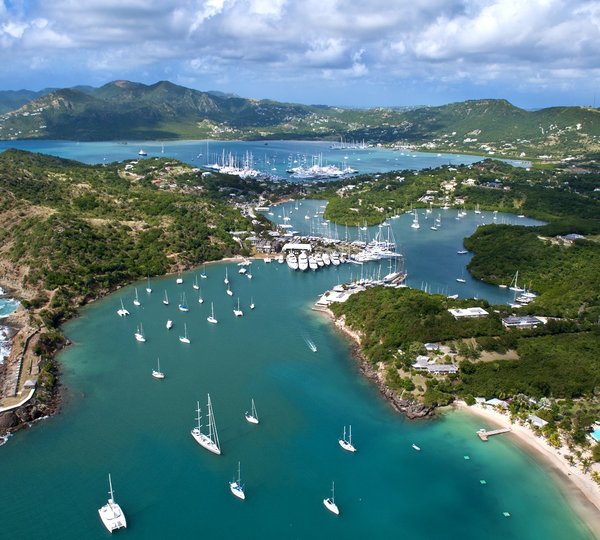
Port Vauban, Antibes, France

Port Vauban, Antibes, France

What France actually delivers from that labour beyond correcting the offending articles of its Tax Code remains to be seen. It is hoped that the authorities will engage and consult with the yachting industry in the same way that they did in the lead up to the favourable rule changes in 2004. But the tight deadlines imposed by the Commission mean that such an approach cannot be guaranteed. Given that the VAT Directive’s provisions are based on the use to which a vessel is put and the location of such use, stipulating use for navigation on the high seas as a condition for exemption under FCE would require that chartering takes place in international waters outside the EU. That would be the very antithesis of conventional yachting, whose pleasure and recreational purpose will sooner yield to the adhesive appeal of the inshore waters and coasts of the EU.

On the other hand, requiring foreign owners and operators of yachts within French territorial waters to now register and account for VAT in France would be too fundamental a step that France may not be ready to take right away, more so because Member States have been allowed a flexible timetable until 1 January 2015 to complete the implementation of the game-changing place-of supply VAT rules for inter-EU supplies of services.

So the immediate impact of trimming the FCE regime may be to re-instate customs controls and deny suppliers of commercial charters in France the right to tax-free fuelling and provisioning that they have enjoyed so far. Those businesses would have to seek the more traditional avenues of inter-EU VAT mitigation, which lie in joining the VAT system as registered persons in a suitable EU territory.

This bulletin was prepared by Moore Stephens Consulting Limited. Yachting VAT Note is designed to keep readers abreast of current developments and trends. It is a general guide only and is not intended to be comprehensive. No liability is accepted for the opinions it contains, or for any errors or omissions.

In all cases you should seek professional advice specific to your circumstances.